

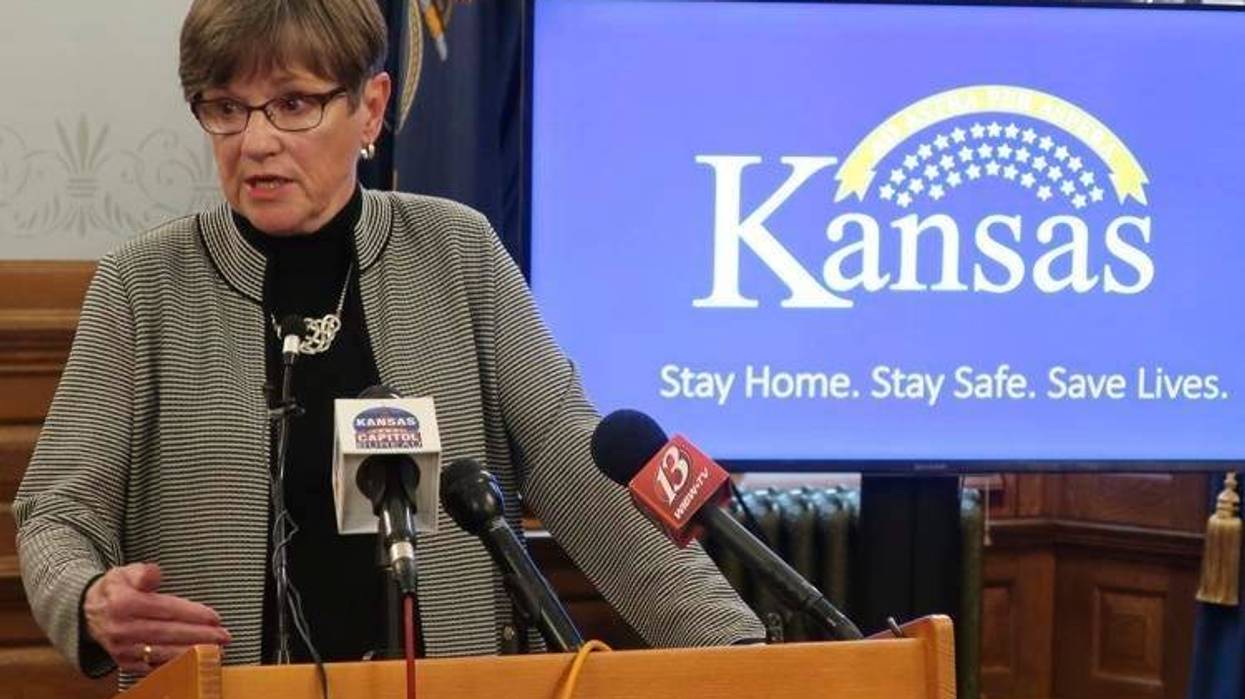

Democratic Gov. Laura Kelly and the Republican-controlled Legislature worked Wednesday on a compromise to give lawmakers oversight of the state's coronavirus response, while Democrats sought protections for workers infected on the job.
Some legislators also expected a debate on expanding the state's Medicaid program, a priority for Kelly.
The Legislature convened for a special session called by Kelly after she vetoed a sweeping coronavirus bill GOP lawmakers approved in May moments before adjourning their annual session.
That measure would have curbed Kelly's power to direct the state's pandemic response; given legislative leaders the final say over how $1.25 billion in federal relief funds are spent; and protected businesses, medical providers and nursing homes from lawsuits.
Her staff and top Republicans have been negotiating since then. GOP lawmakers unveiled a new plan Tuesday that also would give legislators oversight of spending, prevent coronavirus-related lawsuits and limit Kelly's ability to close businesses statewide this fall and winter.
Senate Vice President Jeff Longbine, an Emporia Republican, said "the majority" of the first bill is "still intact."
But the details are different enough that Kelly said Wednesday that she supports the measure and it "will provide the framework our state needs as we continue on the path to recovery."
Kansas law gives the governor broad power in an emergency but requires legislative approval to extend a state of emergency past 15 days. The current state of emergency ends June 10, and Kelly called the special session to get it extended.
The governor was locked for weeks in a dispute with top Republicans who argue that she has restricted businesses too much. When she vetoed the first coronavirus measure, she dropped all remaining statewide restrictions and gave the state's 105 counties the power to set the rules.
Republicans' new coronavirus measure would extend the state of emergency until Sept. 15 and into late January 2021 if legislative leaders agree. Legislative leaders would have a say in whether businesses statewide are forced to close again, but the restrictions on Kelly are not as tough as in the bill she vetoed.
Kansas policy lets exposed meatpacking workers stay on job
Kelly would have to get top lawmakers' approval of her plans to distribute federal relief funds. The bill she vetoed contained a similar requirement but also moved the money into the Legislature's budget from the governor's office budget. An economic recovery team appointed by Kelly proposed Tuesday that $400 million go to cities and counties to cover coronavirus costs.
In vetoing Republicans' first bill, Kelly argued that its provisions protecting medical personnel, nursing homes and businesses from coronavirus-related lawsuits went too far. She wasn't more specific, but the new bill contains narrower language.
Kelly has pushed since taking office in January 2019 to expand Medicaid coverage for the needy but has faced resistance from conservative Republicans. She said she doubts expansion would come up during the special session, but advocates are pushing for a debate.
Some Democrats also wanted to tackle a new issue: ensuring that workers who contract the coronavirus on the job are entitled to workers compensation benefits to cover medical expenses and lost wages.
State officials and attorneys who represent injured workers said such benefits aren't allowed now. Because states have separate systems for reviewing claims from injured workers, they aren't allowed to go to court if they can't get benefits.
Jon Voegeli, a Wichita attorney, said the issue is more pressing because reopening the economy puts more people at risk of getting infected.
"This is a huge loophole that is out there in the system, and we really need to point that out and get this fixed," he said. "More people are going to be exposed."
Some Republicans are wary because expanding benefits for workers will cost employers. Most businesses have insurance to cover such costs, but their premiums are based on the benefits they have paid to workers. Senate President Susan Wagle, a Wichita Republican, said benefits are meant to cover injuries clearly tied to a person's job, such as a machine crushing a hand.
"That person could have contracted it the night before, when they went out to eat," she said. "In most cases, no one can prove where a contact was made that gave a worker COVID."
By JOHN HANNA and ANDY TSUBASA FIELD Associated Press