


ExxonMobil and Chevron both reported better than expected quarterly results Friday as the oil majors benefited from higher prices and record production.
Besides the disruption caused by the wars in Iran and Ukraine that have driven up the cost of fuel, Exxon is also seeing strong production in its fields in Guyana and the Permian Basin in the Southwest. Chevron said its results include one month of production in Venezuela where it’s making a big investment.
Utilization at Exxon's U.S. Gulf Coast refineries was at 100%, and U.S. Gulf Coast diesel production was at the second-highest on record.
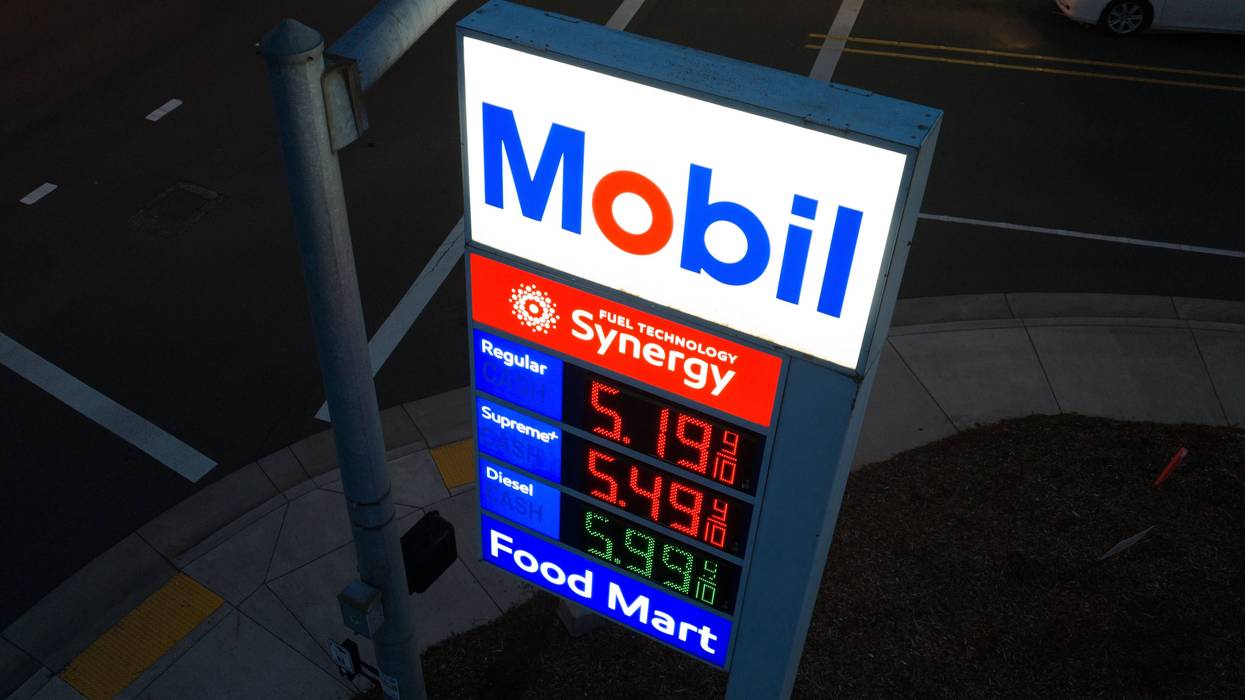
The price of diesel, currently about $6.32 per gallon, is up 71% since last year, according to AAA. Diesel surpassed $6 last month — a record. Regular gasoline is up about 38% in the past year as well. To that end, some state officials have been offering gas tax holidays and other measures to ease costs.
The cost of crude oil — the main ingredient in gasoline as well as diesel — has been volatile amid ongoing uncertainty about the war's future. The conflict with Iran has impeded most shipping through the Strait of Hormuz, a narrow waterway that previously served as a delivery route for a fifth of the world’s oil and natural gas.
Both Brent crude and benchmark U.S. crude were at over $100 a barrel on Friday. Brent is still near the high end of its range since the war with Iran began. The highest price for the most actively traded contract in the market for Brent crude since then is nearly $120, reached in March.
At the beginning of the month, the Group of Seven wealthy democracies announced that they planned to release 100 million barrels of oil and fuel products in the coming weeks, starting with “substantial” amounts of diesel.
The release follows on from a March announcement that International Energy Agency member countries would release 426 million barrels of oil and products to stabilize the oil market. European Union countries committed about 92 million barrels, a promise weighted toward refined products made from crude such as diesel.
President Donald Trump has been trying to tamp down soaring energy costs ahead of the U.S. midterm elections. As part of those efforts, he announced earlier this month that the U.S. struck a deal to obtain diesel from Russia. Congress has criticized the deal as fueling Russia’s war against Ukraine, violating existing U.S. laws and drawing the U.S. closer to Russia. Even as Congress has tried to push back, the first tanker carrying Russian diesel to the United States set sail a week ago.
Darren Woods, ExxonMobil chairman and CEO, noted that investments such as the expansion of its Beaumont refinery in Texas have contributed to an increase in its distillate production by approximately 40% since 2019.
For the third quarter, net income more than doubled to $3.72 per share. On an adjusted basis, profit totaled $4.23 per share, easily topping the average analyst estimate of $4.12 per share.
Revenue during the three months ended in September rose 33% to $113.16 billion, also beating estimates.
The Spring, Texas-based company also raised its quarterly dividend to $1.07 and set a $20 billion stock buyback plan.
Houston-based Chevron said it earned $9.9 billion, or $5.06 per share, during the third quarter, as revenue surged 36% to $67.8 billion. Its results handily topped estimates.
Crude utilization at Chevron's U.S. refineries totaled 98%. Those refineries processed more than 1 million barrels of crude oil per day. The company said it set production records at its Eastern Mediterranean and Australian assets.
Chevron, the second-largest U.S. oil company, has had a presence in Venezuela since 1923. Last month it announced it will invest $7 billion over the next five years in Venezuela. It said Friday that following an accounting-related change during the quarter, it’s now including those results.
Overall capital expenditures during the quarter were lower compared with a year ago because it spent less in the Permian Basin.
Mike Wirth, Chevron’s chairman and CEO, said that the company signed agreements to reduce Bakken midstream costs by about 50%, strengthening the asset’s competitiveness. Chevron increased its holdings in the Bakken fields in North Dakota and Montana following its $53 billion acquisition of Hess Corp. last year.
Shares of Exxon rose 2.8% in early trading. The stock is up 64% in the past 12 months. Chevron's stock climbed 1.8%.