


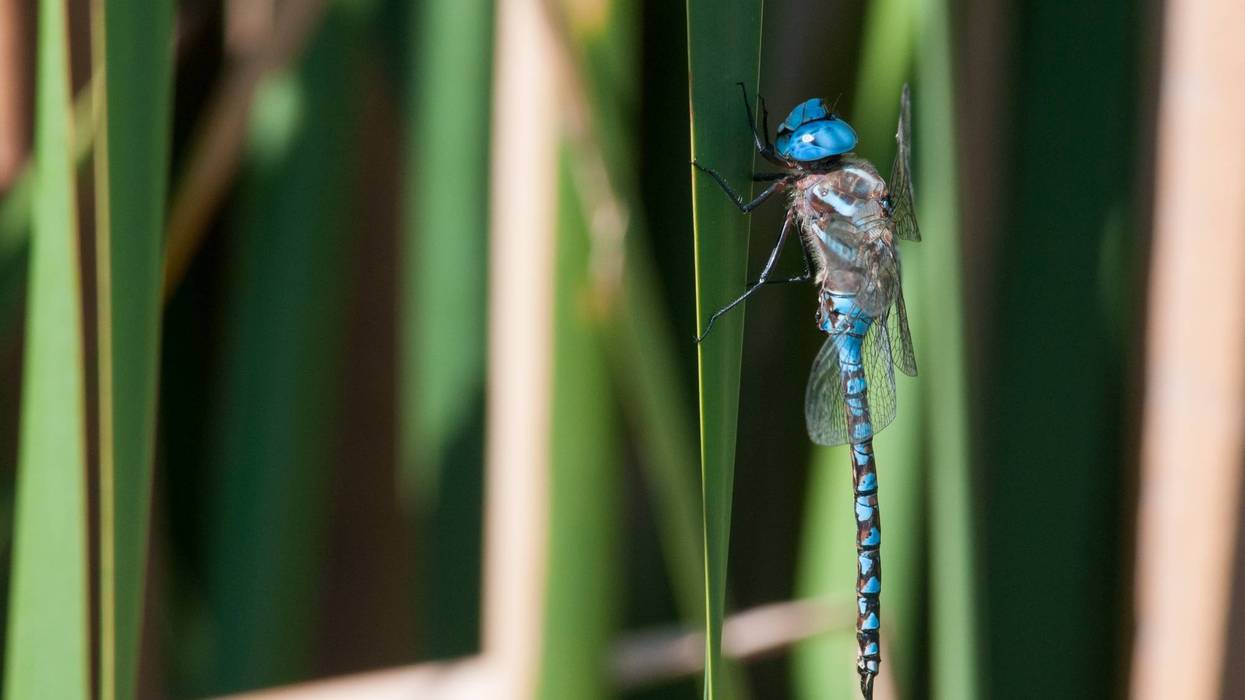

Dragonflies have been flying around the Los Angeles area since at least the Ice Age, and this year has been particularly dragonfly-filled for the state of California, according to recent reports.
Much of the 2026 dragonfly activity has been observed north of L.A. in the Bay Area. Earlier this month, SFGATE assistant local editor Amanda Bartlett wrote that she had first noticed the dragonfly influx in mid-July when she was staying near Smith River, 500 miles north of San Francisco.
Bartlett said she saw hundreds of the flying insects. Then, she saw another swarm in Guerneville – even spotting two of the distinctive creatures mating on the brim of her friend’s hat. Closer to the Bay Area, she saw another swarm while jogging near Lake Merritt in Oakland.
Daniel Montes, communications manager for the San Francisco Recreation and Park Department, told SFGATE that staff members there reported an “unusually large number of dragonflies” over the weekend at the park, located in San Francisco’s Mission District. SFGATE said newly planted sage nearby might also be attracting the dragonflies.
According to the National Park Service, dragonflies are descended from insects that were flying around the ancient supercontinent Pangea, going back 100 million years before even dinosaurs. Some of these ancient bugs had a wingspan of more than 2 feet.
“Though their morphology hasn’t changed much over those unfathomable reaches of time, today’s dragonflies reach a mere fraction that size,” the NPS said.
They have long, gauzy looking wings and are often brightly colored. Unlike some insects, they are generally considered beautiful and are often depicted in art.
“They’re super agile, super strong flying insects with really good vision, really good eyes, and really strong flight muscles, and they are voracious predators that are out there feeding on mosquitoes nonstop,” said Chris Grinter, senior collection manager of entomology at the California Academy of Science in San Francisco, per SFGATE.
There are more than 28 different species of dragonflies in the Bay Area alone, Bartlett noted, so seeing groups of them isn’t exactly uncommon. These species include the blue-eyed darner, the flame skimmer and the wandering glider.
“The fast-moving hunters can fly at speeds of up to 35 mph and catch 95% of the prey they go after – sometimes mid-air – making them excellent natural pest control agents as they eat hundreds of mosquitoes, gnats and flies every day,” Bartlett wrote.
In an email to SFGATE, Grinter said that dragonflies are common during this time of year. He said that “cool weather, wind currents, and an abundance of food (mosquitoes) are likely contributing to the high numbers.”
Crystal Cove Conservancy in Newport Beach, Calif., noted an increase in dragonfly activity in 2017. At the time, it credited the dragonfly boom to a wet winter season. It also noted that dragonflies actually spend most of their lives as nymphs in calm stream waters before they shed their skin and take flight.
Dragonfly larvae from U.S. National Parks is studied as part of the U.S. Geological Survey’s Dragonfly Mercury Project. It helps researchers track environmental risks due to mercury.
Lynn Kimsey, professor emerita at UC Davis and the former director of the Bohart Museum of Entomology, told SFGATE that dragonflies swarming over water are likely mating or laying eggs. She said swarms over fields or grass are likely hunting for food.
This Tuesday, the Associated Press also reported on the “unusual” dragonfly swarms across the U.S. It cited warm spring rains as the cause.
“Californians are spotting swarms of dragonflies flitting around parks, chasing mosquitoes in ponds and hunting flies on farms, a phenomenon experts say was likely fueled by unusually warm spring rains,” the outlet explained. It said Peter Veilleux, owner of a nursery in Oakland, said he’s seen about 100 flying together.