


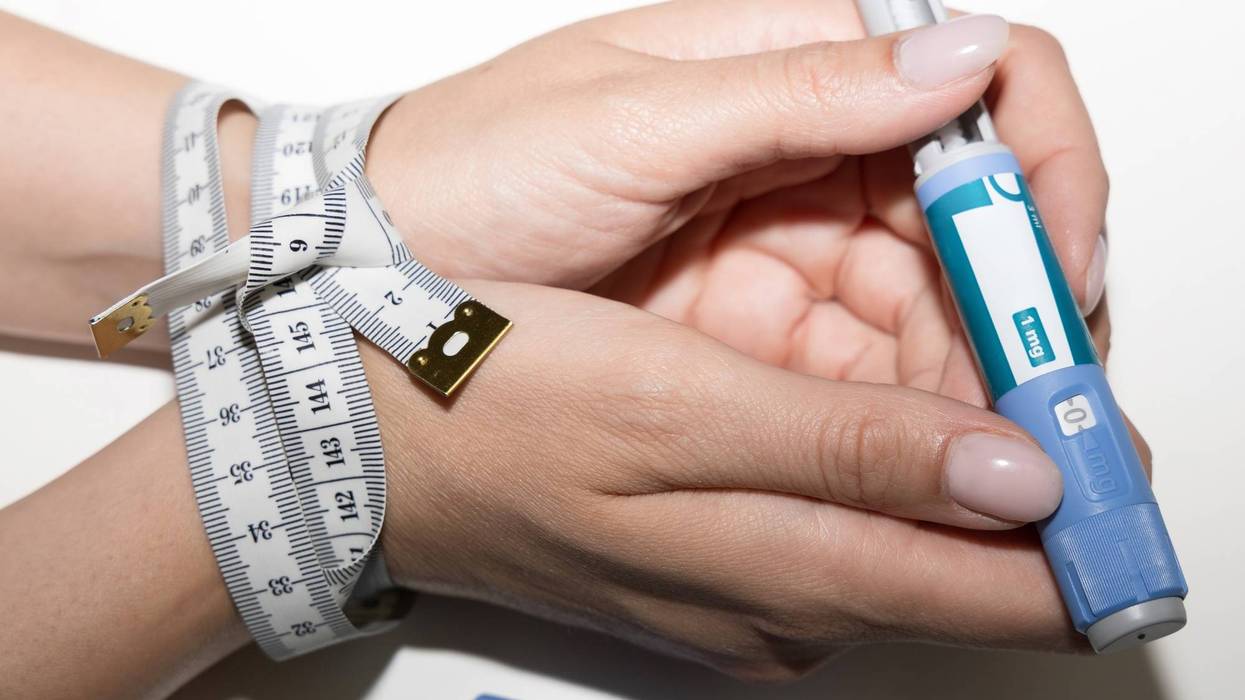

It might seem strange to think that weight loss medication could have an impact on crime statistics, but that’s just what a new study from Rutgers University researchers seems to indicate.
This research was published earlier this summer in the Criminology journal. According to the study authors, use glucagon-like peptide (GLP-1) receptor agonist (RA) medications “was associated with significantly weaker associations between impulsivity and violent crime.”
Research included a cross-sectional study of 821 U.S. adults. Survey data were collected from a nationally representative sample of noninstitutionalized U.S. adults age 18 and older in partnership with Ipsos KnowledgePanel (KP). This 2025 survey covered a total of 7,521 U.S. adults.
GLP-1 medications like Ozempic and Wegovy have become a popular weight loss resource in recent years. As of this July, Gallup polling suggests that 11% of U.S. adults were currently taking a GLP-1.
Back in 2023, Dr. Diana Thiara, an internist at UCSF Health and director of the UCSF Medical Weight Management Program, joined KCBS Radio’s “As Prescribed” to explain how these medications work. She said their most important function is to work on the pancreas to increase insulin production in the body. They work on the stomach to decrease gastric emptying, which means that food sits in the stomachs of people taking them for longer periods of time, making them feel fuller.
“You actually feel more mentally full and physically full, and then your body is just able to process blood sugar better because it’s making more insulin with the help of these medications,” Thiara said.
According to a press release from Rutgers, the new study published in Criminology examined whether the use of GLP-1 receptor agonist medications in particular (a category that includes Ozempic and Wegovy) “influences violent criminal behavior among adults by moderating the effects of impulsivity and alcohol intake.” They compared current GLP-1 users with former users and examined whether medication use changed the relationship between violent behavior, impulsivity and alcohol use.
“Violent behavior was measured using a validated self-reported offending scale assessing behaviors such as fighting, assault and robbery,” the press release said.
Overall, impulsivity and alcohol use were strongly associated with violent behavior. However, those relationships “were significantly weaker among current GLP-1 users,” with the association between impulsivity and violent behavior about 62% weaker among current users compared with former users and the relationship between alcohol use and violent behavior about 52% weaker.
“The strongest finding in the study was that the well-established link between impulsivity and violent behavior was substantially weaker among current GLP-1 users compared to former users,” said Daniel Semenza, the lead author of the study as well as the director of research at the New Jersey Gun Violence Research Center at the Rutgers School of Public Health and an associate professor with the Rutgers School of Public Health. “As GLP-1 drugs become increasingly widespread, it is important to understand all of their potential behavioral effects, including those relevant to public safety,” Semenza said.
Christopher Thomas, an assistant professor at Rutgers University-Camden and the coauthor of the study said the findings are “consistent with these medications working like cognitive behavioral therapy, weakening the path from impulse to action rather than eliminating impulsivity itself.”
Rutgers noted that the study was observational and cross-sectional, so “causal conclusions cannot be drawn,” the researchers stressed. They also “emphasized the need for future longitudinal and experimental studies to determine whether GLP-1 medications reduce violence risk and to better understand the mechanisms involved.”
Another study published this summer in the Acta Psychiatrica Scandinavia journal also found that “in people with both bipolar disorder and diabetes and/or obesity, the use of semaglutide was linked to lower rates of psychiatric hospitalization compared with time periods when GLP-1RA were not used by that individual.” Semaglutide is in Ozempic and other GLP-1 medications.