



MANILA, Philippines (AP) — Southeast Asian leaders and their key counterparts, including from the United States and China, will renew their alarm over the escalating threat of online scams, according to a draft statement seen by The Associated Press on Friday.
Such transnational crimes, which have swindled billions of dollars from people in Asia to the United States and elsewhere, will be high in the agenda when leaders of the Association of Southeast Asian Nations gather in an annual summit with their Asian and Western counterparts on Tuesday in the Philippine capital.
The Philippines currently holds the rotating leadership of ASEAN, an 11-nation bloc in a poverty-stricken region where criminal groups have used technology and resorted to human trafficking to expand their illicit and lucrative operations to other parts of the world.
The leaders of the expanded ASEAN bloc, called the East Asia Summit, will express their “grave concern over the escalating threat posed by transnational criminal organizations inflicting harm through online scams, including those originating from scam center operations and associated criminal conduct such as human trafficking,” according to a draft of their joint statement to be issued after their summit.
They acknowledged “the exploitation of digital and other advanced technologies and digital financial platforms, by increasingly sophisticated criminal actors and the need to strengthen financial and digital systems, as well as the severe human consequences associated with scam centers.”
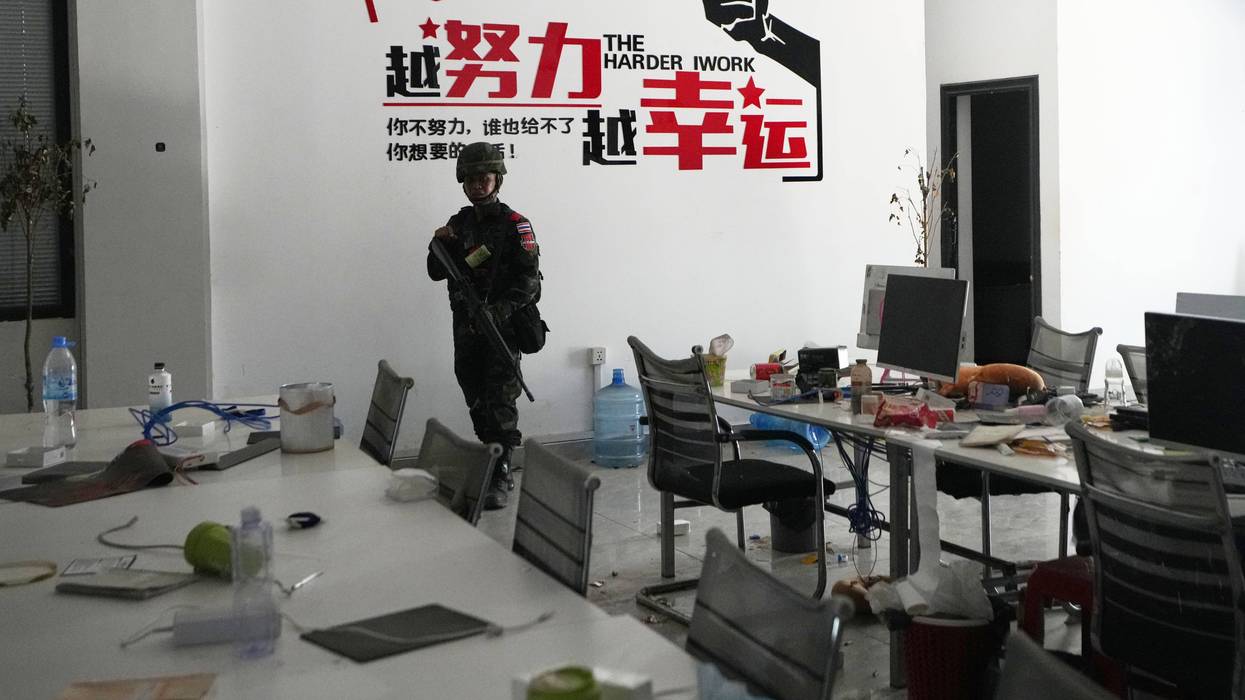
Authorities in Southeast Asia have reported in recent years how large numbers of workers, who were lured by recruitment syndicates into working in online scam centers, including in the Philippines and Cambodia, have been subjected to threats and even torture when they tried to escape or defy orders.
Aside from sharing of information and strengthening law enforcement coordination, the leaders will encourage “the sharing of threat assessments and best practices" as well as strengthening cooperation between relevant authorities in dismantling scam centers, the leaders said in their draft statement, without elaborating.
In July, the United Nations Office on Drugs and Crime reported how Southeast Asia-based criminal groups have increasingly used integrated networks and technology to expand to other regions. The scams caused estimated combined losses of $88.3 billion to $114.1 billion in 2025, according to the report.
Criminals are using new technologies to launder money through global financial systems and using artificial intelligence to steal from victims worldwide, the U.N. report said.
East Asian crime syndicates are running businesses that use malware, generative AI and deepfakes for sexual extortion and exploitation in a trend that increases the risks of in-person as well as livestreamed abuse. Apart from outright trafficking for the sex industry, victims can be sold into domestic servitude, forced begging and forced labor, among other forms of exploitation, the report said.
The East Asia Summit leaders meeting in Manila will underscore “the need to address underlying drivers and other related factors of online scams," such as poverty, lack of social protection interventions, outdated domestic laws, private and public coordination gaps, corruption and limited economic opportunities.
They will stress that government responses to online scams must be consistent with international law and respect human rights.