

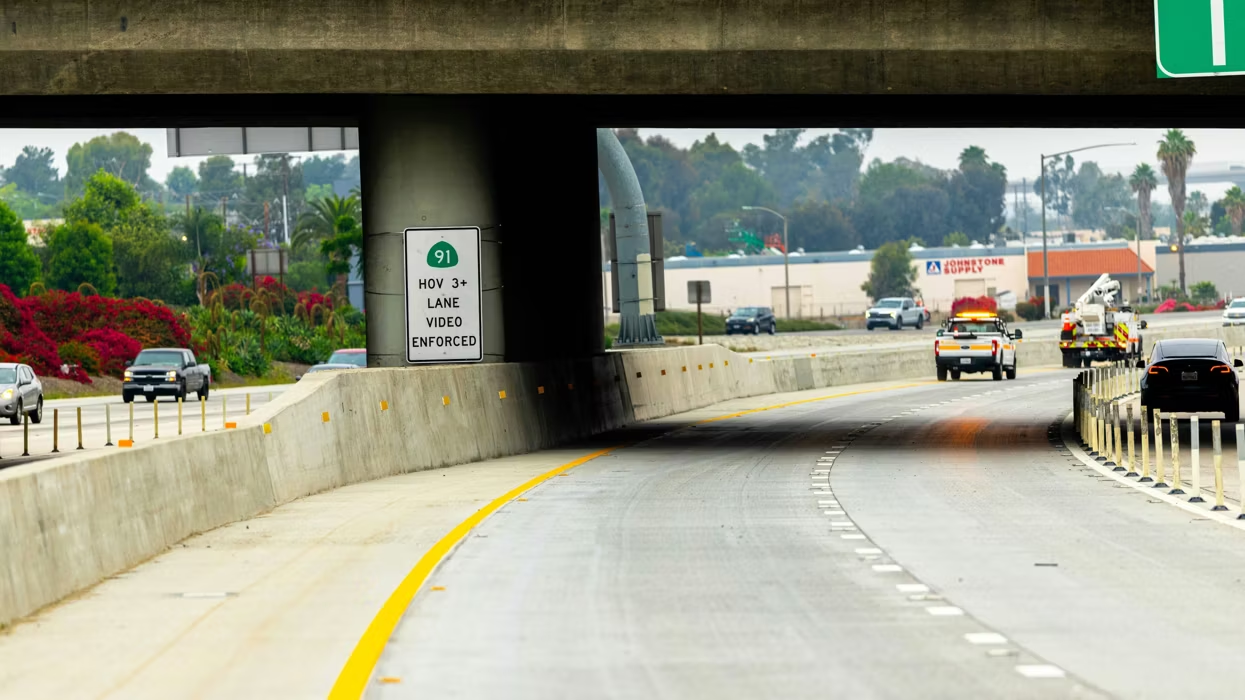

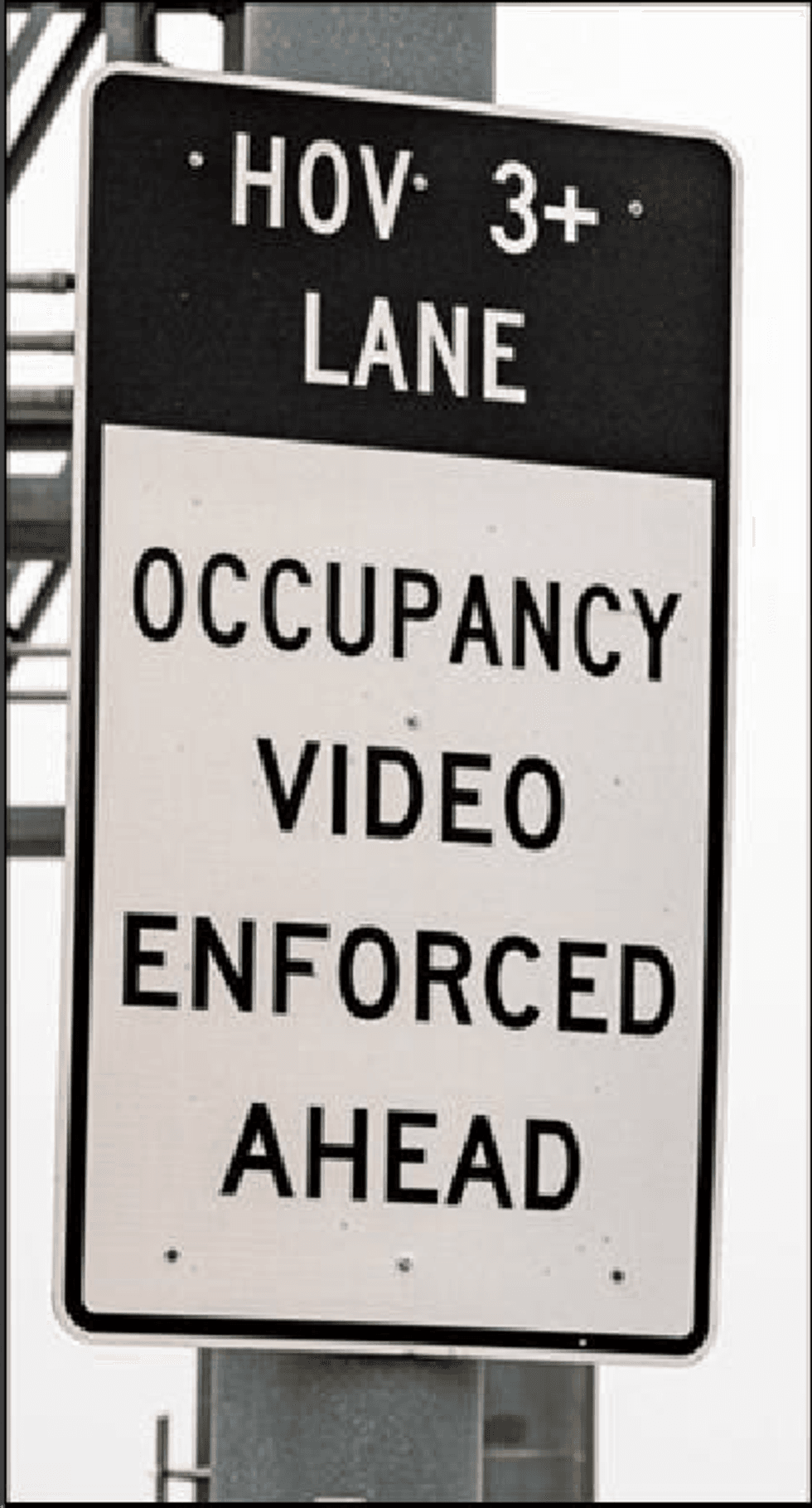
Impatient drivers often leave traffic jams for the HOV lane; some return to traffic, while others stay in the lane until it ends. Either way, the driver is violating the HOV rules – enter Occupancy Detection System, or ODS. The $5 million technology works to photograph the interior of someone’s vehicle as they come to the end of the 91 Expressway in Riverside County.
 RCTC
RCTC
David Knudsen is the deputy executive director of the Riverside County Transportation Commission, which owns that portion of the 91 Express Lanes designated for 3+ passengers. He told me they are the first in the nation to deploy the latest technology, and in the brief time it has been up and running the agency has already recouped more than a million dollars in toll fees lost because of drivers who violated the HOV 3+ lane policy. The photo technology can even see through tinted windows.
The special lane runs from the Riverside/Orange County line to the 15 freeway and is clearly designated for vehicles with three or more occupants. While you don't need a FastTrak transponder for this section, you must have an account with the Riverside County Transportation Commission. The special cameras flash multiple photos. If the computer detects a possible violation, an RCTC employee reviews the photos to confirm it.
Want to get caught up on what's happening in SoCal every weekday afternoon? Click to follow The L.A. Local wherever you get podcasts.
Knudsen says, on average, about 400,000 vehicles use the 91 Expressway, and of those, more than 100,000 violate the 3+ lane. He says when drivers purposely violate the rules others pay the price, which is not fair. If you violate the 3+ lane rule, and the violation is verified by the RCTC, the full toll plus an administrative fee will be added to your next statement. Knudsen says a few people challenge the fees but usually give up when they realize there’s photographic evidence. He says the drivers are more interested in knowing how they got caught than paying the fees.
And when I asked about privacy concerns, Knudsen said no one has complained about the program, so far. He added that people’s faces are blurred in any photos and the digital evidence is stored in accordance with state and federal laws. The program started in August of last year and could eventually be implemented countywide.
Follow KNX News 97.1 FM
Twitter | Facebook | Instagram | TikTok