


The CIA used a previously-classified new technology called Ghost Murmur to locate a wounded American airman hiding in southern Iran last week, marking the tool’s first known operational use.
The airman — publicly identified only as “Dude 44 Bravo,” the weapons systems officer aboard an F-15E Strike Eagle — ejected after his jet was shot down during recent U.S.-Iran hostilities. He spent more than 24 hours evading capture in a remote mountain crevice while Iranian forces with a bounty on his head searched the area. Traditional search methods faced challenges in the rugged, desolate terrain.
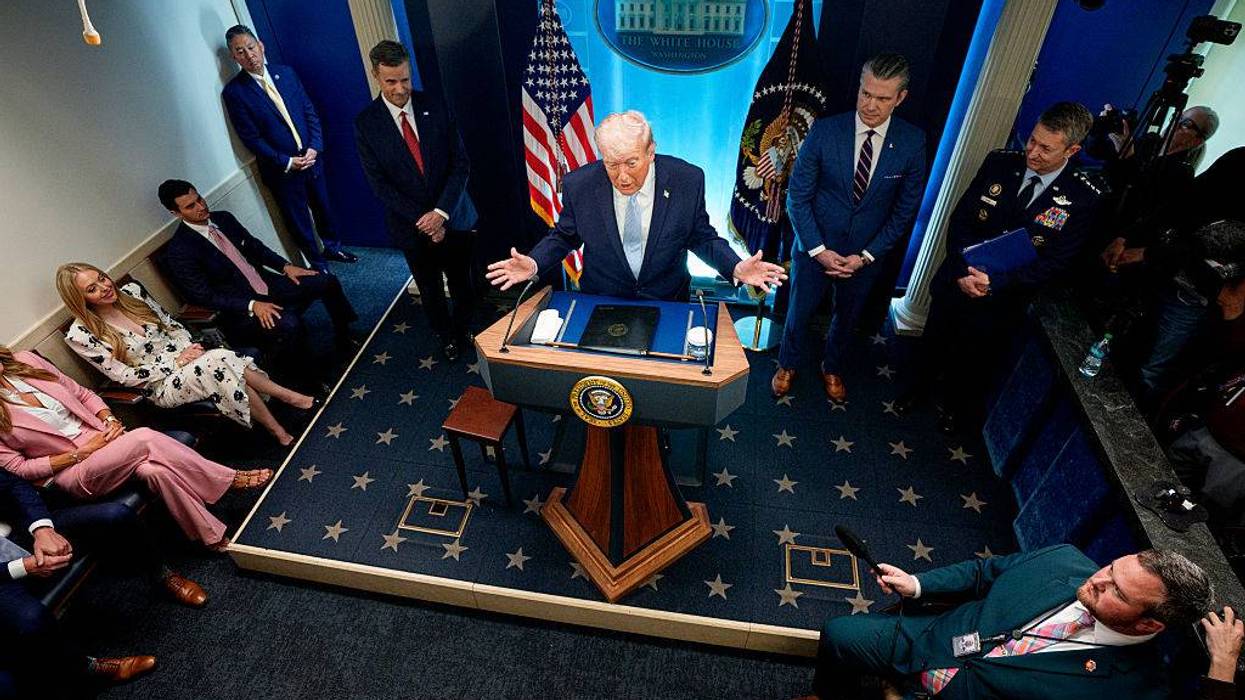
According to sources briefed on the program, Ghost Murmur employs long-range quantum magnetometry sensors built around microscopic defects in synthetic diamonds. These sensors detect the faint electromagnetic signature produced by a human heartbeat and pair it with artificial intelligence software that filters out background noise across a wide area. Officials described the barren landscape as ideal conditions for the system’s debut. President Donald Trump and CIA Director John Ratcliffe alluded to the advanced capability during a White House briefing Monday, with Trump noting the airman was located from about 40 miles away and calling the operation “like finding a needle in a haystack.”
'Ghost Murmur' was developed for CIA by Skunk Works, a secretive Lockheed Martin division, sources said
— Steven Nelson (@stevennelson10) April 7, 2026
It was tested on Black Hawks for future use on F-35. This was its first operational usehttps://t.co/VS4oQbKsTn
The technology was developed by Lockheed Martin’s secretive Skunk Works advanced development division. It had been tested previously but never deployed in the field until this mission. The airman was safely recovered by U.S. special operations forces with no reported American fatalities or additional serious injuries beyond those from the initial incident.
The disclosure follows public confirmation of the rescue itself and underscores rapid advances in remote sensing for personnel recovery in contested environments. No other details on future applications were released.
The technology was developed by Lockheed Martin’s secretive Skunk Works.
The technology was developed by Lockheed Martin’s secretive Skunk Works.