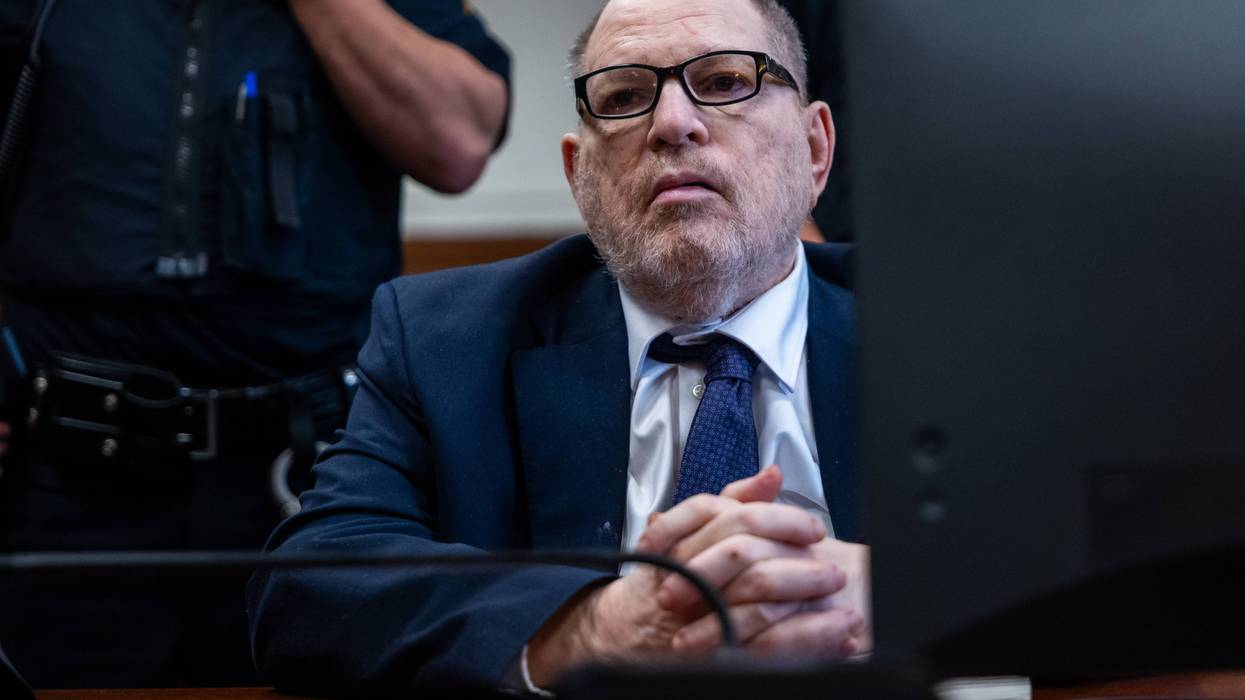




The criminal case was dismissed Friday against George Tyndall, a former longtime USC campus gynecologist who was found dead last year in his Los Angeles home while awaiting trial on sex-related charges involving 16 patients who accused him of inappropriate behavior under the guise of medical exams.
Two of the alleged victims and three other women who claim they were abused by Tyndall spoke after Superior Court Judge Larry Paul Fidler granted the defense's request to dismiss the case based on Tyndall's death from natural causes last October, with one of the alleged victims saying that "this whole process has been a huge disappointment."
One of Tyndall's attorneys, Leonard Levine, told the judge that his client had "always maintained his innocence," and that it was a "tragedy" for Tyndall and all of the other involved parties that there wouldn't be a trial.
The judge noted that he "cannot take a position" on the case. But he told the alleged victims, "I feel terribly that you didn't get what you were seeking."
The County of Los Angeles Medical Examiner concluded that Tyndall died from heart disease, with diabetes playing a contributing factor in his death.
Tyndall was discovered dead after a close friend who talked with Tyndall every day was unable to reach him, used a key to get into his Los Angeles condominium, where he lived alone, and found the 76-year-old man unresponsive last Oct. 4, Levine said last year.
The medical examiner's office initially issued a statement saying that it did not plan to perform an autopsy because "there was a history of natural disease that explains Mr. Tyndall's sudden death with no suspicious circumstances for foul play, suicide or toxins playing a role in his death."
But the medical examiner's office confirmed the next week that it had performed an examination on Tyndall and deferred the case of his death, which authorities announced last month was classified as "natural" causes.
Want to get caught up on what's happening in SoCal every weekday afternoon? Click to follow The L.A. Local wherever you get podcasts.
Tyndall died less than two months after the judge ruled there was sufficient evidence to require him to stand trial on 18 felony counts of sexual penetration of an unconscious person -- charges that allege the women were "unconscious of the nature of the act" and that it served "no professional purpose" -- along with nine felony counts of sexual battery by fraud.
The criminal complaint alleges that the crimes occurred between 2009 and 2016.
The women had gone to USC's student health center for annual examinations or other treatment while Tyndall was working there.
Eight charges involving five other women were dismissed earlier because four of them opted not to proceed and one could not be contacted.
Deputy District Attorney Reinhold Mueller told the judge during the hearing in August that Tyndall was employed at a prestigious university and that the patients -- often as young as 18, 19 or 20 -- "trust in this guy" and "believe what he is doing is appropriate."
"That's how he gets away with this. ... In their mind, they think what's being done is correct," the prosecutor said, adding that Tyndall's patients were "unable to resist" because they were not aware of the nature of what Tyndall was doing.
Levine countered that many patients were not comfortable with the way Tyndall spoke to them, but said he believed their perception of Tyndall changed to the acts being viewed as "sexual in nature" rather than a standard gynecological examination after a Los Angeles Times article about alleged wrongdoing by the former campus gynecologist.
The defense lawyer told the judge that he believed the investigation into the alleged crimes was "totally lacking," saying that the defense maintains that the examinations were done for a legitimate medical purpose.
Tyndall planned to testify in his own defense during the trial, Levine told reporters outside court after the dismissal of the case.
In March 2021, attorneys representing hundreds of women who claim they were sexually abused by Tyndall announced an $852 million settlement of lawsuits against the university, describing the resolution as the largest of its type ever against a university.
In January 2020, a federal judge in Los Angeles granted final approval of a $215 million class-action settlement between USC and some of the women who claim they were sexually abused by Tyndall.
The settlement provides all class members -- about 17,000 former patients who received women's health services from Tyndall -- compensation of $2,500 and up. Patients willing to provide further details about their experience could be eligible for additional compensation up to $250,000.
Attorneys for some victims have argued that following an internal investigation of complaints against Tyndall in 2016, the university paid Tyndall a substantial financial settlement so he would quietly resign.
USC officials had repeatedly denied allegations of a cover-up relating to Tyndall and have said that in response to the scandal, new protocols were implemented at its student health center to ensure any complaints are investigated and resolved by appropriate university officials and authorities. The university also said it has hired female, board-certified physicians and introduced patient education materials about sensitive examinations.
After the March 2021 settlement, USC President Carol Folt released a statement in which she said, "I am deeply sorry for the pain experienced by these valued members of the USC community. We appreciate the courage of all who came forward and hope this much-needed resolution provides some relief to the women abused by George Tyndall."
Tyndall surrendered his medical license in September 2019, according to records from the Medical Board of California.
Follow KNX News 97.1 FM
Twitter | Facebook | Instagram | TikTok