


Tennessee death row inmate Christa Pike is awake and speaking at a hospital, her lawyers said Tuesday, six days after the state's failed attempt to execute her by lethal injection left her unconscious and on a ventilator.
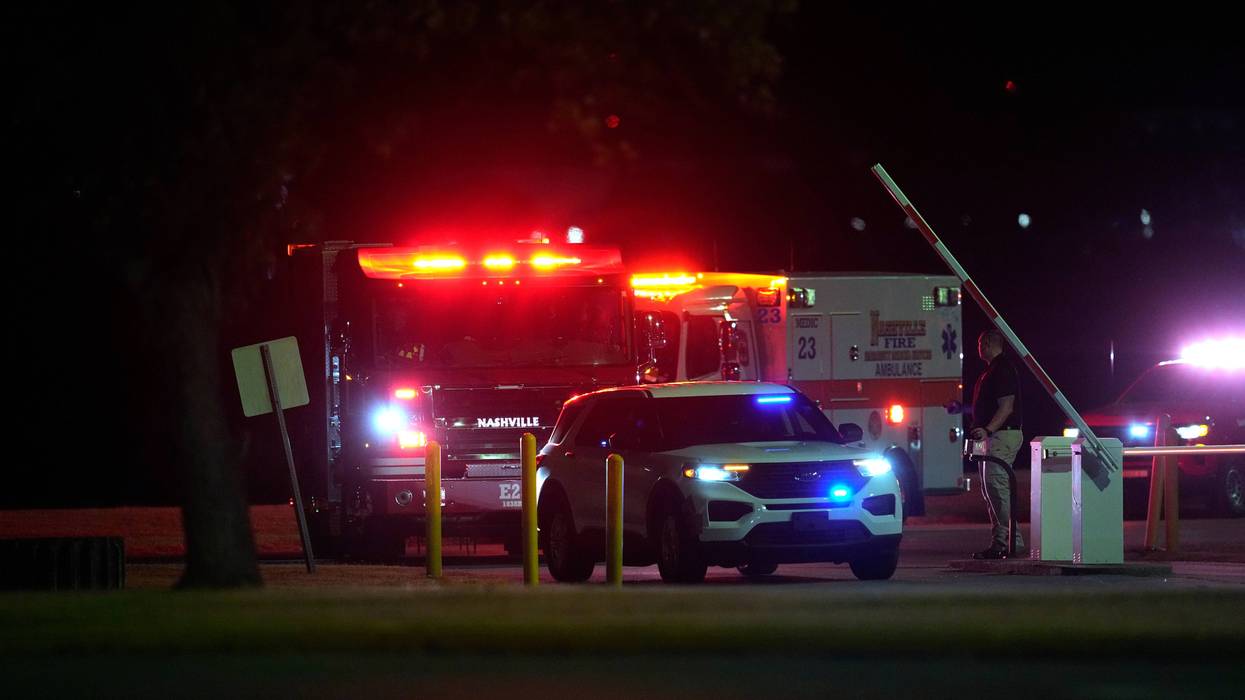
Pike, 50, survived two doses of pentobarbital as executioners attempted to put her to death last Wednesday for the 1995 beating and stabbing death of classmate Colleen Slemmer. The lethal injection drug didn’t kill her, but her lawyers said her arms were left burned and blistered, and she was taken to Vanderbilt University Medical Center for treatment.
Her survival raises further questions about her medical and legal future. Her attorneys said her prognosis remains unclear and that she faces a long recovery.
“Against all odds, Christa Pike is conscious, speaking, and continues to receive critical medical care," attorneys for Pike said in a statement. “Despite the severe damage she endured to her arms, she is still handcuffed and shackled to the bed. Her recovery is medically unprecedented."
Her attorneys said they are grateful for the first responders and the medical team at the hospital “who treated Christa like a human and have provided exceptional care to her.”
It's the first indication Pike's health has improved
As recently as Sunday, Pike's attorneys said she had remained unconscious and on a ventilator.
Dr. Joel Zivot, a professor of anesthesiology and surgery in Atlanta who consulted as an expert for Pike’s legal team, said the development “bodes well for a good recovery.” But, he added, it could be weeks or months before anyone knows exactly what her recovery might look like, and whether her competency could be restored to a level that might enable the state to try again to execute her.
“She’s still in the ICU,” he said. “She has recovered to a certain degree that she’s able to be off a ventilator and able to speak, but in no way would I announce her free of further serious risk. There’s still a lot of bad things that can happen here, even when everyone is doing their job well.”
A spokesperson for the Tennessee Department of Correction said she could provide no information other than that Pike remained hospitalized Tuesday.
A court hearing is set for Wednesday
Pike’s attorneys are set to go to court Wednesday as they seek to learn more about what happened in the failed lethal injection.
The attorneys are seeking a court order requiring the Tennessee Department of Correction to preserve evidence, including drug lot numbers, records and other information from the Sept. 30 attempted execution. Chancery Court Judge I’Ashea Myles scheduled a Wednesday morning status conference in the case.
Pike’s attorneys said in their Tuesday statement that they continue to ask outgoing Tennessee Gov. Bill Lee to commute Pike’s sentence to life in prison without the possibility of parole.
“Christa is a survivor and will take recovery one day at a time,” her attorneys said.
Lee halted further executions following Pike's hospitalization and ordered a “comprehensive, third-party review to determine exactly what occurred.” U.S. Sen. Marsha Blackburn, the state’s Republican candidate to replace him, called on the state to explore other methods of execution to ensure it can continue carrying out capital punishment.
Could the state try again?
In addition to questions about competency — whether Pike can understand why she would be put to death — Pike has strong arguments that it would be cruel and unusual for the state to try again to execute her, said Deborah Denno, a Fordham Law professor who has studied execution methods for 36 years. It could also violate the prohibition on double jeopardy, trying or punishing someone twice for the same offense, Denno said.
In other recent cases, states have been allowed to try again after failing to establish a suitable intravenous line, she said, but Pike is the first person to survive after the lethal drug was actually administered.
“They carried out every aspect of the execution," Denno said. "She didn’t die, but every process they intended, they did it.”
Seattle University Law Professor Michael Russo, who handled capital cases as a public defender in Los Angeles, called the failed execution horrible but said he doubted whether the Supreme Court would stop the state from trying again on double-jeopardy grounds, should it decide to do so.
“There’s nobody else in the history of the death penalty in this country who has gone through what she’s been through,” Russo said. But, he added, “I think what this Supreme Court would say is, her sentence was to die — to be executed — not to suffer an attempt at execution.”
___
Associated Press reporter Gene Johnson contributed from Seattle.