


As Americans struggle financially to the point that not even half can consistently afford healthcare, Democratic lawmakers are pushing for legislation that would increase to the minimum wage from $7.25 to $25 per hour in a phased plan.
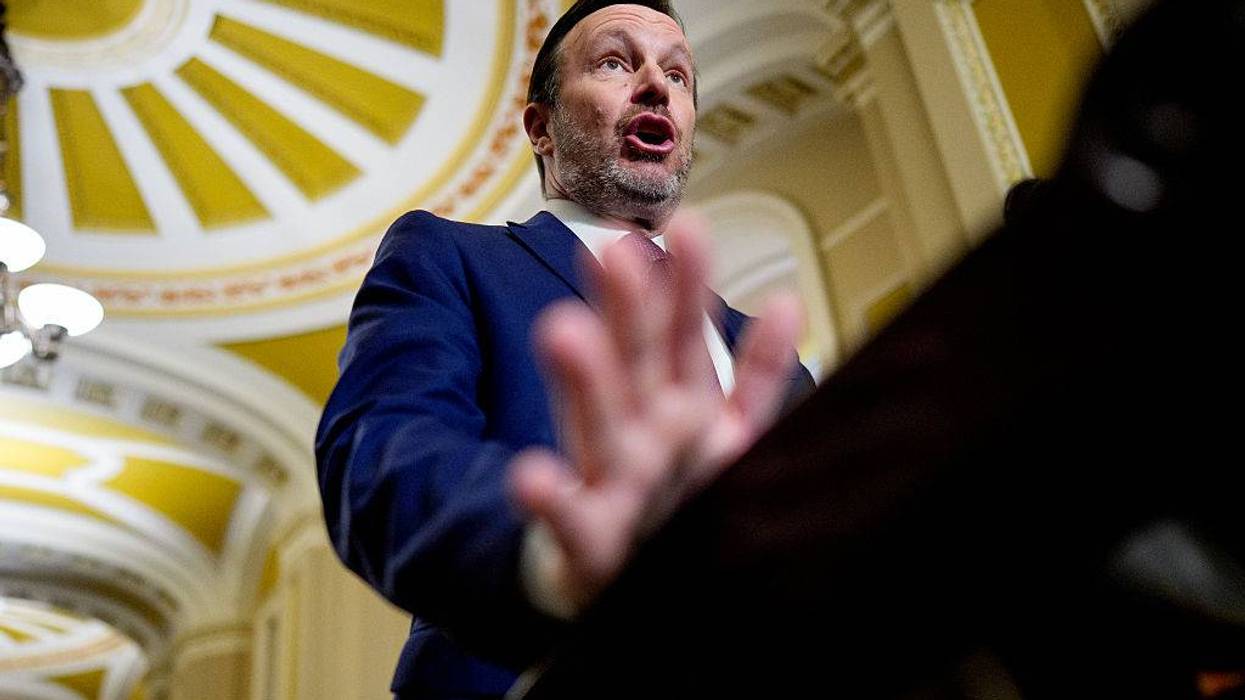
“If the minimum wage had kept pace with inflation and worker productivity since 1968, it would have been roughly $25 in 2023,” said a press release from Sen. Chris Murphy (D-Conn.), a leader of the effort. “There is nowhere in America where a worker with just one dependent can afford their basic needs by working full time at an hourly wage under $25.”
While the minimum wage was equal to around half the wage for blue-collar factory workers and non-management service employees in the late 1960s, it is now equal to roughly a quarter of those wages, according to the Center on Budget Policy and Priorities. Nationally, the minimum wage hasn’t increased since 2009, during former President Barack Obama’s administration. Some states have raised their minimum wages, however.
“Since 1979, workers have become some 92% more productive, but wages have risen by less than 34%,” said Murphy’s office. Today, an estimated 45% of American workers make less than $25 per hour.
Critics of minimum wage increases have argued that businesses will simply cut positions or reduce hiring if wages increase. For example, the right-leaning Cato Institute said in 2012 that “minimum wages particularly stifle job opportunities for low-skill workers, youth, and minorities, which are the groups that policymakers are often trying to help with these policies.”
However, the left-leaning Economic Policy Institute disputed that notion in a piece published this year. It said that “high-quality economic research finds increasing the minimum wage does not significantly impact employment,” or job opportunities and benefits. It even said raising the minimum wage isn’t expected to raise prices.
In fact, the EPI said evidence suggests that increasing minimum wages serves to “reduce poverty and should be paired with a strong safety net.”
As for the public sentiment around raising the minimum wage, the Pew Research Center found in 2021 that 62% of U.S. adults were in favor of raising the federal minimum wage to $15 an hour. Then, an in-depth study conducted by the Program for Public Consultation (PPC) at the University of Maryland’s School of Public Policy in 2023 found that two-thirds of American voters favor raising the federal minimum wage to $15, including a majority of Democrats but less than half of Republicans. That study found there is bipartisan majority support for a $12 minimum wage.
Raising the minimum wage to $12 within a year would be the first phase of the Living Wage For All Act proposed by Democrats if it passes. It would gradually increase to $25 by 2032.
“No employee will be paid below the minimum wage,” said Murphy’s office of the proposal. “Existing subminimum wages for tipped workers, workers with disabilities, and youth workers will be phased out gradually.”
President Donald Trump made “no tax on tips” part of his policy platform and tipped workers are now eligible for the program. Still, the EPI argues that making wages higher would be more financially beneficial for tipped workers than the tax relief.
Murphy’s office said that large employers will be required to move first, while smaller employers will be allowed a longer transition period though 2039 to reach $25 per hour. Then, after the $25 per hour goal is reached, the minimum wage will continue to increase in future years to “equal two-thirds of the national median wage.”
“If you work full time in this country, you should be able to afford to live. But wages are so low that parents work 60 hours a week and still aren’t sure if they’ll have lunch money for their kids,” said Murphy. “Our economy is not working for people and we have to put forward solutions that are as big as the problems American families are facing.”
This week, the Democratic National Committee also announced the launch of “Stuff Costs Too Much Weekend of Action” events.