


A Dallas County death row inmate's attorneys are seeking to halt his scheduled execution after his cousin and co-defendant submitted a sworn confession claiming he - not the condemned man - was the triggerman in a 2008 Garland double murder.
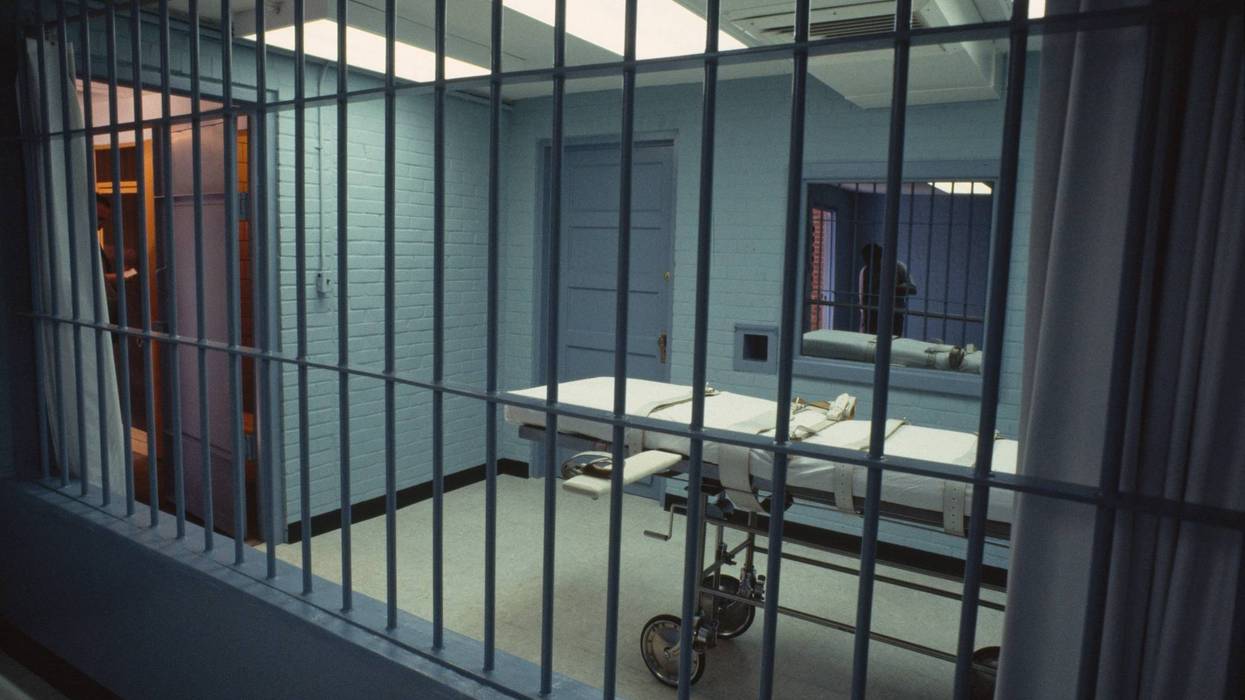
James Broadnax, 37, is scheduled to be executed by lethal injection on April 30 in Huntsville. He was condemned by a Dallas County jury in 2009 for the deaths of Stephen Swan, 26, and Matthew Butler, 28, outside their Garland music studio.
With 42 days until his scheduled execution, Broadnax filed a new appeal Thursday with the Texas Court of Criminal Appeals, including a signed confession from his co-defendant claiming he, not Broadnax, had committed the killings.
In his confession, Demarius Cummings - Broadnax's cousin - took full responsibility for the planned robbery and fatal shooting of Swan and Butler, both Christian music producers. Cummings said he persuaded Broadnax, then 19, to publicly claim he committed the killings because he had no prior criminal history, while Cummings had already been convicted of other crimes.
Cummings said his decision to come forward was influenced by learning of his cousin's looming execution date and by becoming "more spiritual." In his written statement, Cummings wrote that he wanted to clear his conscience and did not want Broadnax executed for acts he did not commit.
Cummings also pointed to DNA evidence as support, noting that only his DNA was found on the murder weapon - not Broadnax's. A prosecution DNA expert confirmed at trial that Broadnax's DNA was not found on the trigger or the right grip of the gun.
The appeal asks the court to stay the execution, remand the conviction back to trial court, and ultimately strike the death sentence. A Dallas County District Attorney's Office spokesperson said the office will respond to the motion.
Under Texas' law of parties, defendants can be sentenced to death if they helped commit a capital murder even if they did not pull the trigger. However, prosecutors in Broadnax's case explicitly declined to use that law, and the appeal argues that the confession makes it unlikely it could have applied.
Cummings is currently serving a life sentence without parole for his role in the murders. His confession does not expose him to additional punishment, since he is already serving the maximum sentence available in his case.
The appeal also revives longstanding claims that Broadnax's trial was tainted by racial bias. Seven Black potential jurors were struck during the trial. The judge reinstated one, leaving a final jury of 11 white jurors and one Black juror. The defense has also contested prosecutors' use of Broadnax's rap lyrics during the sentencing phase to portray him as a continuing danger to society.
If the appeal is successful, it would be the third execution stay granted by the Texas Court of Criminal Appeals in just over a year, following stays in the cases of David Wood and Robert Roberson.
The Texas Court of Criminal Appeals is expected to rule before the April 30 execution date.
LISTEN on the Audacy App
Tell your Smart Speaker to "PLAY 1080 KRLD"
Sign Up to receive our KRLD Insider Newsletter for more news
Follow us on Facebook | Twitter | Instagram | YouTube