


Gridlock across the Dallas-Fort Worth metroplex could become significantly easier to navigate in the coming decades—and regional planners might not even need to lay new highway pavement to achieve it.
A new study led by SMU civil and environmental engineering professor Khaled Abdelghany suggests that the widespread adoption of connected and autonomous vehicles (CAVs) will dramatically improve North Texas commute times by 2045.
Smother Traffic, Not Just More Lanes
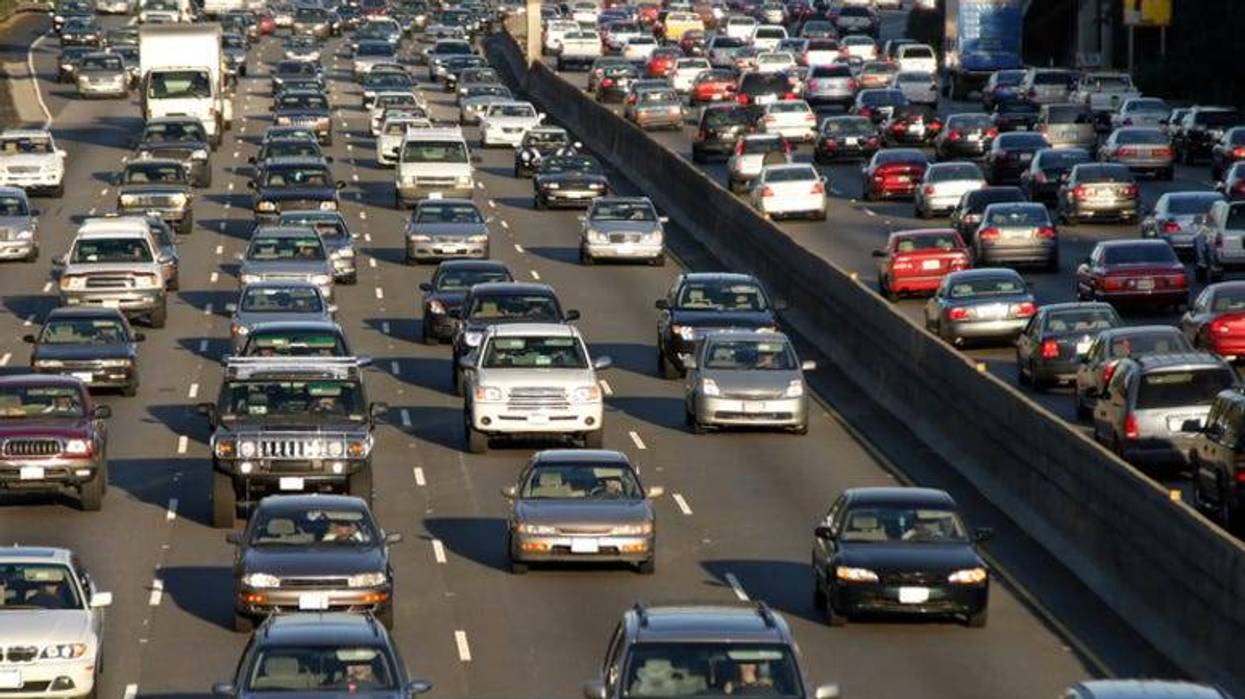
Traffic jams aren't caused strictly by the volume of cars on the road; stop-and-go driving habits, sudden braking, and speed fluctuations cripple road efficiency. Autonomous vehicles eliminate much of that human variability.
"Traffic congestion is often driven not only by high demand but also by speed variability and stop-and-go behavior, which reduce flow efficiency," explains Abdelghany, a fellow at the Stephanie and Hunter Hunt Institute for Engineering and Humanity. "Autonomous vehicles may help mitigate these effects through smoother and more coordinated driving."
Inside the Study: 25 Scenarios Tested
To evaluate how self-driving technology could handle North Texas traffic demands, Abdelghany’s team collaborated with Behruz Paschai (Texas Transportation Institute) and Abby Morgan (Kittelson & Associates, Inc.).
Using the Transportation Analytical Forecasting Tool (TAFT)—an advanced regional model developed by the North Central Texas Council of Governments (NCTCOG) covering 13 DFW counties—the researchers ran 25 distinct experiments across corridors like U.S. 75 and Interstate 635. They benchmarked adoption rates at 25%, 50%, and 100% against a projected 2045 baseline assuming zero autonomous vehicles.
The study explored three key dynamics:
- Varying market penetration of driverless vehicles.
- Real-time vehicle-to-infrastructure (V2I) communication between cars and traffic signals.
- Commuter relocation patterns enabled by hands-free driving.
Key Findings by 2045
Published in the Journal of Urban Technology, the study highlights several major takeaways for DFW commuters:
- 33% Drop in Delays: Reaching 100% autonomous vehicle adoption yielded the largest congestion relief, slashing traffic delays by a third.
- 19% Reduction in Vehicle-Hours Traveled (VHT): If automated driving encourages commuters and employers to spread outward from core counties (Dallas, Tarrant, Collin, and Denton) to peripheral areas, total time spent by all vehicles on the road system drops significantly.
- Minor Signal-Communication Gains: Equipping driverless cars to communicate directly with traffic signals offered only modest incremental benefits beyond the massive gains achieved by full autonomous driving flow alone.
Beyond the Commute
While public skepticism surrounding self-driving tech persists, Abdelghany emphasizes that the structural advantages extend far beyond faster drive times. Full automation expands mobility to populations currently unable to operate a personal vehicle—including the elderly, visually impaired, and disabled—offering a far more inclusive transportation network across North Texas.
The study was partially funded by the North Central Texas Council of Governments (NCTCOG).
And that is without adding any new lanes, SMU study finds
And that is without adding any new lanes, SMU study finds