

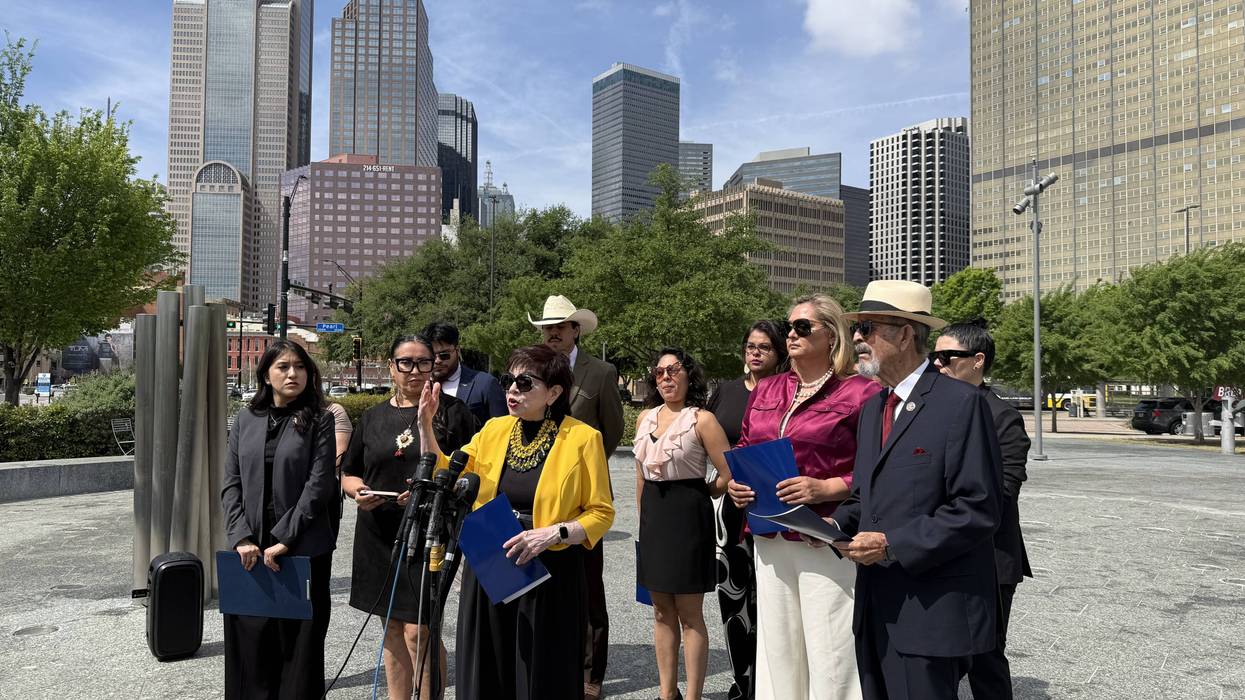

On Tuesday, the Greater Dallas Hispanic Chamber of Commerce condemned late civil rights leader Cesar Chávez following recent sexual abuse allegations, calling for his name to be removed from public spaces during a press conference at Carpenter Park in Dallas.
Chamber leaders cited a March 18 investigation by The New York Times that reported Chávez sexually abused multiple girls and women during his tenure as president of the United Farm Workers. Speakers said survivors have since come forward to support those findings.
“The chamber condemns it without qualification and without exception,” said Diana Flores, the organization’s vice president of strategic initiatives. “He committed these crimes, and accountability does not expire.”
Flores emphasized that the farmworker movement did not belong solely to Chávez, noting that thousands of workers built it through sacrifice and advocacy. “Their victories belong to them alone,” she said. “His crimes are not theirs to bear…and they never will be.”
Other speakers highlighted the impact of sexual violence and the importance of listening to survivors. Olga Lopez, chair of the chamber’s Growth Foundation, said silence protects predators and abandons youth and the most vulnerable.
“When we stay silent to protect a reputation, a holiday, or a name on a building, we are making a choice about whose pain matters and whose pain does not,” Lopez said. “Today, we are saying that the pain of victims matters more than the comfort of the powerful.”
Ginny Mendez, a national women’s commissioner with the League of United Latin American Citizens, said the moment demands accountability and cultural change.
“There is no place in our society, not then, and surely not now, for actions that diminish the humanity of another person,” Mendez said. “The time for change is now, and it begins with us.”
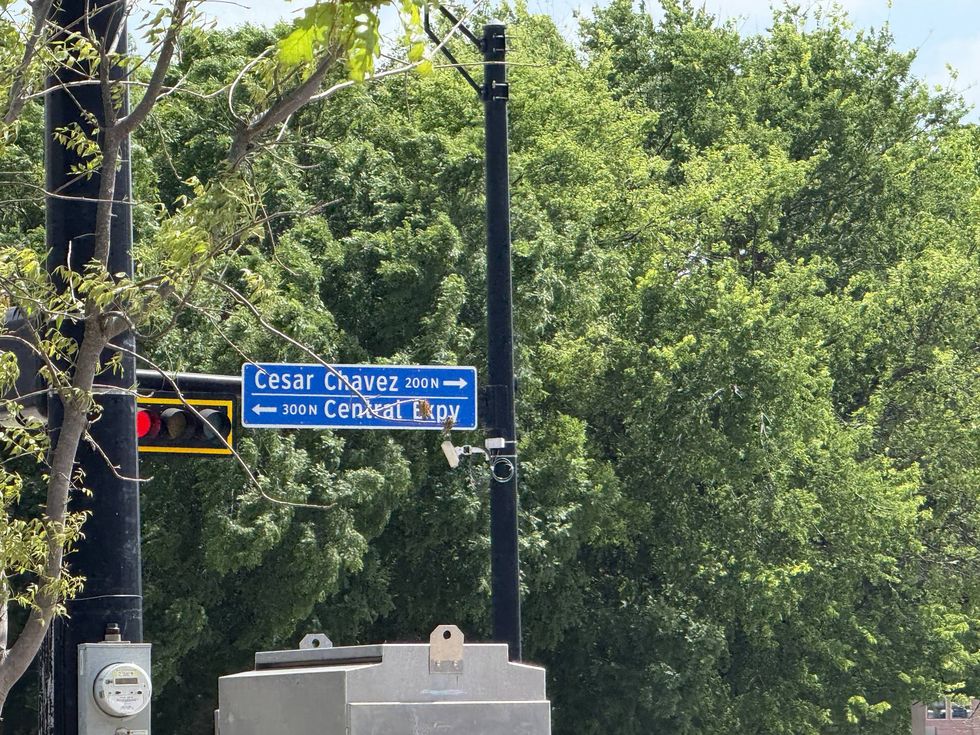 N Cesar Chavez Blvd in DallasEmily Capetillo
The chamber also called for removing Chávez’s name from streets, schools, public buildings, scholarships, and awards, since such honors no longer reflect community values. Leaders said renaming efforts should instead highlight people who represent integrity and the contributions of Hispanic communities.
“We can honor the movement,” Flores said, “but we do not have to honor a man whose power was used to harm those he was supposed to protect.”
The GDHCC said it will not take a position on the legacy of Dolores Huerta, who co-founded the National Farm Workers Association with Chávez and also came forward as a survivor of his alleged abuse. The organization said there are still unanswered questions about what Huerta knew and when, and if her knowledge of the alleged abuse extends beyond her own experience.