

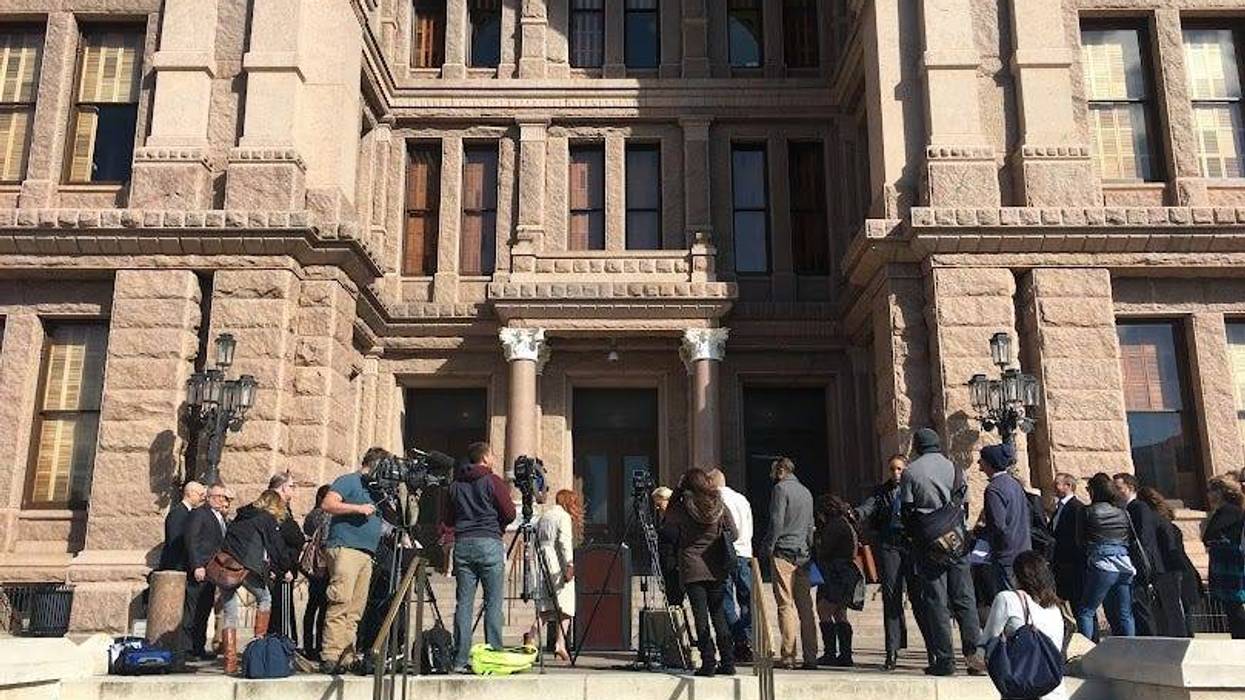

Local and state leaders met Tuesday in Fort Worth for a meeting on their priorities for Congress and state legislature. The North Texas Commission holds the event every two years before the Texas legislative session.
Patrick Brophey, the commission's director of legislative planning and stakeholder relations, said the event gives 105 communities across North Texas a chance to come together to solidify their priorities.
"It requires collaboration and innovative thought from local leaders to be able to communicate with businesses and state legislators to make sure we're getting a plan that isn't just going to benefit one city or detract from another but really lift the region as a whole," he said.
On economic development, Texas Association of Manufacturers President Tony Bennett and Texas Taxpayers and Research Association President Dale Craymer spoke with former Texas House Speaker Dennis Bonnen and current Senator Drew Springer (R-Weatherford).
"Dr. Joe May [former Dallas College chancellor] often said, 'Autonomy is our greatest enemy,'" Brophey said. "That is a lesson we like to preach at the commission. You can see that exemplified in the plan that put DFW Airport into action. Two major cities that certainly had the resources to go it alone decided to combine those efforts. The impact from that is far greater than either one of those airports would have been on their own."
Brophey says conferences like Tuesday's can help cities in North Texas start looking at what may become the next regional project.
"When we look 50 years in the future, when we think, 'What's our next DFW Airport?' For a project of that scale and magnitude, I think we'll take the same approach to it," he said.
On education, panelists included the superintendents of Aledo and Denton ISDs, and Representatives Terry Meza and Glenn Rogers. Eric Reeves, founder of High STEPS, was the moderator. High STEPS is a consultant firm that worked with Dallas ISD to set up its P-TECH and early college pathways.
"I'd love the legislature to really steady the challenges they put in place," Reeves said. "There are challenges through bureaucracy, through differing programs from the Workforce Commission, Higher Education Coordinating Board and [Texas Education Agency] that really stand in the way of progress."
Reeves says districts may benefit from more flexibility in testing. Instead of all students required to take the STAAR test, he says students who begin to show an interest in a trade and students who show interest in college should not be required to take the same classes.
"Differing skills really need different types of assessments. Holding every student to the same assessment doesn't match up with what the economy's doing," he said. "The economy's dynamic. Assessments should be dynamic in such a way that it shows what a student is learning so we're creating a pathway."
Reeves says current testing may not show whether a student is prepared to join the workforce.
"I think what we have is a one-size-fits-all solution at a time when technology is so vibrant, education is so vibrant, the economy is so vibrant, a one size solution really seems like it's short-changing our citizens," he said.
Reeves says districts are starting to adjust, citing schools' early college and P-Tech programs for kids who show an interest in college or a trade. He says districts are also now working more closely with the private sector to help students graduate with a skill they can use to earn a living wage.
"We have great leaders in education," he said. "We need to give them flexibility. We need to give students more opportunities to access their career paths and go into these different arenas."
LISTEN on the Audacy App
Tell your Smart Speaker to "PLAY 1080 KRLD"
Sign Up and Follow NewsRadio 1080 KRLD