


A series of separate technical failures hit major technology systems, air travel and banking across the United States in less than a week, grounding flights, delaying banking transactions and knocking out workplace software for millions of users. Officials say the problems were unrelated technical issues, not a coordinated cyberattack.
The disruptions began Thursday, November 12, when a latent software defect in Microsoft’s networking gateway—introduced in a July update—overwhelmed servers under heavy load and reduced capacity. Outlook, Teams, Copilot and other Microsoft 365 services failed worldwide for roughly 24 hours before full restoration by Saturday morning. Microsoft said the outage was not related to a cyberattack.
On Friday, November 13, the Federal Aviation Administration issued a rare nationwide ground stop at about 3:30 p.m. ET after legacy equipment on its telecommunications network became unstable. A new router installed during a copper-to-fiber upgrade at a remote radio site in El Dorado, Arkansas, flooded the network with roughly 1,000 connection attempts every four to five seconds. A radar site in Amarillo, Texas, showed similar issues. The FAA lifted the ground stop at 8:15 p.m. ET. Approximately 12,462 flights were canceled that day. The agency said there was no indication of a cyberattack or involvement of its new SMART traffic-management tool. All aircraft in the air at the time landed safely.
JPMorganChase has experienced a temporary issue related to a software bug in on-premise hardware systems – there is no evidence this is cyber-related. It is taking longer than usual to service some customers. Where we were party to a transaction involving other banks, those banks may have been impacted, but this is not a systemic issue. Customers still have access to their accounts and funds. We’re working diligently to resolve this by the end of the day today.
— Chase (@Chase) November 16, 2026
On Monday, November 16, JPMorgan Chase reported a software bug in on-premise hardware systems that slowed some transactions. Customers at other banks, including those using Zelle, experienced delays when dealing with Chase. Chase said there was no evidence the issue was cyber-related, customers retained access to their accounts and funds, and the problem was not systemic. The bank worked to resolve it the same day.
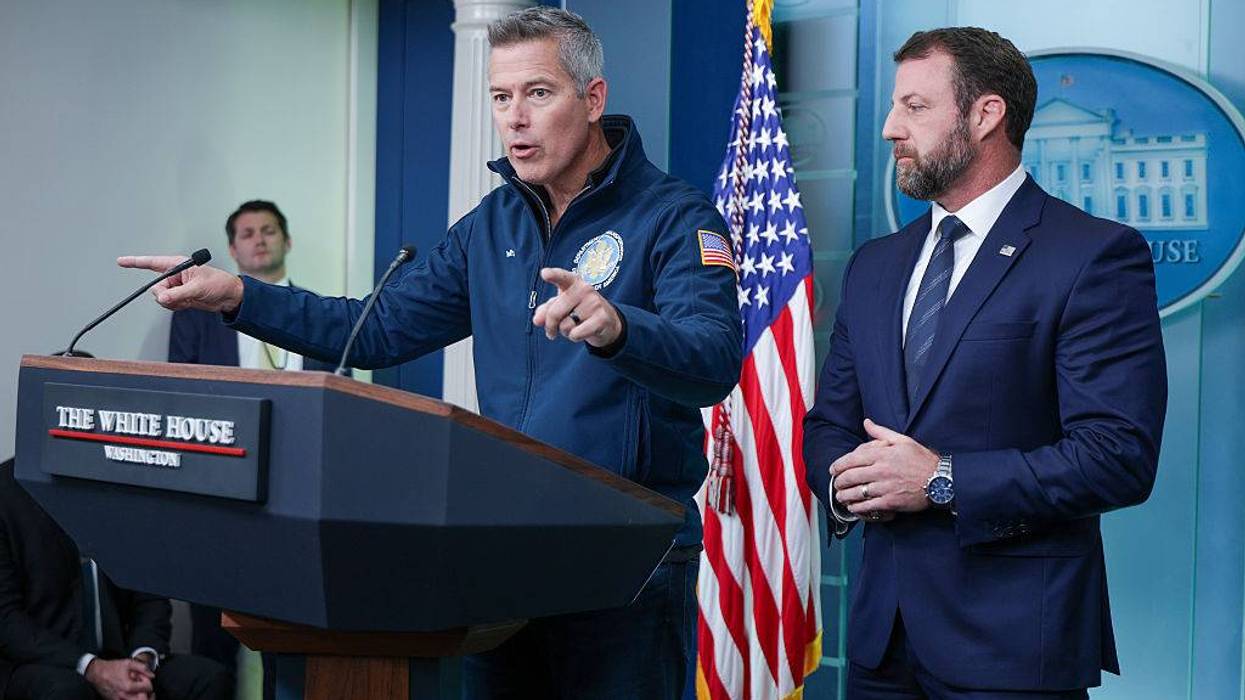
Later that afternoon, United Airlines experienced a widespread system outage that delayed some departing flights for about an hour. The issue affected pilot-facing applications, including the ability to receive final aircraft weights. Flights already in the air and United Express operations were unaffected. United said the problem was resolved and there was no indication it was cybersecurity-related. Transportation Secretary Sean Duffy stated it was not an FAA system issue.
Homeland Security Secretary Markwayne Mullin said investigators found no evidence connecting the incidents or linking them to a cyberattack. He told Fox News he was “98 percent” certain the problems were not malicious and that systems were “individually unrelated.” Mullin also said an unnamed technology expert suggested “super intelligence”—the administration’s term for advanced artificial intelligence—might have contributed by overwhelming older software not designed to handle its speed and self-correcting code. FAA and Department of Transportation officials have said there is zero evidence of AI involvement in the ground stop.
LISTEN on the Audacy App
Tell your Smart Speaker to "PLAY 1080 KRLD"
Sign Up to receive our KRLD Insider Newsletter for more news
Follow us on Facebook | Twitter | Instagram | YouTube