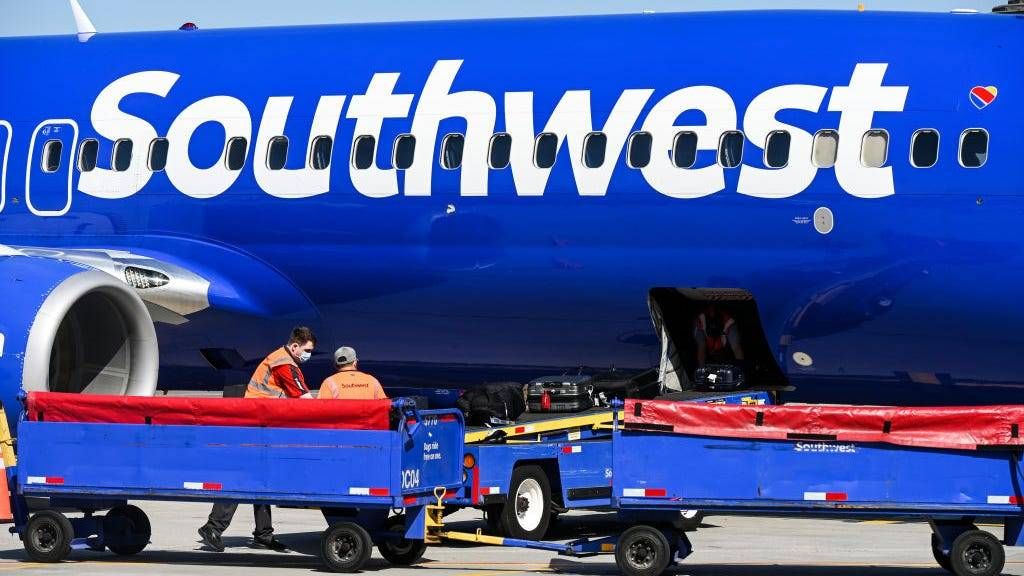



Among the numerous industries currently experiencing shortages is the airline industry. But there isn't a shortage of planes, instead, there's a shortage of pilots to fly them.
With travel returning to somewhat normal almost two years after the COVID-19 pandemic hit the world, airlines say they are struggling to find pilots for their flights.
United Airlines CEO Scott Kirby stressed this on an earnings call in April, saying the shortage is not propaganda but a real issue that isn't going away soon.
"The pilot shortage for the industry is real, and most airlines are simply not going to be able to realize their capacity plans because there simply aren't enough pilots, at least not for the next five-plus years," Kirby said.
As a result, airlines are scrambling to find a solution, and ideas being thrown out include extending the federally-mandated retirement age for pilots, hiring from out of the country, and dropping hiring requirements for pilots.
Sen. Lindsey Graham has been considering proposing legislation to move the retirement age from 65 to 67, giving pilots more time to fly.
Airlines like Delta Air Lines have announced their plan to make getting hired as a pilot a little easier, dropping the required four-year degree for potential hires. Meanwhile, airlines like Frontier and SkyWest have moved to recruit from Australia, NBC News reported.
Nonetheless, there doesn't appear to be a short-term solution, and airlines are struggling, with United having around 150 airplanes grounded with no aviators to fly them, Kirby estimated in April.
Hiring for pilots was stalled when the pandemic began as training and licensing slowed, and early retirement packages were dealt to thousands of pilots in an effort to cut labor costs, NBC News reported.
Kit Darby, a pilot pay consultant, shared with NBC News that the major U.S. airlines are in the midst of trying to hire more than 12,000 pilots in 2022 alone, a single-year record.
But when it comes to how this will happen, Darby says, "there's no quick fix."
One route being taken by the regional carrier Republic Airways, which supplies pilots for American, Delta, and United, is petitioning the U.S. government to allow pilots to fly with half the required 1,500 hours needed through its training program.
However, the reasoning behind the 1,500-hour rule, the 2009 Colgan Air 3407 crash, could be the reason why the petition fails as family members of the victims of the crash are pushing back against it.
No matter how airlines decide to adjust their training and hiring process, Darby shared that the answer isn't going to be simple with such a complex job.
"It's not a car wash," Darby said. "You can't just get someone to come in from the street."