


Los Angeles (AP) — California 's prison system has systematically failed to protect incarcerated women from sexual abuse and harassment by guards, the U.S. Department of Justice said Thursday.
The federal investigation also found that California's corrections department failed to provide victims with a way to report sexual abuse and harassment without retaliation. On top of that, staff who were tasked with investigating the misconduct were often themselves accused of sexual abuse or harassment.
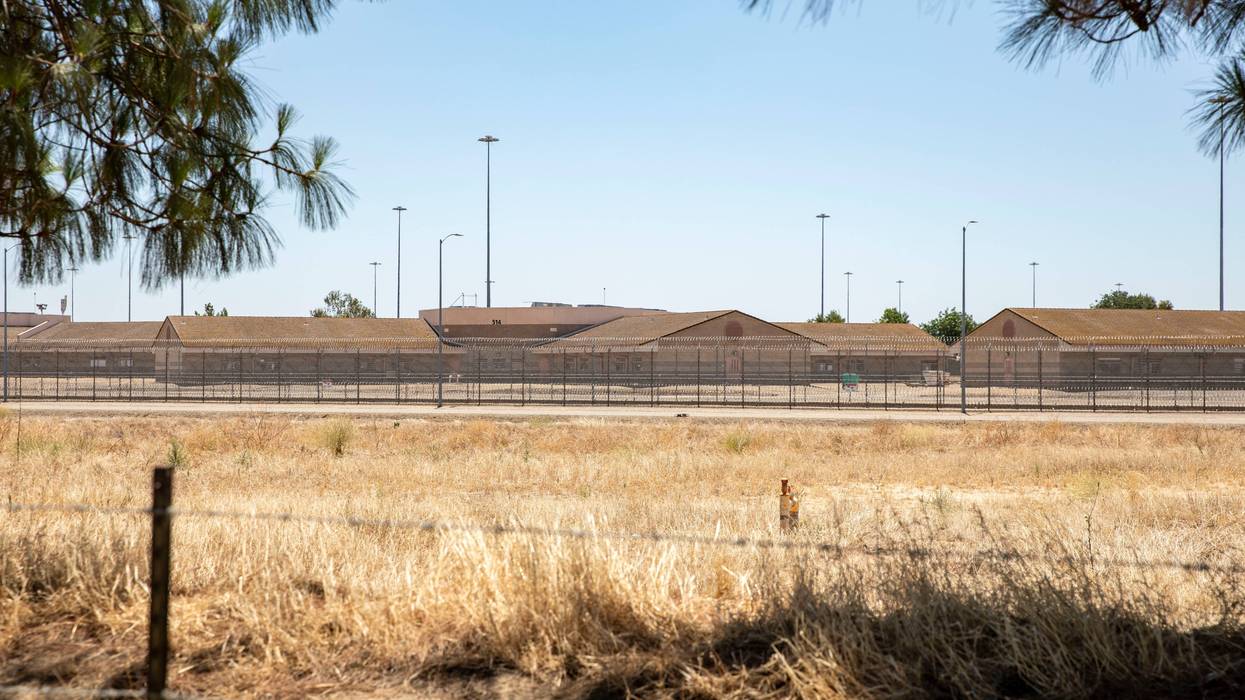
The investigation, which began during the Biden administration, focused on two state prisons: the Central California Women’s Facility in Chowchilla and the California Institution for Women in Chino. It uncovered numerous instances where guards regularly sexually abused incarcerated women. In at least one instance, a guard was convicted of rampant abuse over roughly a decade and sentenced to 224 years in prison.
State says it's making improvements
The California Department of Corrections and Rehabilitation said in a statement that it “enforces a zero-tolerance policy as mandated by the federal Prison Rape Elimination Act,” a federal law passed in 2003 designed to prevent sexual assaults in prisons.
The state agency also said that audits conducted by independent entities trained by the DOJ found the two prisons were in compliance with federal standards as recently as 2024 and 2025.
“CDCR is fully committed to supporting victims of sexual assault and ensuring safe avenues exist for both incarcerated persons and staff to confidentially report misconduct,” spokesperson Will Matthews wrote in an email.
Over the course of the DOJ investigation, the prison agency independently investigated and prosecuted both staff and incarcerated people who violated federal rape prevention laws, he added.
But federal authorities said Thursday that there weren't sufficient mechanisms for victims to come forward.
Women don't have resources to report assaults, Justice Department says
Women were told to report misconduct on an online system that wasn’t confidential and that accused officers had access to, according to Harmeet K. Dhillon, assistant attorney general for the Justice Department's Civil Rights Division.
Dhillon said that women are “fully aware of this gap in confidentiality, and this serves as a deterrent from women reporting this misconduct.” She named at least one sergeant whose job was to investigate misconduct who was himself sentenced to 15 years in prison after pleading guilty to receiving child sexual abuse images at work.
“The upshot of our investigation is that California’s prison system, when it comes to women, has inadequate systems in place to deter, detect, and hold accountable rampant sexual misconduct and assault on female prisoners,” Dhillon said at a news conference in Los Angeles on Thursday.
The Associated Press has previously exposed similar patterns of rampant abuse by federal prison staff against women held in a Dublin, California, facility that at the time was nicknamed the “rape club.” The prison was closed following the AP investigation.
Justice Department sets a deadline to address problems
The federal government on Thursday gave California's prison system 49 days to remediate the conditions that enabled the rampant abuse, warning that a failure to do so could result in civil litigation.
The measures include expanded camera coverage, enhanced confidential reporting channels and strengthened investigative protocols.
The corrections department was implementing many of those changes before the federal investigation, Matthews said.
U.S. Attorney Bill Essayli, appointed by President Donald Trump as the top federal prosecutor in Los Angeles, said California has to take action.
“The State must confront the persistent failure of its own employees to prevent and address sexual abuse at these facilities,” Essayli said in a statement, “and the systemic breakdowns that have permitted these conditions to persist.”