


ISLAMABAD (AP) — President Donald Trump on Sunday said the U.S. Navy would “immediately” begin a blockade of ships entering or leaving the Strait of Hormuz, after U.S.-Iran ceasefire talks in Pakistan ended without an agreement or next diplomatic steps in sight.
In his first public comments after the 21-hour talks, Trump sought to eliminate Iran’s key source of leverage in the war by exerting strategic control over the waterway that was responsible for the shipping of 20% of global oil supplies before fighting began.
A U.S. blockade could further rattle global energy markets. It was not immediately clear how it might be carried out, but Trump told Fox News the goal was to ensure all ships could transit: “It’s going to be all or none, and that’s the way it is.”
Trump said he has “instructed our Navy to seek and interdict every vessel in International Waters that has paid a toll to Iran. No one who pays an illegal toll will have safe passage on the high seas.” Other nations would be involved in the blockade, he said, but did not name them.
Freedom of peaceful navigation is a basic principle of international maritime trade, but Iran has asserted control of the strait.
Iran’s Revolutionary Guard later said the strait remained under Iran’s “full control” and was open for non-military vessels, but military ones would get a “forceful response,” two semi-official Iranian news agencies reported.
During the talks, the U.S. military said two destroyers had transited the strait ahead of mine-clearing work, a first since the war began. Iran denied that.
Trump stressed that Tehran’s nuclear ambitions were at the core of the talks' failure, and the U.S. was ready to “finish up” Iran at the “appropriate moment." In comments to Fox News, he again threatened to strike civilian infrastructure and said he was fine with his widely criticized threat before the ceasefire that a “whole civilization will die tonight.”
No word on what happens after ceasefire expires
The face-to-face talks that ended early Sunday were the highest-level negotiations between the longtime rivals since the 1979 Islamic Revolution. Both delegations later left Islamabad.
Neither indicated what will happen after the ceasefire expires on April 22. Both said their positions were clear and blamed the other.
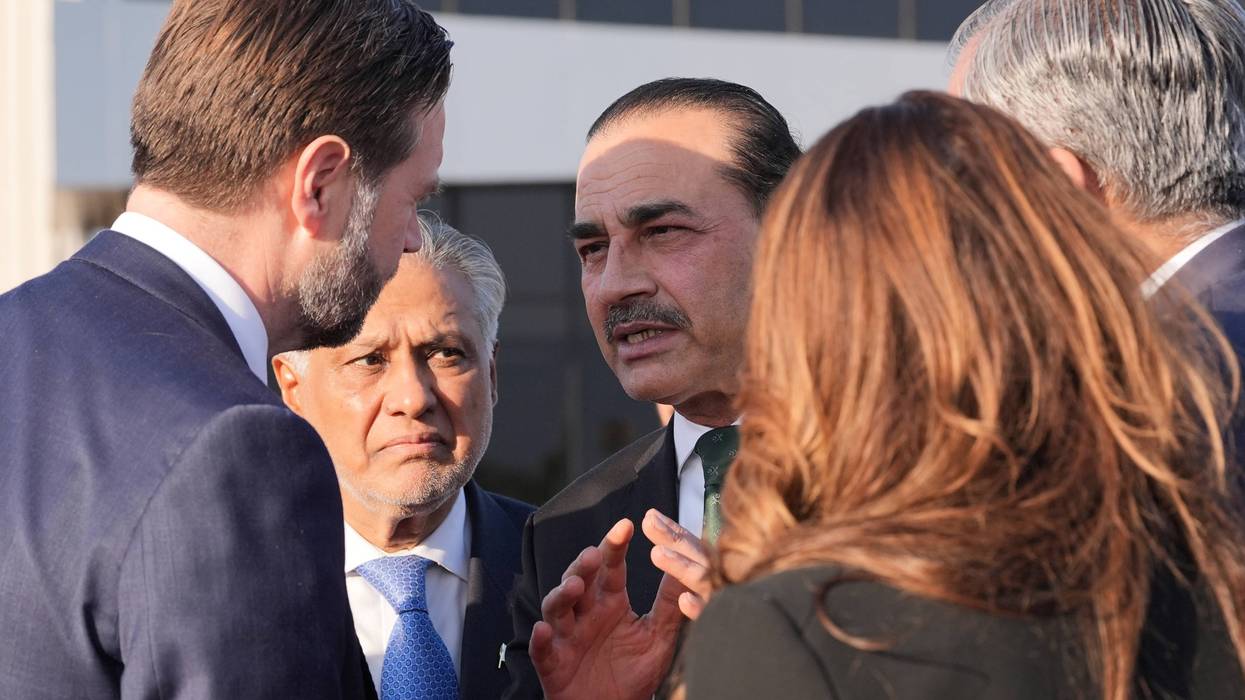
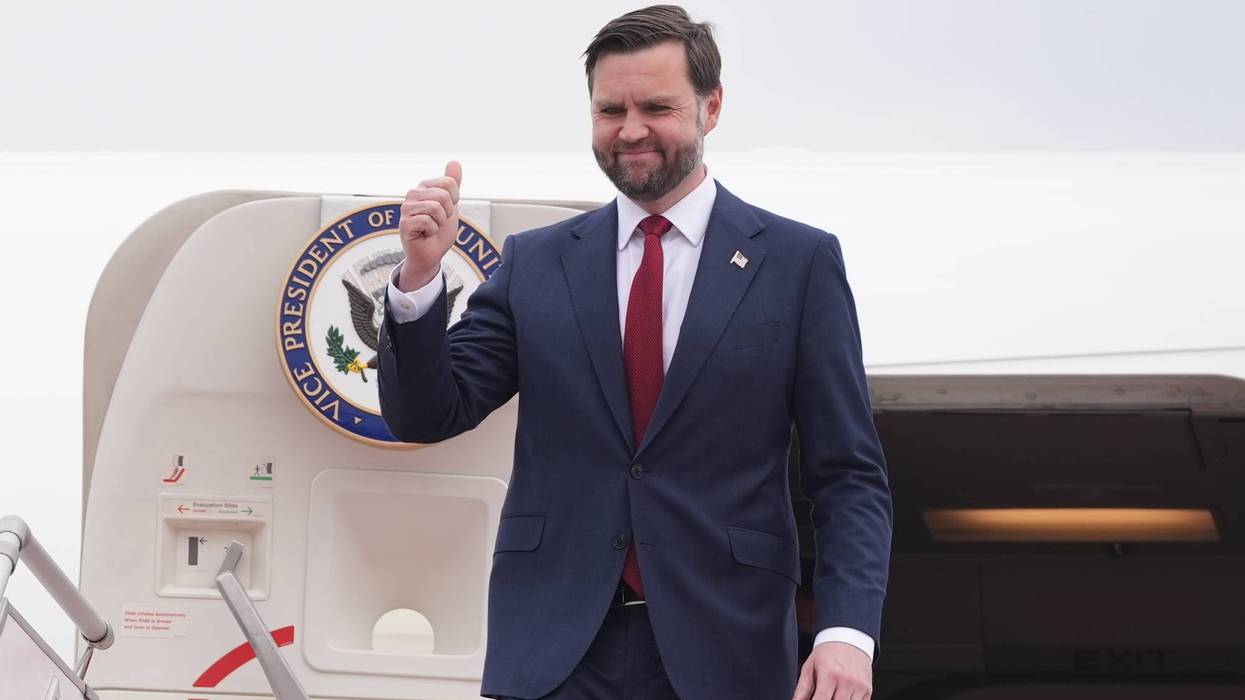
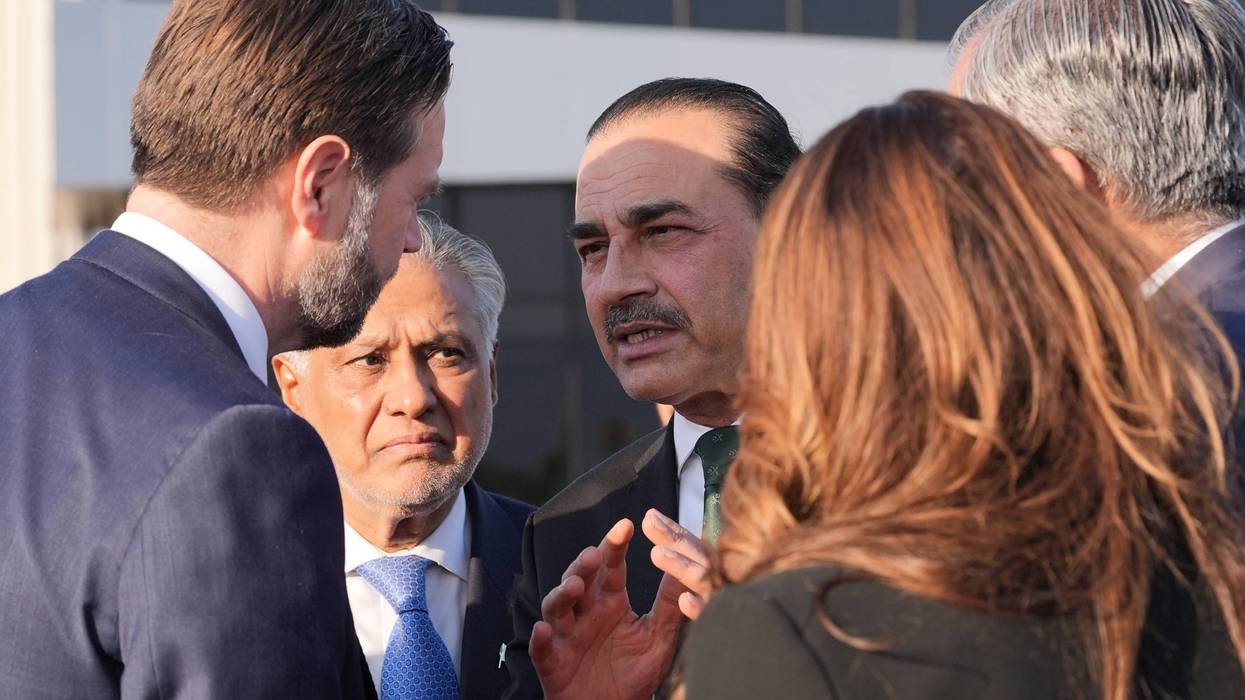
“We need to see an affirmative commitment that they will not seek a nuclear weapon, and they will not seek the tools that would enable them to quickly achieve a nuclear weapon,” Vice President JD Vance, leading the U.S. side, said afterward.
Parliament speaker Mohammad Bagher Qalibaf, who led Iran's side, said it was time for the United States “to decide whether it can gain our trust or not.” Iranian officials earlier said talks fell apart over two or three key issues, blaming what they called U.S. overreach.
Pakistani Foreign Minister Ishaq Dar said his country will try to facilitate a new dialogue in the coming days. Iran said it was open to continuing the dialogue, Iran’s state-run IRNA news agency reported.
The European Union urged further diplomatic efforts. The foreign minister of Oman, located on the Strait of Hormuz's southern coast, called for parties to “make painful concessions." The Kremlin said Russian President Vladimir Putin “emphasized his readiness” to help bring about a diplomatic settlement in a call with Iran's president.
Iran's nuclear program is a key sticking point
Iran’s nuclear program was at the center of tensions long before the U.S. and Israel launched the war on Feb. 28. The fighting has killed at least 3,000 people in Iran, 2,055 in Lebanon, 23 in Israel and more than a dozen in Gulf Arab states, and caused lasting damage to infrastructure in half a dozen countries.
Tehran has long denied seeking nuclear weapons but insisted on its right to a civilian nuclear program. The landmark 2015 nuclear deal, which Trump later pulled the U.S. out of, took well over a year of negotiations. Experts say Iran's stockpile of enriched uranium, though not weapons-grade, is only a short technical step away.
An Iranian diplomatic official, speaking on condition of anonymity because of the sensitivity of closed-door talks, denied that negotiations had failed over Iran's nuclear ambitions. “Iran is not seeking to acquire nuclear weapons, but it has the right to nuclear energy for peaceful purposes,” the official said.
Inside Iran, there was new exhaustion and anger after months of unrest that began with nationwide protests against economic issues and then political ones, which turned into weeks of sheltering from U.S. and Israeli bombardment.
“We have never sought war. But if they try to win what they failed to win on the battlefield through talks, that’s absolutely unacceptable,” Mohammad Bagher Karami said in Tehran.
Elsewhere in the region, reported airstrikes calmed over the past day except in Lebanon.
More questions as Israel presses ahead in Lebanon
Iran’s 10-point proposal for the talks explicitly called for a halt to Israeli strikes on the Iranian-backed Hezbollah in Lebanon. Israel has said the ceasefire did not apply in Lebanon, but Iran and Pakistan said it did.
Israeli Prime Minister Benjamin Netanyahu visited parts of southern Lebanon under Israeli control on Sunday, for the first time since the current round of fighting.
Negotiations between Israel and Lebanon are expected to begin Tuesday in Washington after Israel’s surprise announcement authorizing talks despite their lack of official relations. Israel wants Lebanon’s government to assume responsibility for disarming Hezbollah, but the militant group has survived efforts to curb its strength for decades.
The day the Iran ceasefire deal was announced, Israel pounded Beirut with airstrikes, killing more than 300 people in the deadliest day in Lebanon since the war began, according to the country’s Health Ministry.
Though Israel’s strikes have calmed in Beirut, attacks on southern Lebanon have intensified alongside the ground invasion it renewed after Hezbollah launched rockets toward Israel in the war's opening days.
Lebanon’s state-run National News Agency reported six people were killed Sunday in Maaroub village near the coastal city of Tyre.
___
Metz reported from Ramallah, West Bank, Boak from Miami and Magdy from Cairo. E. Eduardo Castillo in Beijing, Collin Binkley and Ben Finley in Washington, Kareem Chehayeb in Beirut and Ghaya Ben MBarek in Tunis contributed.