


Why did the gator cross the road? To get to the bagel store, according to a recent Facebook post.
“Apparently, word of our fresh bagels has made its way into the swamp!” said Bagel Dock Express of Southport, N.C. It’s a New York-style bagel shop founded in 2021 in coastal North Carolina where bagels are made from scratch daily.
A small alligator was spotted on the shop’s security cameras. Gators might have a fearsome reputation, but this particular alligator appeared to be around the size of a medium-sized dog. It can be seen scuttling around on the floor.
“Our surprise visitor was safely escorted out by local law enforcement. No injuries, no drama… just one VERY unusual customer!” the shop said.
Its bagel adventure made headlines in The Charlotte Observer. According to the outlet, the incident happened around 4:30 p.m. last Thursday, and that store owner Jesse Driscoll called 911 when he spotted the gator.
“The gator was safely captured and relocated,” said the Southport Police Department in a Facebook post.
The Charlotte Observer said the Southport Police Department called in Officer Katie Ward of Animal Protective Services to catch the gator and take it to a wilderness area. It added that nobody got hurt during the confrontation.
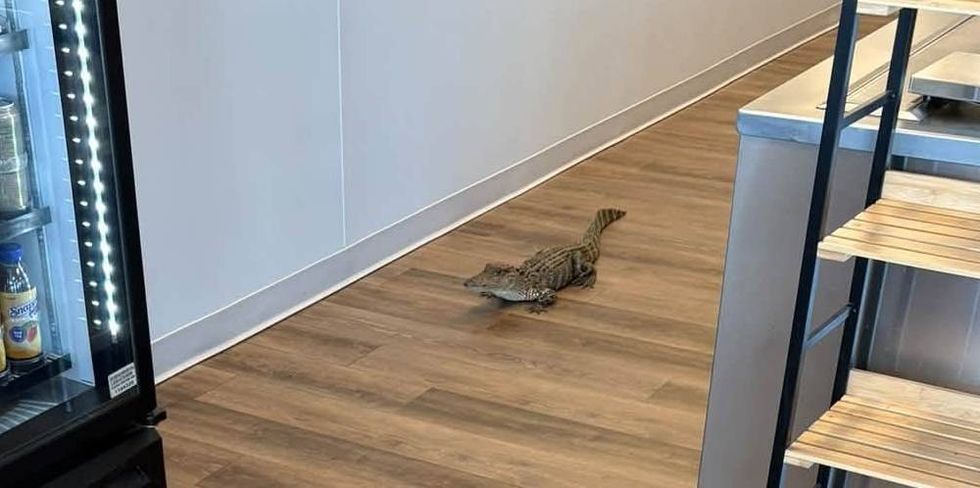 A gator who visited Bagel Dock Express of Southport, N.C. Southport Police Department
North Carolina is the northernmost area where American alligators are naturally found in the U.S. They live in lakes, rivers, creeks and marshes, the North Carolina Wildlife Resources Commission said.
“Due to our colder winters, alligators in NC have much slower growth rates, reproduce less often, and are more vulnerable to local population extinctions than those in more southern states,” the commission explained.