

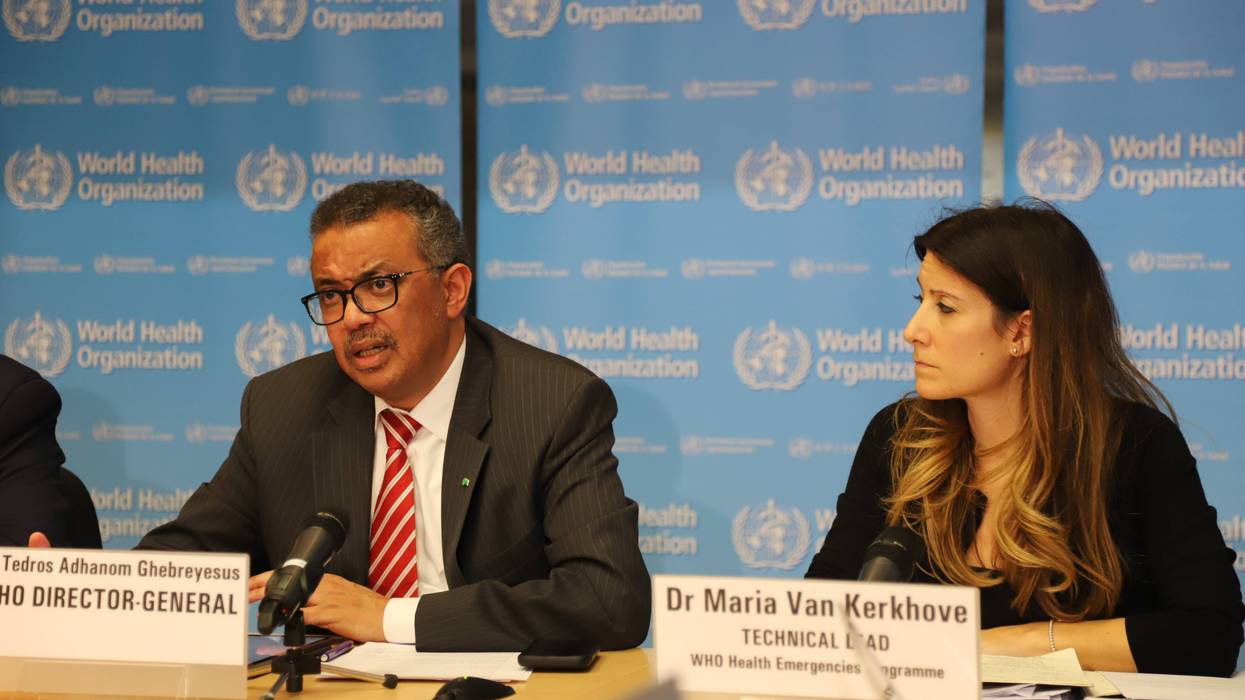

PHILADELPHIA (KYW Newsradio) — The World Health Organization on Wednesday morning called the global coronavirus outbreak a "pandemic" for the first time.
"Pandemic" means simply that the COVID-19 coronavirus is spreading around the world and most people do not have an immunity to it.
KYW Medical Editor Dr. Brian McDonough says this distinction refers to how the coronavirus has mobilized, not how deadly it is or isn't.
"By definition, a pandemic means it's in our community. And we have to be concerned about coronavirus — wash our hands, clean surfaces, do all of those commonsense things," he said. "Understand, most people do exceptionally well. We worry about the elderly and we worry about people who have chronic illness and other issues complicating it."
The WHO does not use the word "pandemic" lightly, said former CDC Director Tom Frieden.
"I think their concern was 'Would it cause uinnecesary excessive concern to call it a pandemic?'" Frieden said.
The WHO had previously been calling the outbreak a "public health emergency of internatiaonal concern."
"Calling something a pandemic doesn't say it's going to be terrible. There have been pandemics that are relatively mild," Frieden said.
He cites the 2009 influenza pandemic. Though many children died, the flu that season killed fewer people than in an average flu season.
"Saying something is a pandemic doesn't mean the sky is falling. It does mean we need to take it very seriously," Frieden said.
He says he doesn't think anyone could have predicted this.
"No one can predict the future with certainty. What we do know is that there is a risk that this could get very bad. Therefore, we need to do everything possible now to reduce that risk," he said. "We'd rather overreact than underreact. The evidence suggests that the sooner we act, the bigger the impact can be on reducing the impact (of the virus) going forward."
There is a lot we still don't know. Does this coronavirus spread from children? Does it spread from people who don't have symptoms? Why is it spreading so much on cruise ships?
Frieden says we don't have answers yet.
"However, we do know that infectious disease threats merge and spread. On average, there is one new microbe discovered each yuear. And 2020 is off to an erly start. From the time we saw the kind of devastating outbreak in Wuhan, China, I think all of us in public health have been very concerned that this could happen in other places, as well."
The number of cases in the United States has topped 1,100 across 38 states and the District of Columbia. About 30 people in the United States have died.
The worldwide number of cases now is nearing 130,000.
___
Map courtesy of NBC Owned Television Stations