

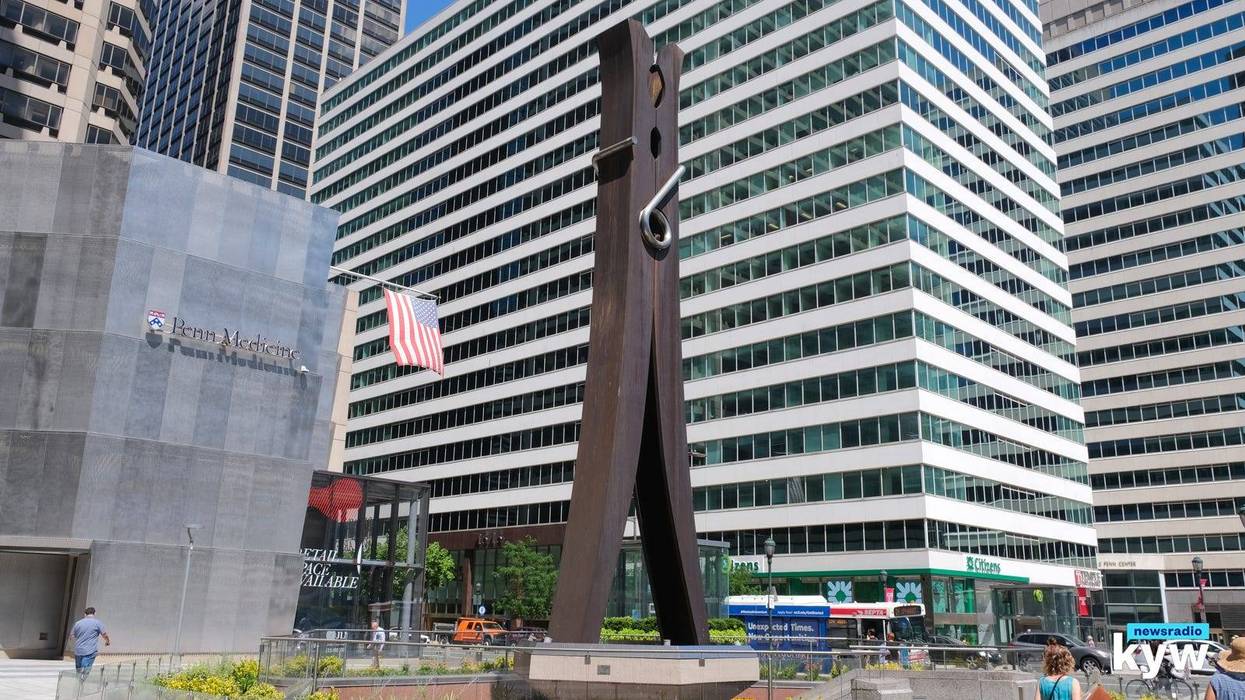

PHILADELPHIA (KYW Newsradio) — Swedish-American sculptor Claes Oldenburg died at the age of 93 this week, leaving a legacy to democracy in Philadelphia that will live on for generations.
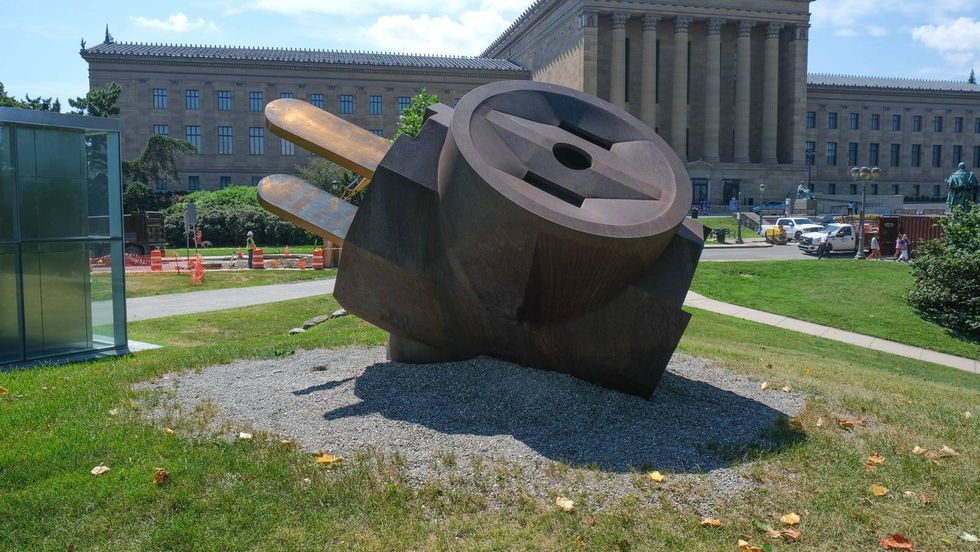
Claes Oldenburg's connection to the city started back in 1970, when he created the sculpture "Giant Three-Way Plug (Cube Tap)." Created from an idea he had been playing with since the '60s, it was installed in the d'Harnoncourt Sculpture Garden behind the Philadelphia Museum of Art in 2010, according to the Association for Public Art.
It continued with the giant "Clothespin" (1976) across 15th Street from City Hall. "Clothespin" is important because it represents the first time Oldenburg was able to realize his vision at the scale he later became known for. By supersizing ordinary household objects, Oldenburg democratized public art and made the everyday monumental.
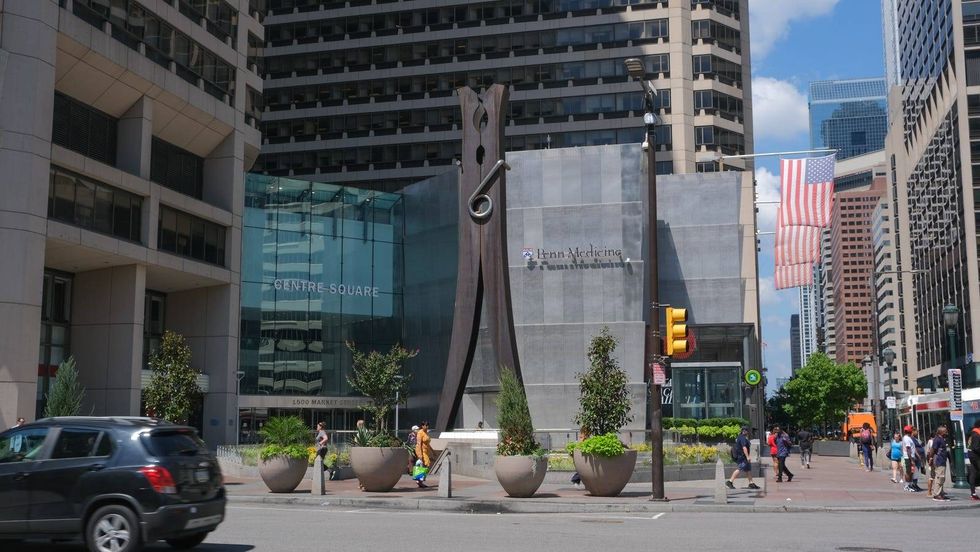 "Clothespin," 1976, Claes Oldenburg.Holli Stephens/KYW Newsradio
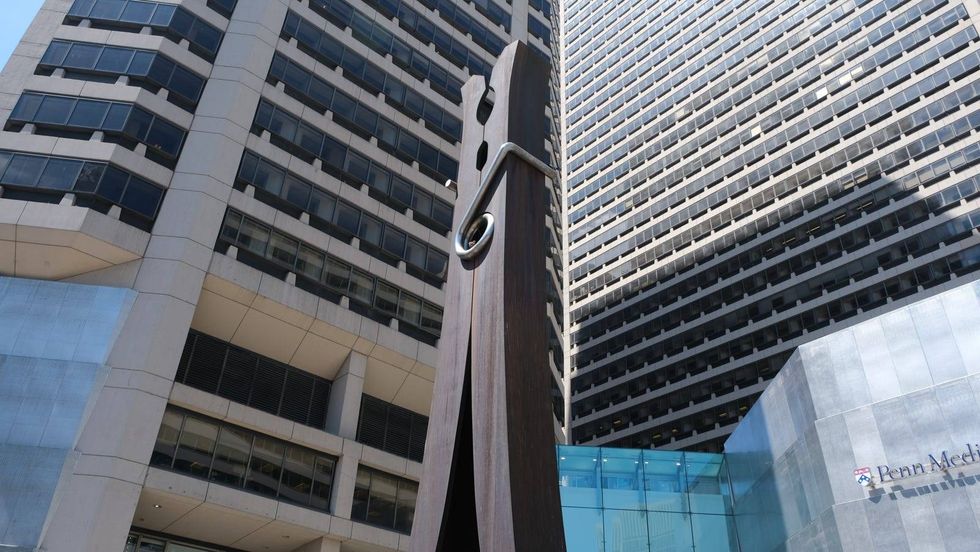 "Clothespin," 1976, Claes Oldenburg.Holli Stephens/KYW Newsradio
His works in the city continued. "Split Button," commissioned in 1979 and installed on the University of Pennsylvania campus in 1981, was a collaboration with his wife, art historian Coosje van Bruggen. According to the Association for Public Art, It was conceived of as a visual joke. Oldenburg had said that a nearby statue of Benjamin Franklin depicted him as missing a button.
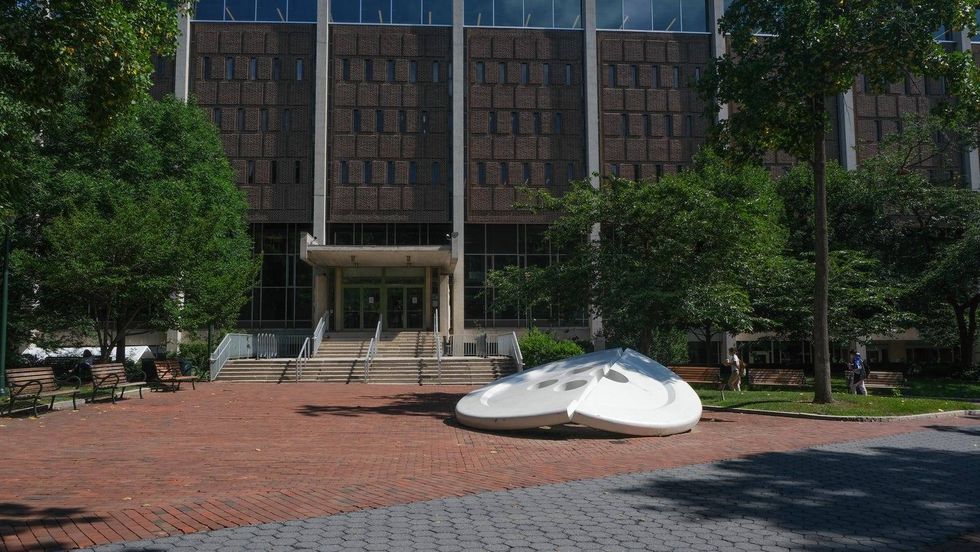 "Split Button," 1981, Claes OldenburgHolli Stephens/KYW Newsradio
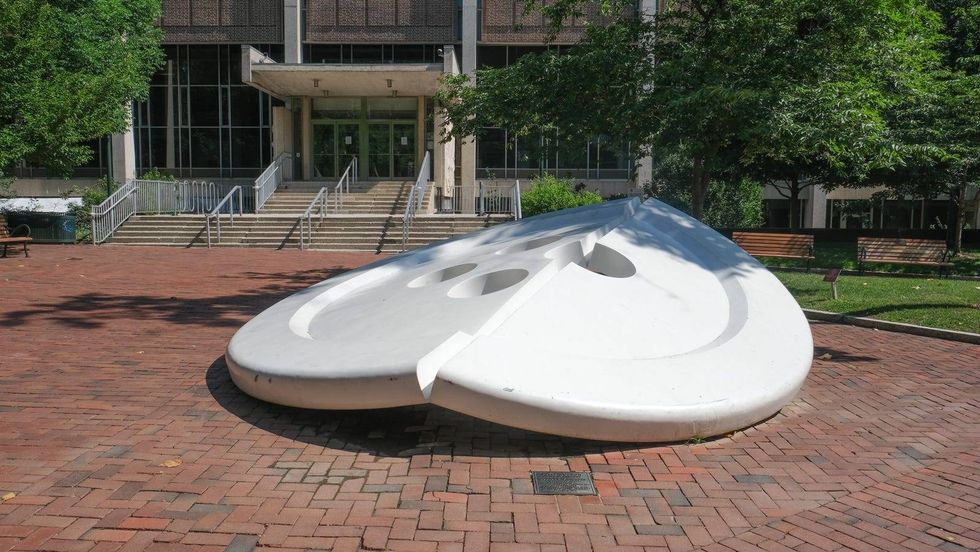 "Split Button," 1981, Claes OldenburgHolli Stephens/KYW Newsradio
His final work in the city was "Paint Torch," which the Pennsylvania Academy of Fine Arts commissioned in 2011. PAFA president and CEO Eric Pryor says the landmark on North Broad Street serves as a compass to their community.
"'Paint Torch' is a 51-foot-high sculpture. It's the centerpiece of our Lenfest Plaza," he said.
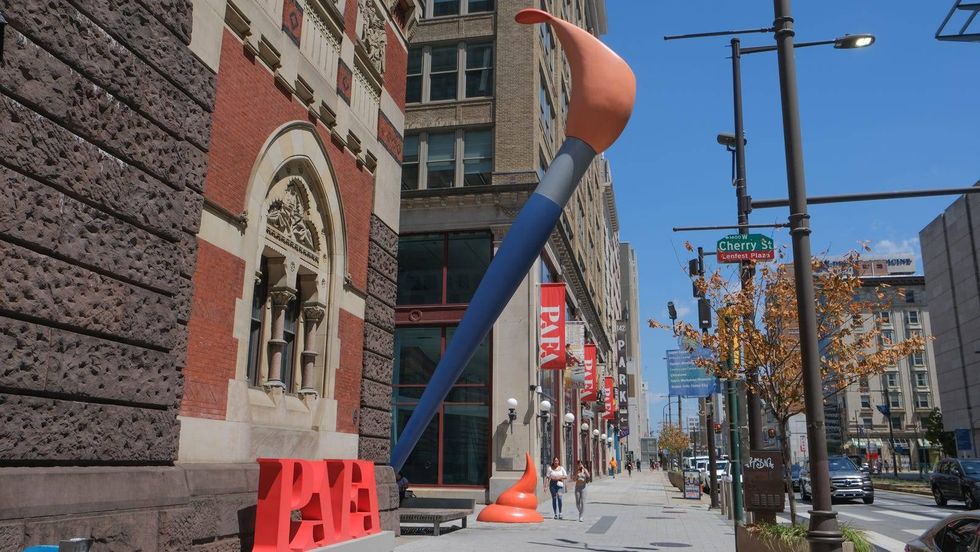 "Paint Torch," 2011, Claes Oldenburg.Holli Stephens/KYW Newsradio
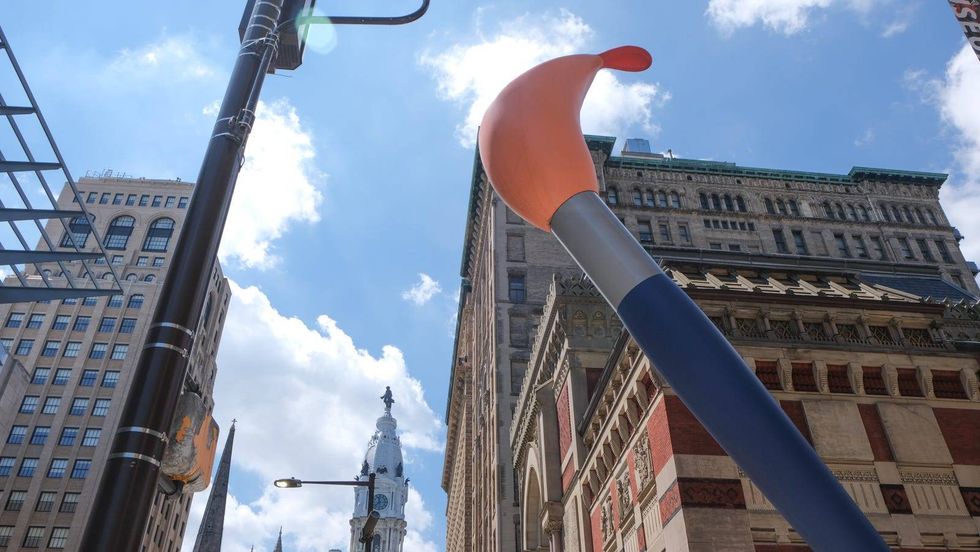 "Paint Torch," 2011, Claes Oldenburg.Holli Stephens/KYW Newsradio
It simultaneously honors painting and sculpture and, illuminated at night, recalls another sculpture dedicated to "liberty," a founding principle of the United States, in the city where it was founded.
Pryor says Oldenburg's work outside of their building has the same lasting impact on the city that he made with the people he met at the academy.
"He was very taken by the museum and thought it was a very unique place," Pryor said. "He was just a down to earth, very approachable human being."