


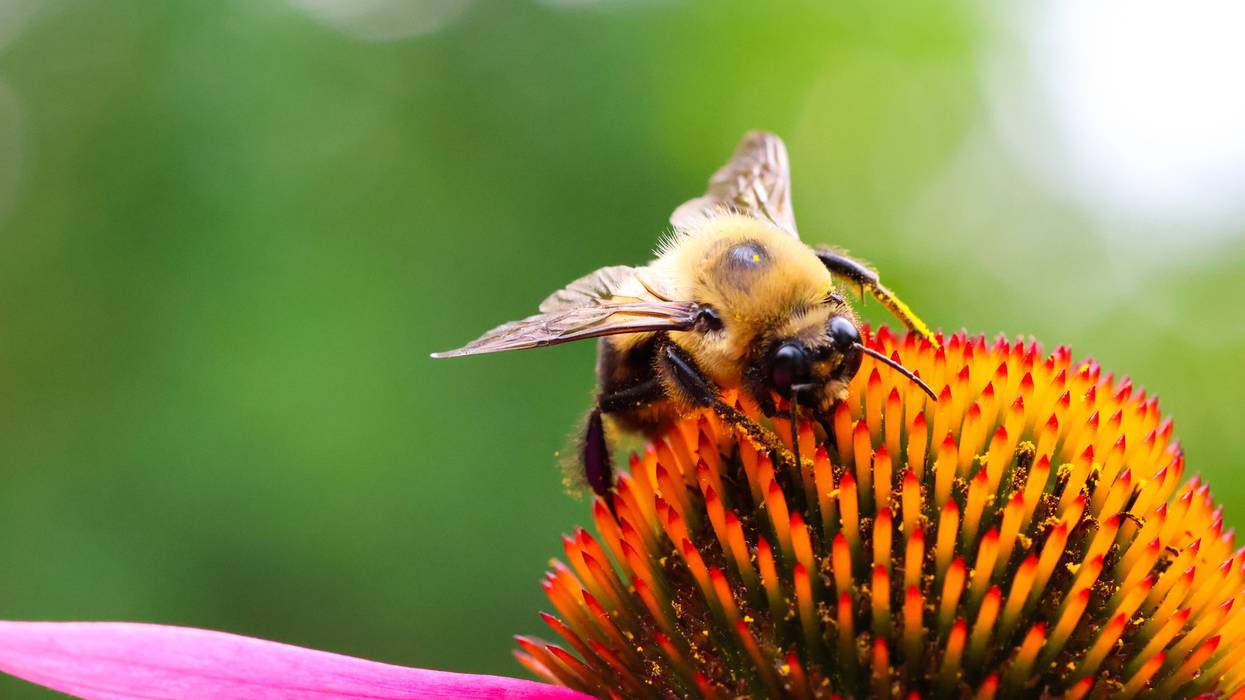

PHILADELPHIA (KYW Newsradio) — We live in a sea of concrete, shopping areas and manicured lawns. None of which support the needs of birds and beneficial insects, which we need for a healthy food web. But we have the power to make things better, even in the city, one container at a time.
By planting native pollinator plants in pots and containers, people have the ability to promote biodiversity and give animal pollinators like birds and bees a helping hand.
“My experience doing container gardening in Philadelphia, whether it’s rooftop pots on people’s stairs, a couple of containers in the back, they will get used,” said Andrea Calabretta, from Mount Airy. “If you have a high enough balcony, a lot of studies and observations have shown pollinators will fly up to 150 feet, 200 feet in the air.”
Calabretta lives in Mount Airy with her family, and sought out Miles Christenson from sustainable landscape design duo Backyard Biome to help her naturalize her small yard and planters. According to Christenson, it’s crucial for biodiversity to choose plants that bloom at different times.
“Let’s say you have room for five plants in one or three containers, you can choose some flock species,” he explained. “They’ll bloom in spring, and then choose some summer-blooming perennials, whether it’s our Asclepias Tuberosa — which is the butterfly milkweed — Echinacea — purple coneflower — Rudbeckia. And then it’s always important to have late-season pollen and nectar sources, so our goldenrods and our asters.”
According to Christenson, blueberry bushes will also do well in large pots, and can support more than 200 species of pollinators.
When it comes to choosing your pots, container gardening experts at the Pennsylvania Horticultural Society advise not going smaller than 12-inch pots, and say larger containers are also best filled with soil, skipping the filler because larger plant roots need the depth. They also recommend making sure containers have holes in the bottom for drainage, and to avoid using pesticides since they can hurt and kill helpful birds and insects.
“If we can start to make changes, whether it’s a part of our yard or just a pot outside, you’ll be contributing to the food web and wildlife,” said Christenson. “And hopefully soon we’ll start to see our populations increase."
Potting native pollinator plants can help wildlife and promote a healthier food web in cities
Potting native pollinator plants can help wildlife and promote a healthier food web in cities


