


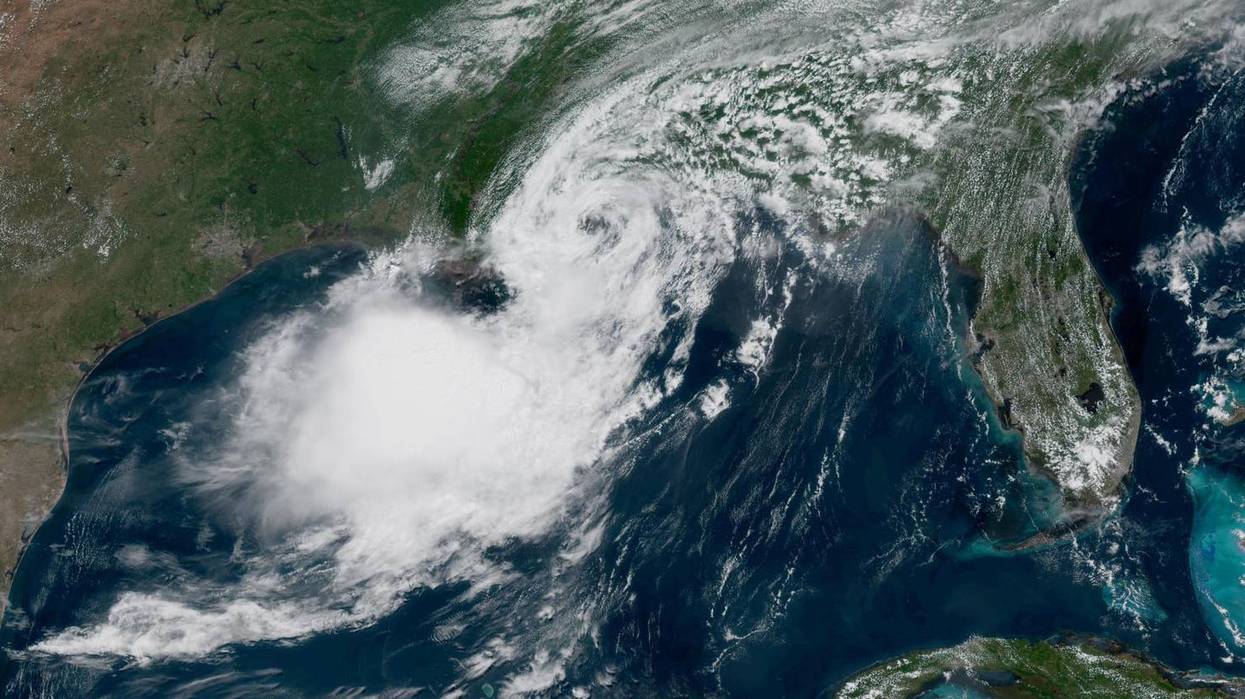

PHILADELPHIA (KYW Newsradio) — We could be in for a quieter Atlantic hurricane season this year, as forecasters say El Niño is ramping up in an unusually strong fashion.
The natural climate pattern causes warm surface water temperatures in the Pacific Ocean, and that spreads east. The National Oceanic and Atmospheric Administration (NOAA) gives El Niño a 90% chance of reaching a status of “very strong” during peak hurricane season this year.
Sarah Johnson, warning coordination meteorologist with the National Weather Service in Mount Holly, said that categorization is rare.
“That is a pretty unusual event,” she said. “Going back as far as we’ve had records for the status of El Niño — which we have reliable records going back to 1950 — we have had six ‘very strong’ El Niño events.”
The change in surface water temperature calms tropical storms before they strengthen. While El Niño tends to suppress storm development in the Atlantic, tropical storms pick up in the Pacific, according to NOAA.
Forecasters predict the number of named storms in the Atlantic to be between seven and 14.
“[The] average number of storms for the Atlantic basin for tropical systems is 14 named storms,” said Johnson. “As of today, we’ve had five named storms. We still have plenty of tropical season left to go, but that is still below normal in terms of the amount of tropical activity.”
The hurricane season is from June 1 through Nov. 30.
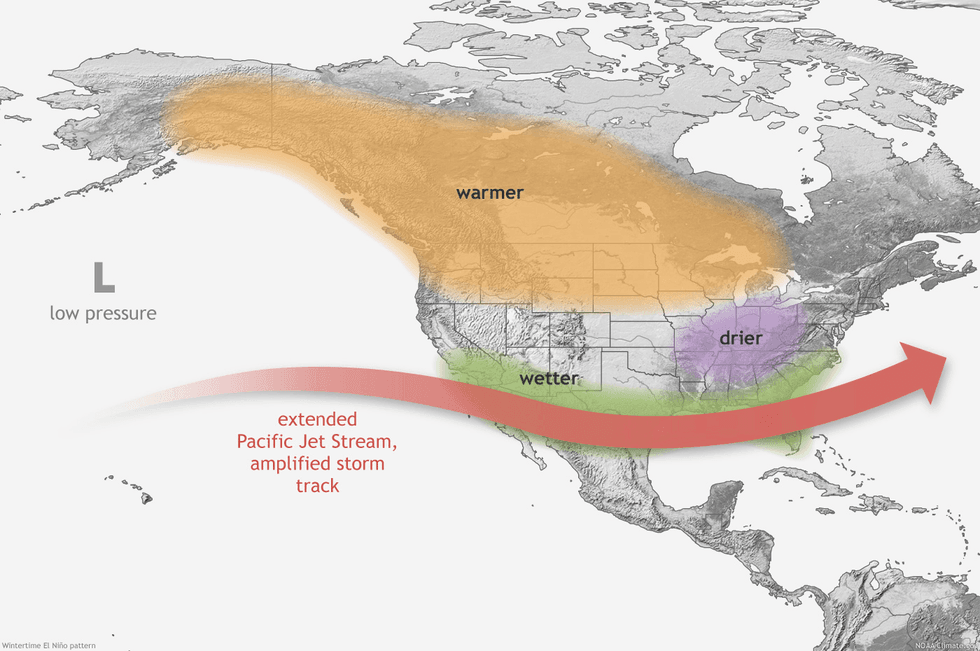 A map showing the effects of El Niño during winter in the Northern Hemisphere. NOAA
In addition, some parts of the United States are expected to see a warmer but messier winter. El Niño also often leads to a warmer-than-usual winter in the northern U.S. — less snow, but more rain and slush.
El Niño’s impact on the greater Philadelphia region, however, depends on other factors, like the North Atlantic Oscillation, in which the atmospheric pressure changes at sea level above the Atlantic Ocean.


