


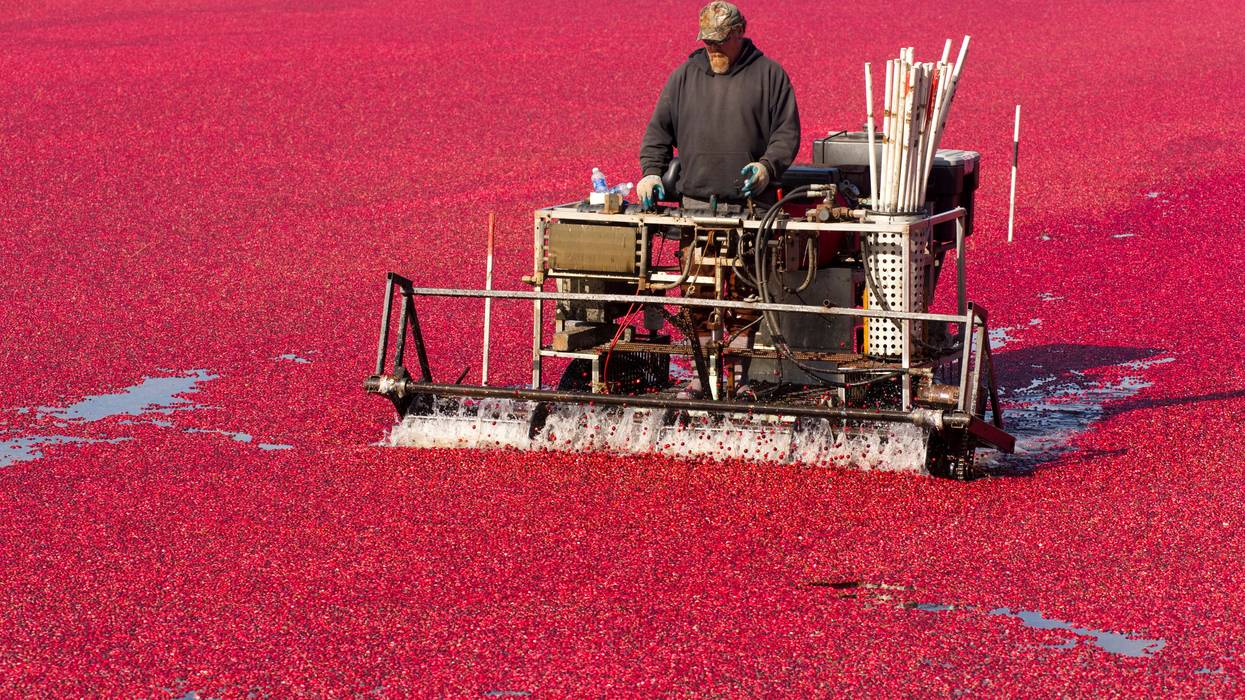

NEW JERSEY (KYW Newsradio) — Whether you like it homemade, canned or not at all, a lot of work goes into making cranberry sauce available for the holidays.
In South Jersey and across the country, cranberry farmers are finding ways to adapt to changing weather patterns brought on by climate change.
Those changes occur gradually, and researchers like the people at Rutgers University’s Philip E. Marucci Center for Blueberry and Cranberry Research and Extension are dedicated to monitoring those changes long-term.
According to the center’s director, Peter Oudemans, increasingly frequent extreme weather events are among the problems farmers are currently facing.
“The drought we had a couple years ago, the hurricanes that we have, the nor’easters that are coming in — we’ve had tornadoes come through cranberries and tear up individual bogs,” Oudemans said.
A changing climate also means that weeds and insects threaten crops more, too.
“You start to see new weed species moving up from the south because the climate allows them to overwinter and survive,” he explained. “And then insects are the same, we are seeing them move up from the south because they can survive in this slightly warmer climate.”
He said growers are turning to new fruit varieties that are more resilient and resistant to new climate threats.
“Now there’s ones in the pipeline for increased sunlight resistance — so, thicker waxes to protect from overheating in the sunlight. Ones that are resistant to fruit rots. Different characteristics like that.
Researchers at Rutgers University are analyzing the long-term effects of climate change on crops
Researchers at Rutgers University are analyzing the long-term effects of climate change on crops