

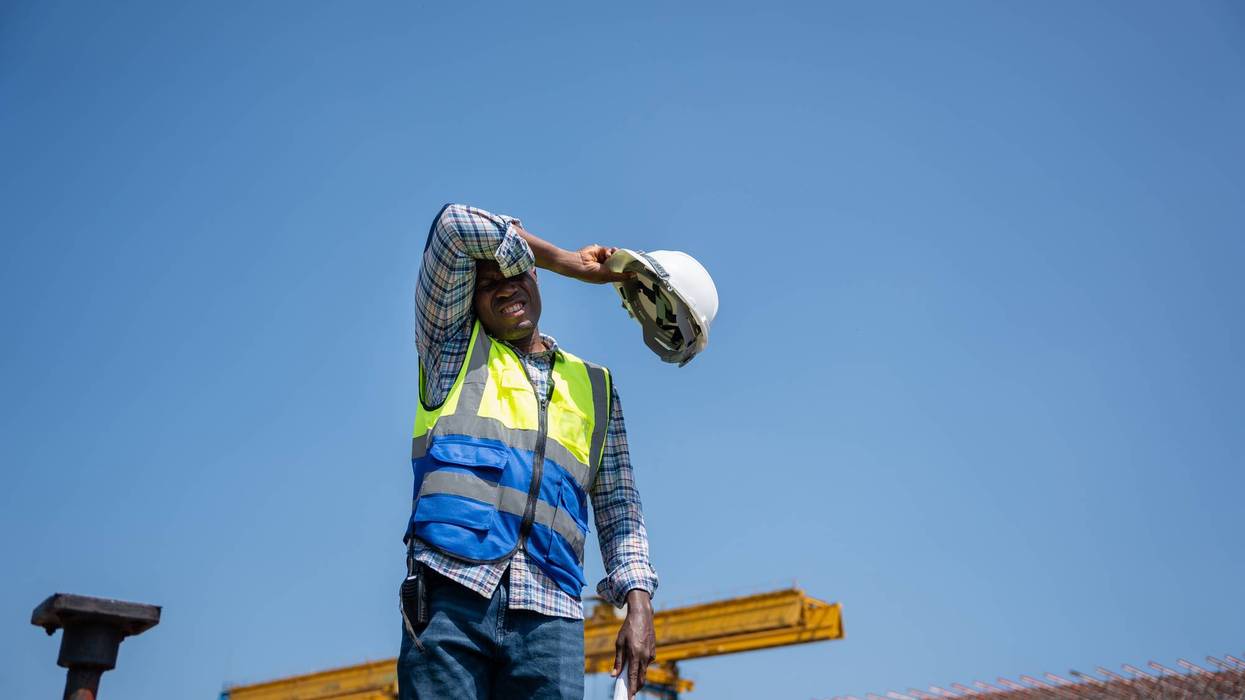

PHILADELPHIA (KYW Newsradio) — With temperatures once again climbing into the 90s this week, there are efforts in Harrisburg to require employers to have plans that protect their workers from extreme heat.
The state House version of the bill is co-prime sponsored by Philadelphia Democrat Elizabeth Fiedler. The legislation would mandate shaded rest areas and water for workers when temperatures hit certain levels. Currently, she said, there are no mandated protections.
“This bill, at its heart, is about saving people’s lives,” she said, “but it’s also important to note that healthy workers are more productive workers, and we know that with climate change, extreme temperatures are only going to get worse.”
“Ironically, in Pennsylvania, we do have two laws on the books that cover extreme heat. Does anybody want to take a guess what they’re for? Dogs and cats,” added co-sponsor Jim Haddock, a northeastern Pennsylvania Democrat.
Delaware County-based Democrat Tim Kearney has a companion bill in the state Senate, saying outdoor workers in agriculture, road work and construction have enough challenges.
“The last thing you should have to worry about is dealing with the symptoms of heat exhaustion or heat stroke, dizziness, fatigue, cramps or nausea,” he said. “We’re talking about simple, simple practical steps — scheduled water or shade breaks, access to ventilation, and allowing new employees time to acclimate to the heat of their jobs.”
The lawmakers noted that protections at the federal level have stalled, forcing states to take action.
The state House Labor and Industry Committee held a hearing on the bill, with employers saying they need clear and concise guidelines to ensure compliance. Questions were also raised over how to make state law work with current federal standards.
A companion bill was proposed in the state Senate
A companion bill was proposed in the state Senate