


PHILADELPHIA (KYW Newsradio) — Leaders of Pennsylvania's state-supported schools warned lawmakers that tuition hikes will be coming if their funding stays flat this year.
The University of Pittsburgh and Temple University are still working on their 2026-2027 budgets. Pitt said with the flat funding proposed by Gov. Josh Shapiro, there will be a tuition increase, but it's unclear how much.
Temple expects a 3.5% to 4% increase. Penn State has already approved a 2% tuition hike for in-state students and 4% for out-of-state students.
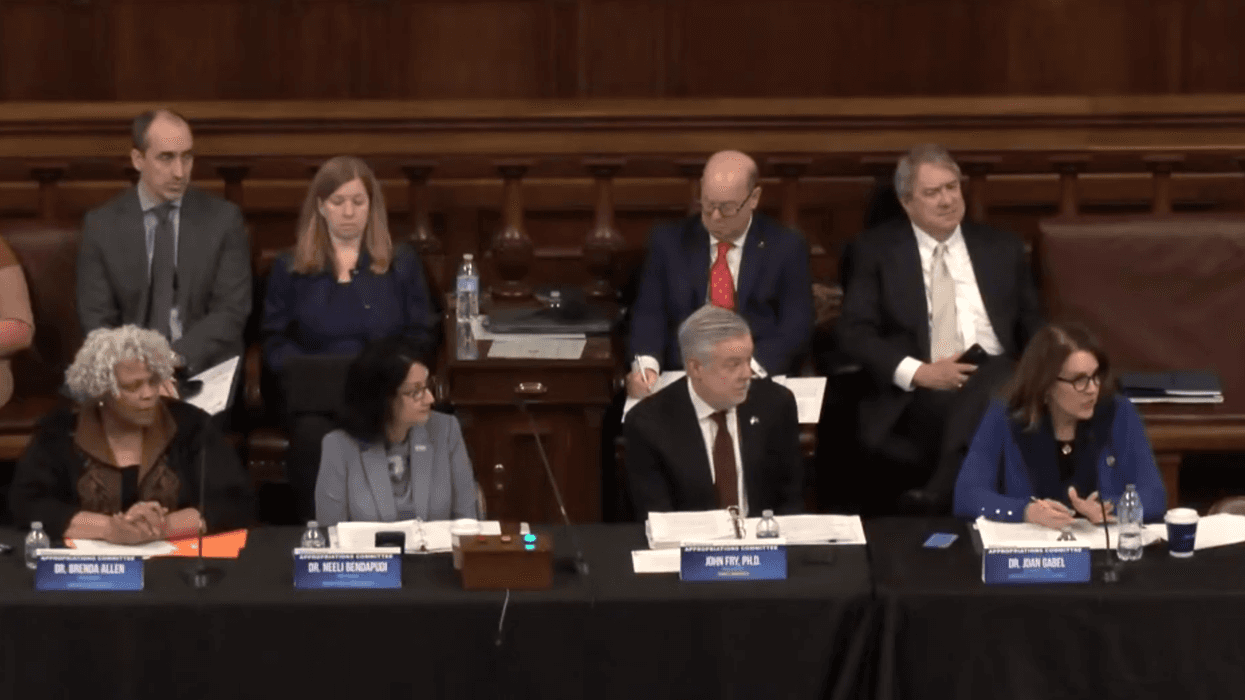
During a state House budget hearing in Harrisburg on Wednesday, college leaders also addressed artificial intelligence with lawmakers, overall agreeing that the potential benefits outweigh the negatives.
Lincoln University President Brenda Allen said the focus of AI has gone from concerns that it was being used to cheat to embracing it as a way to enhance learning.
"We thought the internet was going to take away every job that the library ever had. And in fact, the invention of AI actually puts pressure on universities to figure out what the next skill up will need to be," she said.
Lincoln even partnered with IBM for basic AI certification for freshmen.
Penn State President Neeli Bendapudi said every student in every major, from engineering to philosophy, knows how to use AI in their field.
"AI will not replace humans, but humans who understand AI will replace humans that don't," he said.
Bendapudi said potentially world-changing technology has historically sparked fears; he pointed to Plato, who said writing would be a detriment to society.
Lawmakers also asked university presidents about the daunting changes to the economics of collegiate sports. Temple University President John Fry said NIL — or "name, image and likeness," which allows college athletes to get paid — paired with the transfer portals, is pricing some universities out of Division I sports.
"It's very confusing, it's changing, it's unbelievably expensive, and for Temple University, it's not affordable," said Fry.
Pitt Chancellor Joan Gabel called the rapid changes "dizzying." While academics come first, college sports are the "front porch," she said, often a first point of contact that enhances the student experience and increases alumni engagement.
"We're working really hard to figure out how to get this into a condition where it is manageable for all of us and also still competitive and excellent," she noted.
Pitt and Penn State said no state money goes toward funding athletics.