

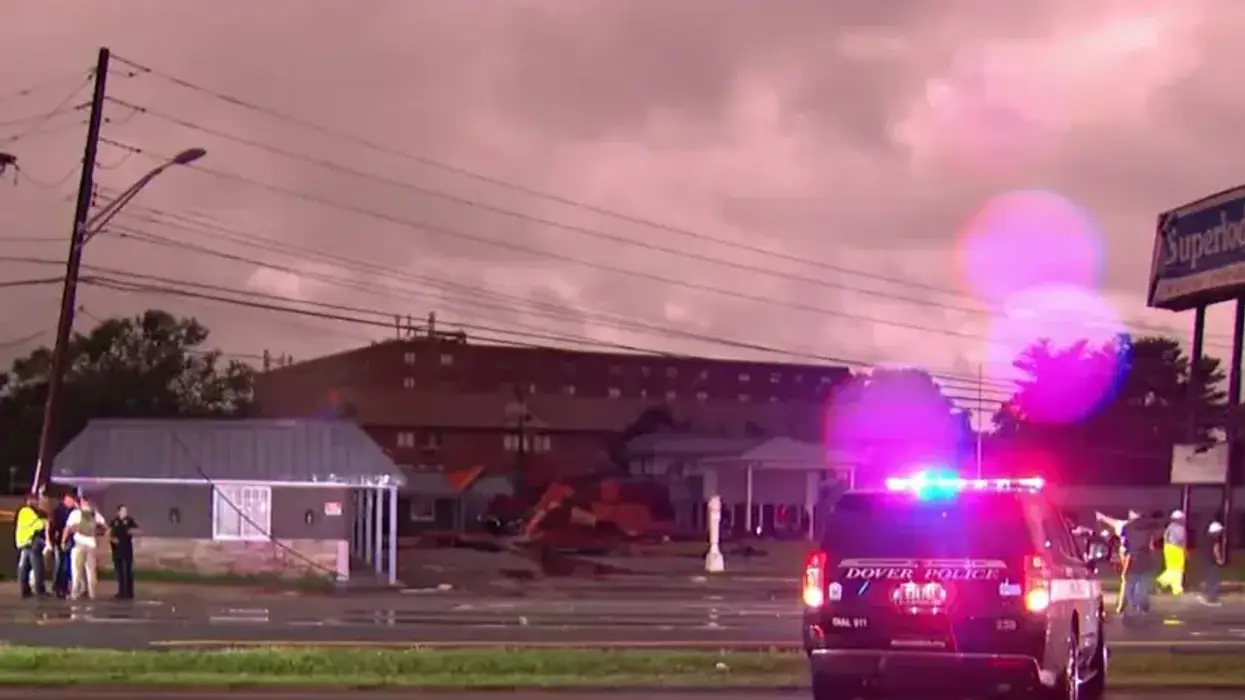

PHILADELPHIA (KYW Newsradio) — If you’ve noticed a lot more tornado warnings this summer than usual, you wouldn’t be wrong.
The National Weather Service has confirmed more than a dozen tornadoes so far this year in the greater Philadelphia region — above average, but not unheard of. Yet, that’s more tornadoes than in 2024 and 2025 combined.
This summer has also been rife with severe weather across the board, with more than 150 flash flood warnings.
“It’s been an active year for sure, and it’s not just tornado warnings. We’ve already passed the office record for the number of flash flood warnings issued,” said National Weather Service meteorologist Eric Hoeflich.
He said some years are simply worse for tornadoes than others, but it doesn’t mean it’s a “new normal.”
“Some years we have active years, like 2018 to 2020 was a very busy stretch,” he said. “And then we have some quieter years, like 2024 and 2025.”
This year has been exceptional. One reason we may be seeing more tornado warnings: better detection.
“We have pretty good radar coverage across our area. If you have better tools at hand, you can potentially discover more and see rotation in the atmosphere better,” said Hoeflich.
Between 2000 and 2018, the National Weather Service said there were never more than six confirmed tornadoes in the region in a given year. Since 2019, yearly confirmations have regularly reached the teens, and even surpassed 20.
Hoeflich noted it may not be that there are more tornadoes; it may just be that many of them were not detected in the past. He said another factor is better on-the-ground confirmation, including more structures that can be hit.
“We’ve gotten significantly better over the past 15 to 20 years at detecting [tornadoes] via radar,” he explained. “We have more people in our area than we did 20 years ago, so more spotters. There’s more development, so there’s more things for a tornado to potentially hit. The main thing, though, is radar has improved.”
The severe weather season typically runs through mid-October.
National Weather Service meteorologist credits better radar detection
National Weather Service meteorologist credits better radar detection


