

Before the season, if you told Brad Stevens the Celtics would win 56 games, finish as the No. 2 seed in the East, see development across the roster, and get Jayson Tatum back for 22 games, he would’ve been more than satisfied with the outcome.
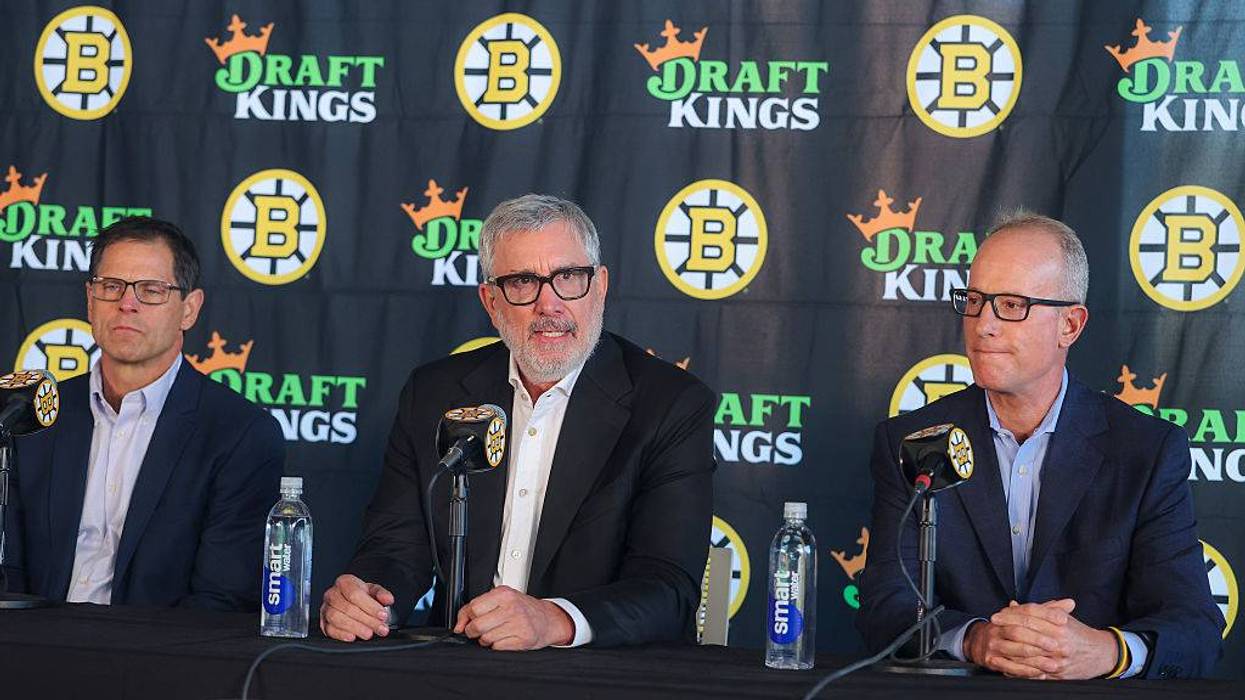
But after blowing a 3-1 series lead and becoming just the 15th team in league history to do so – and the first in franchise history – that regular-season success ultimately wasn’t enough. It was a reality Stevens addressed for more than 30 minutes with reporters at the Auerbach Center practice facility on Wednesday.
“The reality is that we came up short. And so now the job is to do an honest assessment,” Stevens said. “I’ve got a little sign above my desk that says: ‘What do you want? ‘What’s true? And how do you get there?” And there’s no question what we want. There’s no question when you look at what’s true, that, though we did a lot of good things, we lost in the first round, and we were also 3-11 against the top three seeds in the West and the other top two in the East. And so we’ve got to get better. And that’s been the communication in here, just talking to the team.”
Here are six takeaways from Stevens’ end-of-season press conference following Boston’s first first-round exit since 2021, and just its second in the last 10 years.
Jaylen Brown has not expressed any frustration to the front office
NBA Hall of Famer Tracy McGrady, a close mentor of Jaylen Brown, raised eyebrows this week after saying on his podcast that Brown has grown frustrated with the Celtics organization.
“His frustration lies deeply in the organization that we don’t have the details to,” McGrady said. “There’s just been a lot of stuff that I’ve been hearing, just going on with the Boston organization with JB.”
McGrady’s comments came in the wake of Brown’s controversial Twitch stream on Sunday night, during which he referred to this as the “favorite year” of his basketball career despite not reaching the second round for the first time in his career.
Stevens said those reported frustrations have not been communicated to him by the team’s longest-tenured player.
“I talked to Jaylen Monday a little bit after — real quickly, and it was nothing but positive,” Stevens said. “He has not expressed those frustrations to me. We’ve been here 10 years together. Obviously, I love JB, and everybody around here loves JB, and just like any of our other guys, as we get to the end of the season, I’ll be here, and my door is always open, and if anybody ever wants to come in and talk about it — and talk about their team, their place, whatever the case may be, I’m all ears. And that would be 1-16, not just Jaylen, not just Jayson, not just the guys that have been here. I think it’s really important to be available. So I certainly am, and none of that has been expressed to me.”
Brown later addressed the situation on his Twitch stream, offering clarity of his own.
“I hate that our president of basketball operations even had to respond to this,” he said. “Me and Brad have a great relationship. I love Boston. If it was up to me, I could play in Boston for the next 10 years.”
More clarity on why Jayson Tatum missed Game 7
Jayson Tatum’s return from a ruptured Achilles tendon in just 298 days was nothing short of remarkable.
Across 22 games (regular season and playoffs), he averaged 22.2 points, 10.2 rebounds, 5.7 assists, and 1.2 steals, recording 15 double-doubles. It marked the first time in his career he averaged a double-double over a stretch of games, albeit in a smaller sample size. He also finished among the league’s top 10 in total rebounds since returning.
Tatum appeared in 22 of Boston’s final 26 games before ultimately missing Game 7. So what led to the absence, which the team described as “left leg stiffness”?
“You probably could see it at the end of Game 6. We thought that it would dissipate and be okay the next day. He didn’t do very much on Friday, just rested, and then came in on Saturday morning and tried to do a workout. I watched it, and [he] clearly didn’t feel right,” Stevens said. “I think it’s not like a long, long-term concern, but it certainly didn’t look right when he was working out, and didn’t feel right. So, it made sense to be smart about that. The obvious answer is, anytime you’re coming back from an injury like he was coming from, there’s a tendency to overcompensate, and there’s probably a little bit of that there.”
Tatum averaged 32.6 minutes per game in his 22 appearances. He reached the 35-minute mark by his ninth game back and played 39-plus minutes in five of his final eight outings, a deliberate ramp-up from the medical staff that Stevens acknowledged could have contributed to the stiffness.
“We did try to ramp him up for more playoff load and playoff minutes towards the end of the regular season, including a couple of the games there late where we kept him in, even though the games weren’t necessarily close, just to get his minutes up,” Stevens said. “That’s a part of this kind of load management era that we have a lot of discussions about, because I think Phil Coles and his group do a great job. And a big part of that is they say you have to be ready to play those kind of meaningful minutes in those kind of meaningful moments. Do we think that that had an impact on his knee stiffness and the injury in Game 6? Hard to tell, but you can’t cross it off. So we have to look at that. I know that they will, but I feel really comfortable that they worked their butts off to try to get everybody on the court, and they did an amazing job with JT, and he did an amazing job all year, and to be able to play a lot if needed.”
Not as simple as just missing shots?
After each of the Celtics’ four losses this postseason, Joe Mazzulla repeatedly maintained that he liked the looks they were generating.
Brad Stevens didn’t fully share that view. In his opening statement, he pointed to Boston’s struggles in creating quality opportunities against a Philadelphia team that was middle of the pack defensively during the regular season.
“I thought we really struggled to generate good looks against Philly. I thought they deserved to win,” he said. “I thought on the other end, they made it really hard on us, and really kind of felt in control in a lot of ways, especially as Embiid got his legs under him. I thought that probably one of the defining things that they did to us in games five through seven was they cleaned up the glass, which had been a real boost for us. Our first-shot offense wasn’t very good the whole series, but we really got a lot of good looks on second chances and off the glass, and I thought they did a really good job. So I think overall, obviously, we had chances to win, and I’m sure there’ll be specific questions about that, but I thought overall, Philly deserved to win, and played a great series and made it hard on us.”
According to NBA tracking data, which should be taken with a grain of salt, the Celtics shot 36.9% on “wide-open” three-point attempts (defender six or more feet away) and 27.9% on “open” looks (defender within four to six feet) during the first round.
Too reliant on the three-pointer?
The Celtics averaged 46.1 three-point attempts per game, nearly seven more than any other team in the first round. They shot 33.7% on those attempts, good for ninth among playoff teams and below the league average of 36.0%. In their four losses, that number dropped to 49-for-179 (27.4%).
“The biggest thing is: can we generate looks at the rim? Yeah, everybody wants to do that, and every one of us would prefer a dunk over that, over a three. Every single one of us. Those are hard to get, and we struggle to generate them, and so, yeah, we certainly shot some bad ones. I’m not telling you we didn’t. There’s no question about that,” Stevens said. “But I also thought we shot some really hard shots at the rim, really hard shots in the midrange too, and I don’t necessarily fault anyone for that, other than credit to Philly’s defense, and we’ve got to do a good job as we build out the roster to have more options.
In the first round, Boston finished with the third-fewest free throw attempts per game (20.0) and the second-fewest points in the paint (37.1). Only 47.5% of their shot attempts were twos (the lowest mark of any first-round team), and just 42.4% of their total points came from inside the arc, also the fewest among first-round teams.
Stevens was direct about the need to put more pressure on the rim moving forward.
“I look at more of each shot individually, and my general feeling watching us play, in really each of the last two playoffs, in the second-round against New York, even against Orlando in the first round, was, we had a hard time generating really good looks on that first shot,” Stevens said. “We’ve got to figure out a way to do better in that. And I think that that’s again, one of the things that we’ve got to figure out is how to have more of an impact at the rim. And I think we do need to add to our team to do that.”
Joe Mazzulla still has room for improvement
The regular season was a resounding success for Joe Mazzulla. He maximized the roster and saw nearly every player take clear steps forward under his guidance and that of the coaching staff. His work will almost certainly be recognized with Coach of the Year honors, which would make him the first Celtics coach to win the award since Bill Fitch in 1980.
Still, there is room for growth after Boston was eliminated in the playoffs as the higher seed for the third time in four years.
“I think our coaching staff, like all of us, can continue to improve and get better. That said, I think they’re very good. And we need to continue to provide them the resources to grow, and to get better, and to continue to be the best that we can be,” Stevens said. “There was a lot of growth this year, and I thought that there [were] a lot of things that we can build off of, even though that ending was disappointing.”
Maybe the roster isn’t too far off?
In games where both Jayson Tatum and Jaylen Brown were available from start to finish, the Celtics went 14-4 this season. That level of success when fully healthy wasn’t lost on Stevens.
“I don’t take for granted how good we’ve been when we’ve been full,” Stevens said. “When we’ve been full and all on the court and playing together, we’ve been a good basketball team. Those are hard to get, and so we just have to be better around the margins.”
Boston could open real flexibility in the summer of 2027 if it can navigate one more season under the luxury tax, effectively resetting the repeater penalties — similar to the path the team took when it added Kristaps Porzingis and Jrue Holiday in 2023. The question becomes whether they can balance the urgency to improve now with the long-term benefits of potentially ducking the tax again.
“We will – like we normally do – take a little bit of time before we all meet and sit down and get together and determine the best course of action for building the best team that we can that’s also sustainable over a long period,” Stevens said. “Our margin for error needs to get bigger. And at the same time, I don’t think we’re like way far away. But we’ve lived it here. Again, this is where the honest assessment part has got to come in, right? We’ve been to six Eastern Conference Finals, a couple of finals in the last few years. We’ve won one, and when you get beat in the first round, you’re not there. So we need to be.”