


As he sat at his locker prior to Friday night's game in Boston, Miami Heat Guard Dru Smith knew what was coming.
"You guys got some Achilles questions?" he said as a swarm of reporters approached him.
Smith was among seven NBA players who suffered Achilles injuries last season. The list also included Pacers forwards James Wiseman and Isaiah Jackson, New Orleans guard Dejounte Murray, as well as Damian Lillard, Tyrese Haliburton, and, of course, Jayson Tatum.
Smith was the third to go down. And as the injuries kept coming, he couldn't help but relive the early days of his own recovery.
"Honestly, it just got harder and harder to watch more and more guys go down," he said. "Just thinking back to those first couple of months, at that point, I was a few months in, so I was walking and that kind of stuff. But it just kind of took me right back to that moment of, you know, where it's kind of all taken away, and you're just trying to figure out what's next. It's definitely tough. It's just a tough rehab, so I just felt for everybody that was about to have to go through it."
Smith, 27, suffered the injury on December 23, 2024, just 14 games into his return from a torn ACL suffered in November 2023. But after a long, at times boring rehab, he was ready to go at the start of training camp on September 30, just nine months later.
"It's slow. It's tough," Smith said of the rehab process. "It's boring some days, but you know, it's just a process. You've got to kind of take it day by day, and then just kind of always see how your body is responding."
Despite his speedy recovery, Smith says it was a patient approach that made it possible.
"Just putting in the time every day with the rehab, and then also not taking it too fast. I was able to get back fast, but it was really, probably because of the patience on the front end. Like, we took everything really slowly. We walked slowly, ran slowly. We were probably behind on a lot of those early milestones just to make sure that everything was safe, and then we can kind of ramp it up from there."
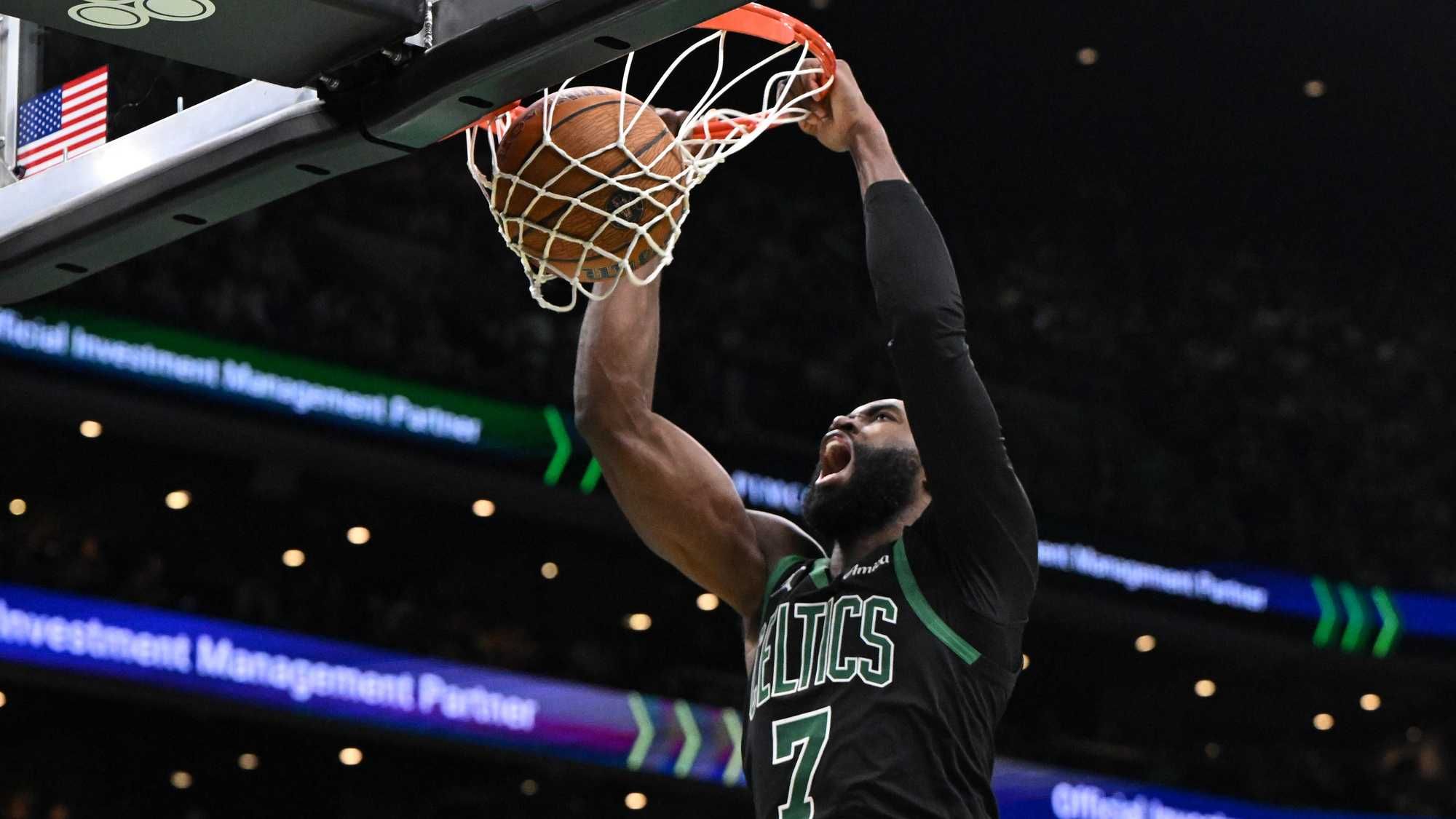
A nine-month recovery would put Tatum's return right around the All-Star break. However, Brad Stevens reiterated this week that the organization will not set a timeline for Tatum, who suffered the injury on May 12.
"We're not putting a timeline on it, as we haven't the whole time," Stevens said. " I mean, I think one of the things that everybody can see is that we didn't apply for a DPE [disabled player exception] this year, which was a conscious decision for a lot of reasons. But the reality is, he's not going to be back until he's 110 percent healthy, and he feels good about it, and that's a big part of it, right? Obviously, he's itching to play. Obviously, he hates watching. But he's also very cognizant of the need to meet every threshold and why there are those things that are put in place. We've had a lot of great talks about it. One of the things that we love about this whole group, and I think the guys that have been here the longest lead the charge, is they love the play."
Tatum has been training relentlessly at the Celtics' practice facility, ramping up basketball activities in recent weeks, working individually with coaches after practice, and sharing one-on-one videos on social media. However, Stevens says Tatum is still in the strength-building phase. After that, he will progress through return-to-play scenarios.
"There are strength thresholds he has to meet. And after that, several weeks of progressions, from the standpoint of scripted against small groups, scripted against bigger groups, scripted in 5-on-5, unscripted random, all the way up through those," said Stevens. "But it's a long progression, and it's almost like, once you hit the strength, then you do your thresholds of a progression of play, and then you're also reconditioning to play real minutes, whatever that looks like. He's obviously made great strides. Right now, we're still focused on the full-strength game."
Smith says the strength-building process is among the most tedious parts of recovery.
"It's slow. I don't think there's like one line of demarcation for what it is for everybody," he said. "It's just a process. And as you go through the testing and all the different things like that, it just takes time. And that's what sucks about it. There's no way around it. Like, it's just a lot of volume calf work and boring stuff that you feel like you're not really getting much done, but like, that's just what you have to do."
One of the big question marks surrounding Tatum's return is overcoming the mental hurdle and natural passiveness or worry that can come with it, an aspect Smith says is certainly relevant.
"It's different," he said. "You know, you have a few negative thoughts in the back of your mind. But at the end of the day, you just have to understand that you put in the work to get back to that point. And so, you know, I think once you get out there a couple of times and you realize that you're good, you're fine, you're going to be okay, and you start to have confidence in the work that you put in up to that point. So, the first couple of times you step out there, it's a little difficult. But after that, you get back to playing basketball."
Smith has played in all 28 games this season for Miami, a career high, averaging 17.2 minutes (second-highest of his career), 6.2 points (matching career high), 2.6 rebounds (matching career high), 2.9 assists (career high), and 1.5 steals (matching career high). He hasn't spoken with the other injured players but offers one piece of advice: listen to your body.
"I think everybody you know kind of goes through it their own way," He said. "It's different for everybody. You just always have to make sure that you're listening to your body, understanding how it's responding, and then also, you know, not being too tentative, like if your body's telling you can keep going, then just keep pushing."