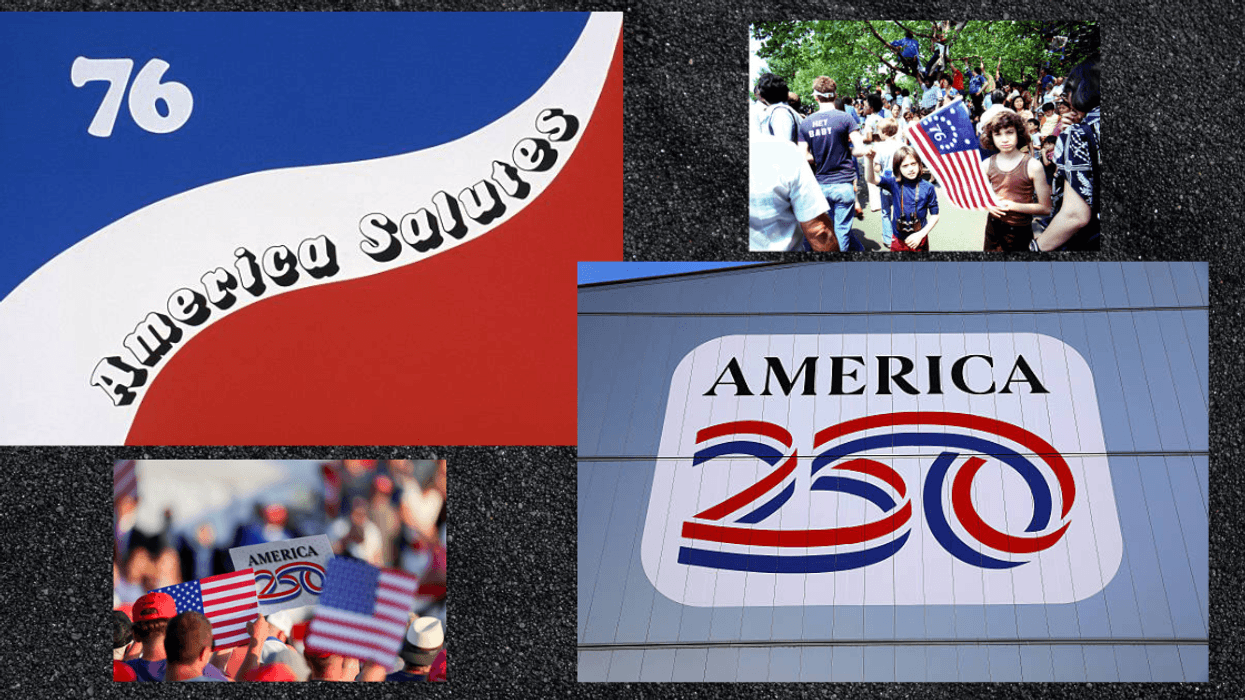

You need to be at least 50-years old to have been present for America's bicentennial in 1976. Now, 50-years after that celebration, America is again celebrating a milestone, the semiquincentennial. Or, a 250th birthday which is a lot easier to say.
There are many ways the country - and the world - has changed in the last half-century. There are also similarities. In 1976, the country was still in the wake of the Watergate scandal, the end of the Vietnam War, and high-profile impeachment and executive authority debates. The economy was plagued by high inflation and an energy crisis, creating an uneasy national atmosphere.
Now, in 2026, historians have noted striking similarities. The 250th anniversary unfolds amidst international conflicts - especially in the Middle East and Ukraine, more inflation concerns, and intense cultural and political wars. And during a week with many high-profile Supreme Court rulings, more questions about executive authority.
But, let's put the politics and conflicts aside. On America's birthday, let's look back at the differences in our lives between 1976 and 2026:
Economy and Demographics
Population: The U.S. population has grown quite a bit since 1976. We've gone from 221 million people in the U.S. to over 349 million in 2026.
Along with that, the racial composition has transformed dramatically. The white population made up approximately 85% of the U.S. in 1976. That has shifted to roughly 56% in 2026.
The biggest growth has been in the Hispanic, Asian, and multiracial populations.
Economy: There has been an incredible growth in the amount of money flowing though the economy. The U.S. Gross Domestic Product (GDP) grew from $1.87 trillion in 1976 to $32.3 trillion.
That growth has come at a price, however. It has been accompanied by a steep rise in national debt. The total gross national debt of the United States is approximately $39.2 trillion. It was about $620 billion in '76.
For actual spending power, we are in far, far worse shape. $1 in 1976 has the equivalent purchasing power of about $5.85 today. Spend it wisely because a dollar today buys just about 17% of what it could buy 50 years ago.
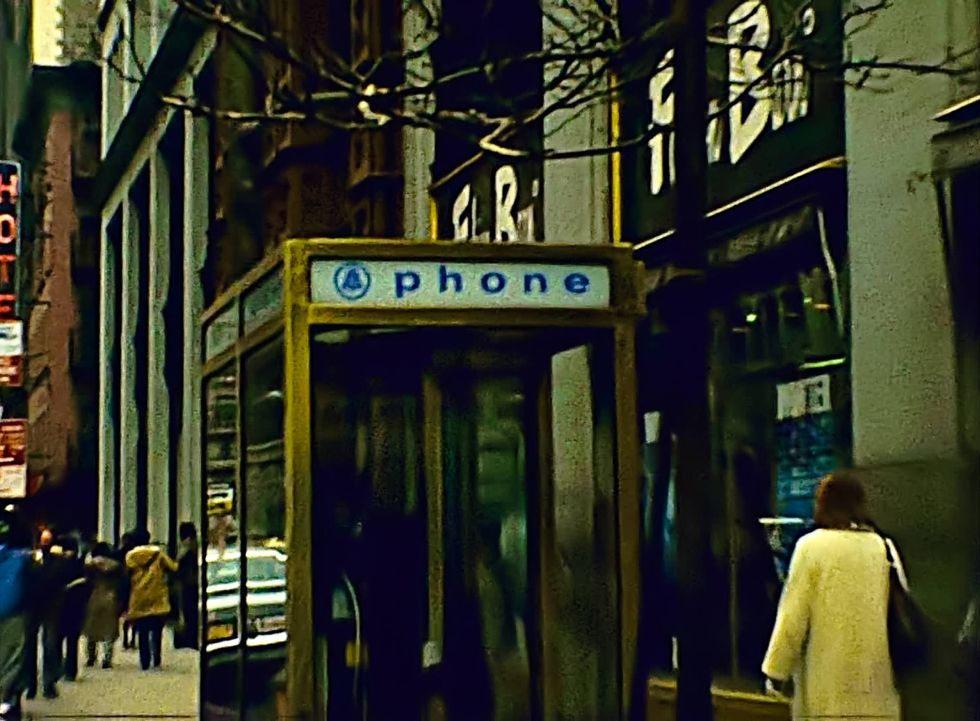
Bring some change with in case you need to make a phone call, something that is almost unthinkable now in 2026, but was part of daily life in 1976.
(Getty Images / bennymarty)
Technology and Daily Life:
50 years ago was the very beginning of the personal computer revolution. Apple Computer Company was founded in 1976. What you now hold in your hand or stuffed in your pocket was unthinkable in 1976, although the early seeds were being germinated.
Daily life in the mid-70s wouldn't be recognizable to your kids in 2026. We relied on landline phones, analog vinyl records, and over-the-air television - hello rabbit ears? When you were at school, you scribbled math problems down on paper. Your teachers demanded you "show your work." A calculator? That was quite a luxury.
Think back to how difficult it was to track someone down? If they weren't home, you had no way to get in touch with mom, dad, or your kids. Maybe you could call work, or school. But if they weren't sitting at home waiting for the phone to ring? Good luck.
We now survive in hyper-connected world dominated by global smartphone networks, cloud computing, and advanced generative Artificial Intelligence. Need to find information? You ask your phone for it - just by talking to it!
If you flicked on your television, probably just the one you all shared in the living room, you had four choices: NBC, ABC, CBS, and public television. Cable TV was still a few years away from infiltrating your home. Want to change the channel? You had to stand up, walk to the TV, and turn a nob.
It probably took two grown men to move your TV into the home, with those old tube sets or console TVs looking more like furniture.
Now, you have a TV in your phone. Or you just pick whatever you want to watch, whenever you want to watch it at the flick of a finger. The four networks and public TV are still there, but have had to reinvent themselves to serve the "on-demand" customers. And they are joined by and endless, almost literally, parade of options to watch things on your inch-thick television your 10-year old can probably lift by themselves. And it hangs on your wall like a piece of art.
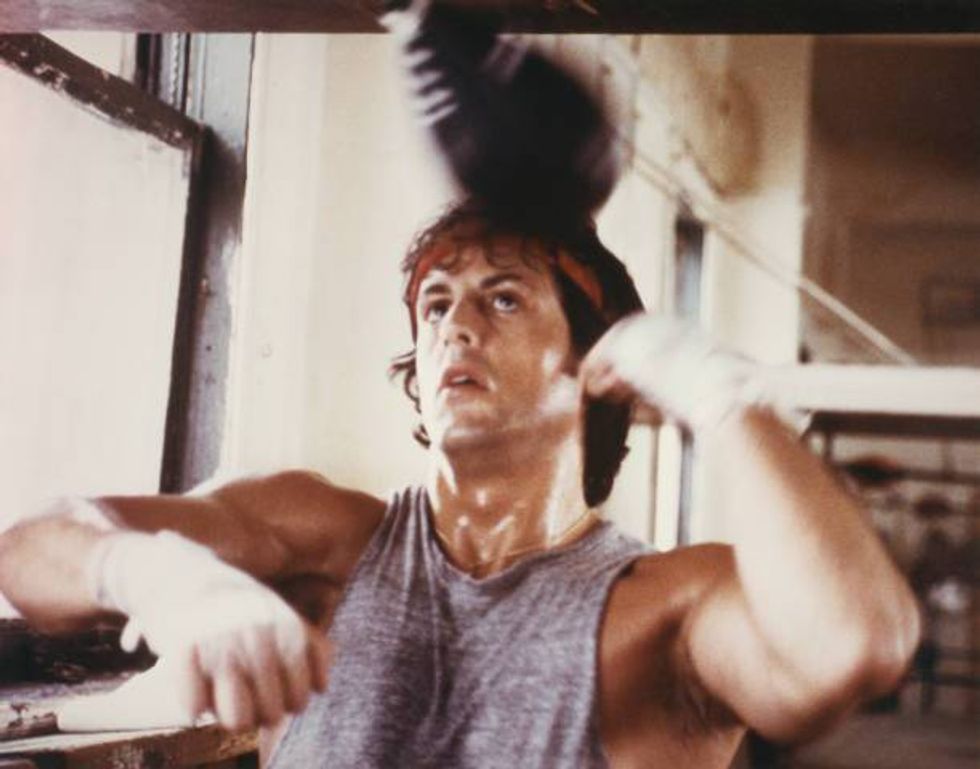
Sylvester Stallone as boxer Rocky Balboa trains with punchbag in the 1976 film 'Rocky '.
(Photo by Screen Archives/Getty Images)
What Were/Are We Watching?
1976 saw a phew classics make their debuts on the big screen. Rocky introduced Sylvester Stallone to the world, and won Best Picture at the Oscars. Robert DeNiro freaked us all out with his shocking performance in Taxi Driver. It came out in 1975, but Jaws was still a massive hit in 1976. The Omen gave the devil his due and terrified movie-goers. And a little-known director named George Lucan began to film a little space drama, which would be released in 1977 - Star Wars.
On the smaller scree, Charlie's Angels made its debut in 1976 and put Farrah Fawcett posters on bedrooms all across the U.S. But when it came to ratings, it was Happy Days that ruled. And because of that success, a spinoff show, Laverne & Shirley, premiered. For the kids, the Muppet Show started up in '76 and Donny & Marie Osmond lit up living rooms with their variety show on Friday nights.
In 2026, it's a different world of course, where streaming apps dominate. But there are still some massive hits for those that prefer the movie theater experience.
That's led by The Super Mario Galaxy Movie which rocketed to $1 billion at the box office. Michael broke records as the top biopic ever, telling the story of the King of Pop. Project Hail Mary won over sci-fi fans, and The Devil Wears Prada 2 brought the fashion industry to the silver screen. This summer, Toy Story 5 had a massive debut. And 50 years after Star Wars began production, The Mandalorian & Grogu hit the big screen as the 15th (!!!) movie from that universe - not counting streaming series.
On TV/streaming, HBO had a big hit with the Game of Thrones prequel, A Knight of the Seven Kingdoms. Beef Season 2 brought a brand new feud to that hit show, and fans loved the new season of the medical drama, The Pitt. There was drama on network television, with chaos inside longtime news stalwart 60 Minutes, plus new spinoff shows from the universe of Yellowstone, Marshals and Dutton Ranch.
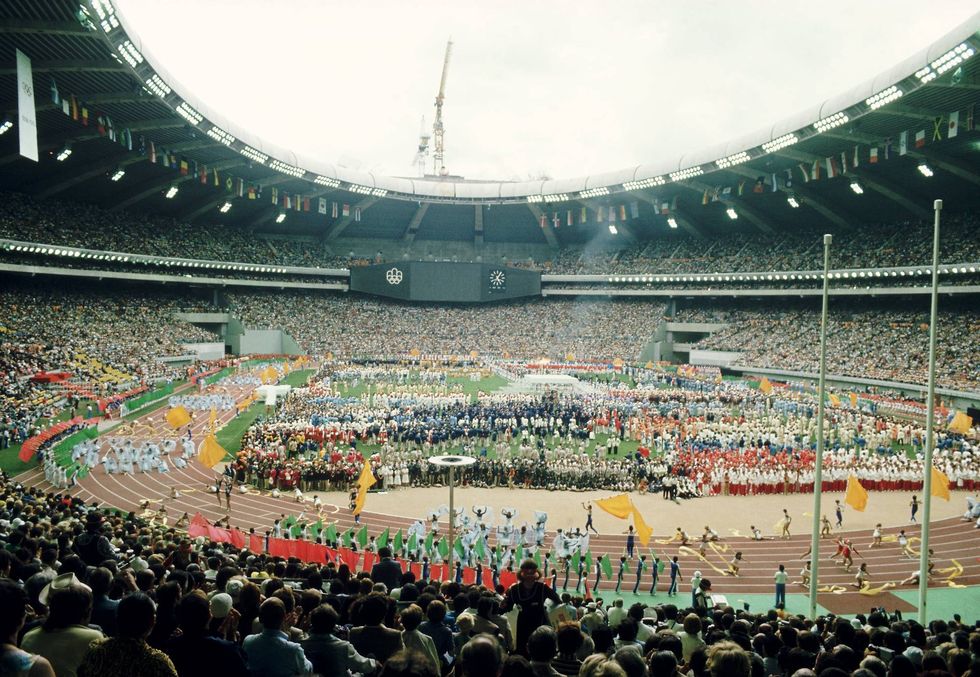
Jul 1976: General view of the Opening Ceremony of the Olympic Games at the Olympic Stadium in Montreal, Canada.
(Getty Images / Tony Duffy /Allsport)
Sports and Athletes
The year 1976 was one of the most transformative in sports history, defined by unforgettable Olympic perfection, a massive pro basketball merger, and the dominance of some legendary teams.
The 1976 Summer Games in Montreal, Canada delivered some of the most iconic moments in Olympic history:
14-year-old Romanian gymnast Nadia Comăneci shocked the world by scoring the first-ever perfect 10.0 on the uneven bars. She went on to earn seven perfect scores during the Games. American athlete Caitlyn Jenner (then competing as Bruce Jenner) won gold and set a world record in the decathlon, earning the title of the "world's greatest athlete".
Women’s basketball, rowing, and team handball all made their official Olympic debuts as well.
On the hardwood, the ABA-NBA merger took place, with the colorful, flashy American Basketball Association (ABA) officially folded and merged into the NBA. Four ABA teams survived the leap: the San Antonio Spurs, Denver Nuggets, Indiana Pacers, and the New York Nets (led by Julius "Dr. J" Erving).
In college, Bob Knight led the Indiana Hoosiers to a flawless 32-0 season, crushing Michigan in the national final. They remain the last undefeated men's college basketball champion.
Baseball and football were ruled by dominant teams. The Big Red Machine, the Cincinnati Reds, cemented their dynasty status by sweeping the New York Yankees 4-0 to win back-to-back World Series titles, led by MVP Johnny Bench. In Super Bowl X, the Pittsburgh Steelers won their second straight championship by edging out the Dallas Cowboys 21-17, highlighted by acrobatic catches from game MVP Lynn Swann.
In other sports, the Pittsburgh Panthers went a perfect 12-0 to claim a unanimous national championship, powered by Heisman Trophy winner Tony Dorsett. Björn Borg won his very first Wimbledon title without dropping a single set, while Chris Evert took home the women's singles crown. Heavyweight champ Muhammad Ali defended his title in Yankee Stadium, narrowly winning a highly controversial 15-round decision against Ken Norton.
2026 is currently in the midst of the largest sporting event in the world, with the World Cup being playing out across North America. For the first time in history, the FIFA World Cup features an expanded roster of 48 teams competing across the US, Canada, and Mexico, heading into knockout rounds this week.
The New York Knicks broke a long drought, and captured their first NBA Championship since 1973. They defeated Victor Wembanyama and the San Antonio Spurs 4 games to 1 in the 2026 NBA Finals.
The Carolina Hurricanes captured the 2026 Stanley Cup, defeating the Vegas Golden Knights 4-2 in a fiercely competitive championship series.
In February, the Seattle Seahawks shocked the football world by soundly defeating the New England Patriots 29-13 at Levi's Stadium in Santa Clara, California led by a former castoff QB that played with the Jets, Panthers, 49ers and Vikings, Sam Darnold.
But in even more shocking fashion, the Indiana Hoosiers pulled off one of the greatest, most incredible turnaround stories in sports history by finishing a flawless 16-0 to capture their first-ever national football title. The Hoosiers came into 2025-26 with the most losses of any program in college football history.
We'll have to wait-and-see what happens across MLB, and the rest of the sports world as 2026 unfolds.
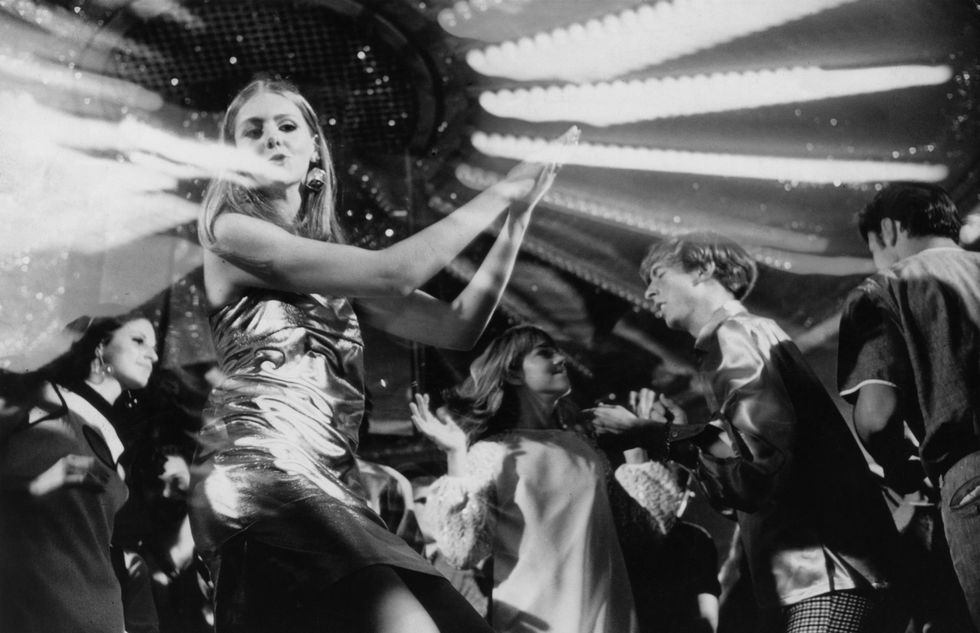
There was plenty of arena rock - the Eagles, Queen, and many more. But it was disco, like this teenage girl, dancing at a discotheques all over the U.S. by 1976.
(Photo by Chris McHugh/Fox Photos/Getty Images)
Music
Disco - need we say more? OK, there is actually more than just disco exploding worldwide. Besides the fact that most people were still dropping the needle on vinyl in 1976, here's who was big:
On the arena circuit, classic rock acts ruled. The Eagles dropped one of the best-selling albums of all-time, Hotel California, and Brit rockers Queen hit big with Bohemian Rhapsody. Swedish song makers ABBA conquered radio with Dancing Queen. Stevie Wonder released Songs in the Key of Life. As for disco, the Bee Gees began their dance chart dominance in 1976.
Punk reared its ugly head with The Sex Pistols birthed the UK and The Ramones releasing their first gritty New York punk record, as the late-70s showed anyone with a guitar they could start a band.
Hard rock and heavy metal also began to take over some of the mainstream for the first time by '76.
Led Zeppelin released their second-to-last (non-compilation) album, Presence. Canadian rockers Rush released their sci-fi epic 2112. Boston came out with their debut, one of the best-selling debut albums, which dominated - and still dominate - the rock stations.
In the UK, the first real, classic heavy metal album was released with Judas Priest's epic Sad Wings of Destiny. Their Birmingham mates Black Sabbath were still going strong, releasing their seventh studio album, Technical Ecstasy, alongside their highly successful compilation album, We Sold Our Soul for Rock 'n' Roll.
Want to go to a show? Well, even seeing a big-time artist like Bruce Springsteen in 1976 was going to set you back a whopping $7.50 to $10.00.
Just like movies and TV have moved to a different platform, with YouTube, streaming apps like Spotify, Apple Music, and Pandora taking over. Fans still flock to the arena to see their favorites. Of course that isn't cheap anymore. The average concert ticket price for a major arena or stadium tour in 2026 generally ranges from $100 to $130 - if you're lucky. Dynamic pricing driven by AI can sometimes drive the price way up if there's demand. It's not 1976 anymore.
As for big-name artists, none are larger than Taylor Swift who dropped The Tortured Poets Department album this year. Beyoncé went country on Cowboy Carter and won a Grammy in the process. Sabrina Carpenter dominated summer airwaves, Chappell Roan brought queer pop to stadiums, and Charli XCX sparked an iconic brat summer.
Brit Billie Eilish has ruled streaming charts globally. 2000's rockers Linkin Park returned with a brand new singer and packed stadiums. Lady Gaga shocked fans with dark synth-pop instead of bouncy pop. Shaboozey blended hip-hop with country roots, and Kendrick Lamar broke records with iconic diss tracks.
If you aren't up on the music we just shared - it likely means you remember 1976 very, very well.
Happy birthday America! The more you change, the more you stay the same.