
“While [President Donald] Trump profits from merchandising the presidency, our democracy pays the price,” said a report published this week by the Citizens for Responsibility and Ethics in Washington (CREW) watchdog group.
According to the report, the president’s Trump Store sells at least 99 items that include reference to his presidency. If someone bought one of each product, it would cost them $7,511.28, CREW said. That’s just a fraction of the store’s many offerings, including 622 products launched since Trump began his second term last year “to profit off the presidency.”
These items include the red Make America Great Again or “MAGA” hats. People have been able to purchase items through the Trump store since it launched during his first term, in 2017. While CREW noted that the store “immediately attracted ethics scrutiny,” it has continued to operate.
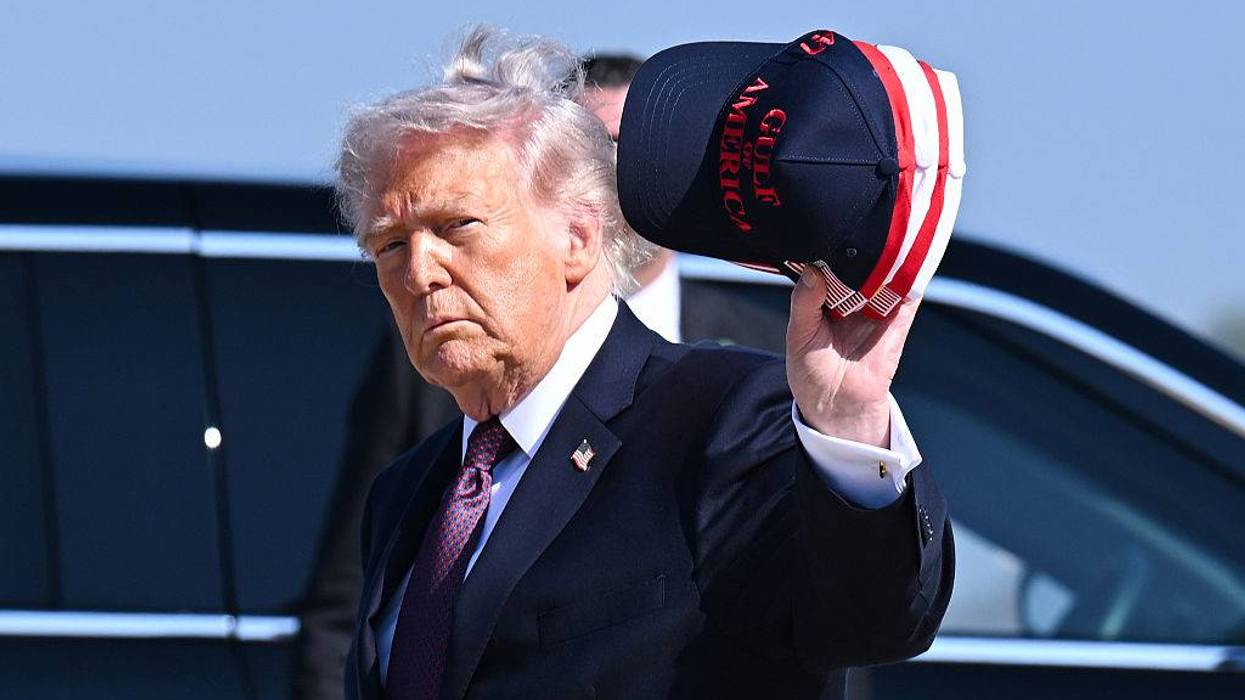
Per Trump’s last released financial records, the store brought in $8.8 million in 2024, 17 times what it brought in during its first year of operation. Prior to losing the 2020 election, MAGA hats were sold only through Trump’s campaign store, a symbolic separation between “Trump the president and Trump the businessman” according to CREW. However, the Trump Store itself started selling MAGA hats after that election. Now, its items include a “Space Force” hat, a “Gulf of America” ballcap and merchandise promoting an unconstitutional third term for Trump that he hasn’t ruled out pursuing in 2028.
“This is an unprecedented level of monetization of the presidency, even by the standards of Trump’s own first term,” said CREW. It also noted that Trump is known to pass out merch for free at Cabinet meetings and Oval Office visits, adding promotional value that isn’t figured into the store’s profits. Furthermore, CREW listed other outlets for Trump products – such as the Trump Sneakers website, Trump Media and Technology Group stocks and World Liberty Financial tokens.
In summer 2025, the Trump Organization even filed a lawsuit over alleged counterfeit merchandise, according to The Verge.
Another example is the Trump coins that launched in September 2024, while he was on the campaign trail. These featured Trump’s face on one side and the White House on the other, with “In God We Trust” written above and his signature bordering the bottom. In 2023, Trump’s 2024 election team also sold merchandise emblazoned with his mugshot taken by the Fulton County Sheriff’s Office in conjunction with the state of Georgia’s election interference case, raising legal questions.
Last May, the Brennan Center for Justice noted that a number of Trump’s actions at the start of his second term “including cryptocurrency transactions, real estate deals, and interactions with foreign officials,” have raised legal questions as well. It said U.S. Constitution’s Emoluments Clauses in particular limit certain actions by presidents. Presidents in the past typically willingly complied with the clauses and they do not have an obvious mechanism of enforcement, the center said.
“When Trump first took office in 2017, he departed from the practice of other recent presidents who voluntarily divested from any assets that could pose a potential conflict of interest,” the Brennan Center explained. “He maintained control of his extensive business holdings, including hotels and other properties that regularly transacted with foreign governments and officials and with state governments.”
Trump has also faced backlash in his second term over Qatar’s gift of a jet that was rumored to be a possible replacement for Air Force One.
Concerns about Trump’s business dealings led to lawsuits filed by members of Congress, leading federal trial court judges in Maryland and the District of Columbia issued opinions confirming a broad reading of both clauses to include not only honors and gifts but also proceeds from commercial transactions. However, the lawsuits were later dismissed on procedural grounds.