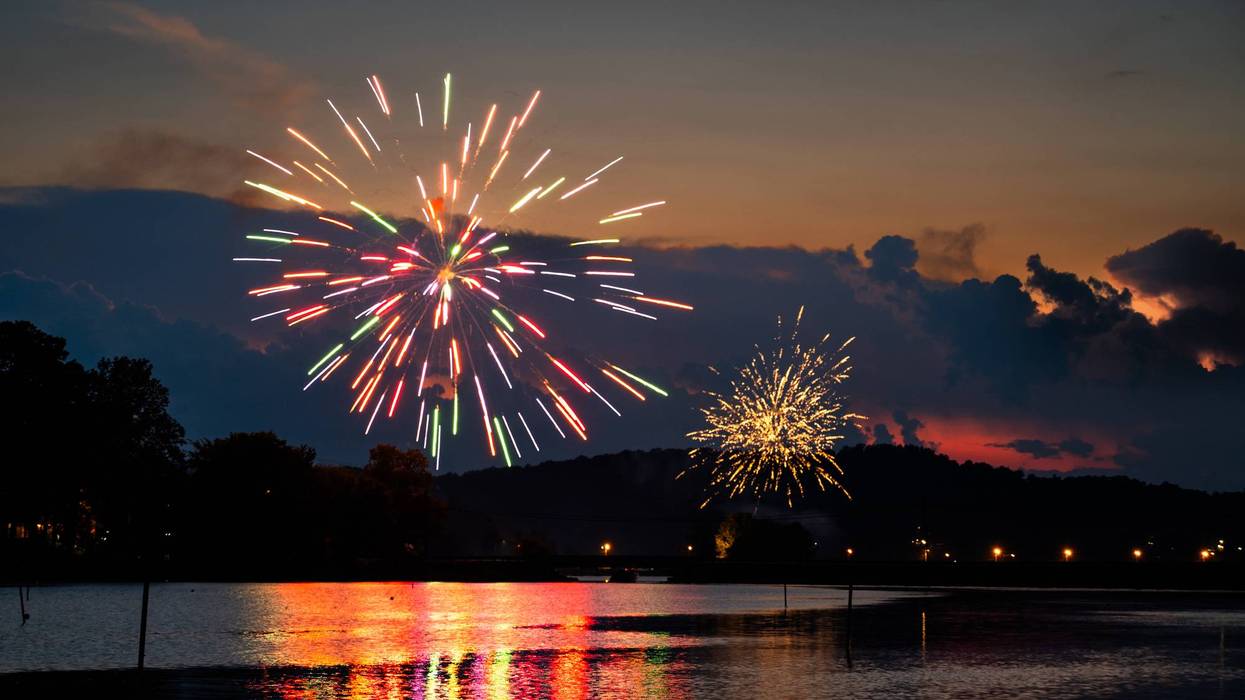

In the U.S., we’re heading into what is probably the most fireworks-filled weekend of the year. While it’s a tradition to celebrate the nation’s anniversary (especially a big one like the 250th), these entertaining explosives have some downsides.
Fireworks can freak out pets, land people in the hospital if they’re not careful and impact the environment. This week, the American Chemical Society highlighted three new studies that reveal just what these bright lights and loud booms leave behind when the party is over.
First, the ACS cited a lab study published in Environmental Science & Technology that found litter from fireworks alters water chemistry in lakes and rivers.
“After firecrackers flare out, they leave behind residue containing partly burned fuel and additives, metal salts, and charred packaging,” the ACS explained. According to the study, this residue “released substantial amounts of metal ions (e.g., potassium and manganese) and dissolved organic matter (e.g., simple phenols and sulfur-containing compounds) into lake and river water.”
At the same time, “the solid residues adsorbed existing dissolved substances, such as larger, more complex compounds, from the water.” The researchers said such changes could disturb microbial activity and aquatic life, especially after intensive or frequent events.
“Simply cleaning up spent firecrackers properly can help reduce these impacts,” said the ACS.
Second, the ACS noted that researchers reporting in ACS ES&T Air suggest that fireworks are one of the sources of air pollutants at festivals that could push exceeded limits beyond World Health Organization recommendations. These researchers monitored particulate matter at a large, multi-day athletic competition in the U.K.
“The opening and closing ceremonies each produced two spikes in fine particles: one from dust as attendees arrived and a second, slightly smaller one from firework displays,” said the ACS. “The researchers estimate that people who attended all the events exceeded recommended limits for air pollutants set by the World Health Organization, highlighting celebratory events as a route of exposure to fine particulate matter.”
Finally, a group of scientists set out to investigate whether amines are consumed during firework explosions by measuring compounds during Lunar New Year celebrations in a suburban area of China. Amines are compounds found in some firework formulations that can react in the air to form aerosols that contribute to both haze and poor air quality.
Findings reported in Environmental Science & Technology Letters, showed that there were “substantial increases in several amines compared to a non-celebratory period,” in the research area. Amine increases were observed during the biggest firework displays. Other firework-related pollutants such as fine particulate matter and sulfate and potassium ions were also observed.
“The researchers say the results indicate how fireworks may contribute more than just smoke to post-celebration haze,” the ACS said.