

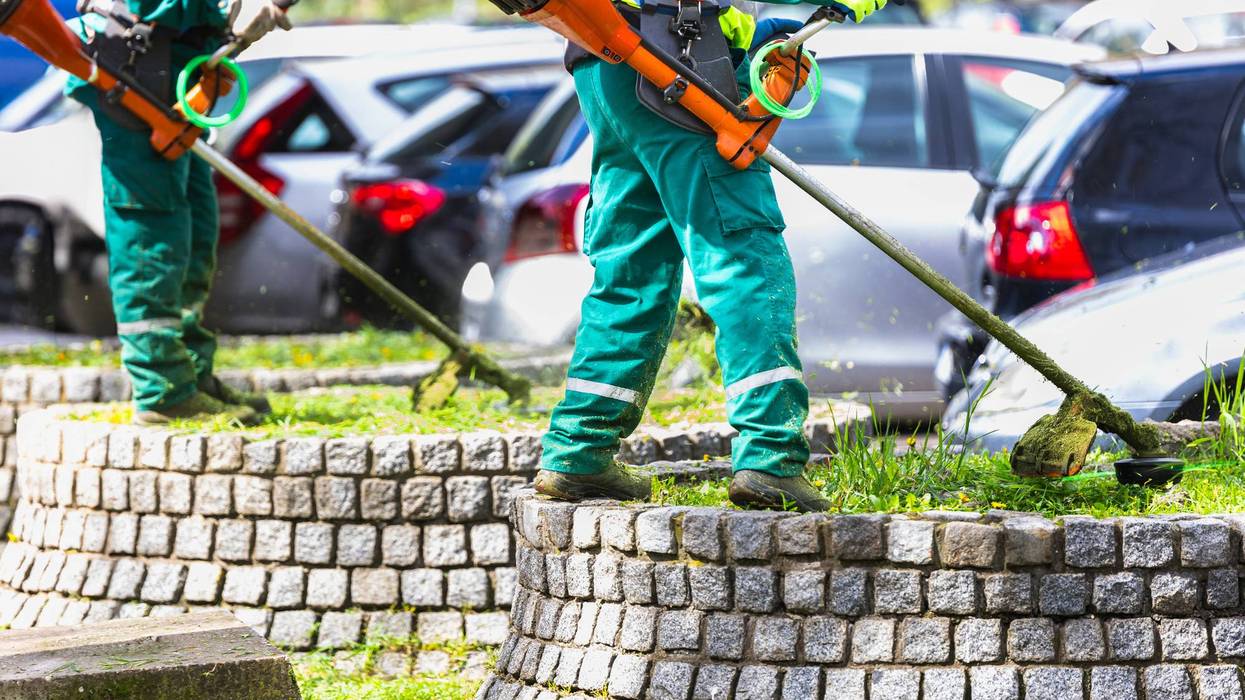

Mowing the lawn, trimming hedges and whacking weeds, is usually something associated with dads in white New Balance sneakers, but it turns out it's also associated with risk. High risk.
Landscaping has become one of the ten most dangerous jobs in America, with a fatal injury rate that increased from 13 per 100,000 workers in 2014 to 21 per 100,000 in 2024.
What's going wrong? Grounds maintenance workers were most commonly killed while using tools or machinery to trim or cut down trees, according to the National Institute for Occupational Safety and Health.
The Bureau of Labor Statistics data shows that deaths among grounds maintenance workers were evenly split between transportation incidents, falls, and contact with heavy equipment, with heat exposure becoming a significant source of fatal injury.
In a work safety fact sheet from 2008, the National Institute for Occupational Safety and Health listing tree trimming or cutting down trees as the most common deadly incident. Operating a vehicle or piece of transportation equipment while landscaping was another common activity that led to a fatal injury.
Here's a ranking of the most dangerous jobs in America, from Money Geek. Logging tops the most dangerous jobs list followed by fishing and hunting, roofing, steel workers, refuse collectors (due to crashes), construction, mining and truck driving.
"Which jobs kill the most people depends on which measure you use," Money Geek wrote. "By rate, the deadliest jobs are the specialized trades: logging, fishing, roofing and ironwork. By raw count, the deadliest work in America happens on the road."
In other dangerous jobs, security guards and carpenters have also seen an increase in danger between 2014 and 2024, but their injury and death rates are not high enough to place them in the top 10 most dangerous jobs.
On the other end of the spectrum, pilots, flight engineers, electricians, farmers, ranchers, and power-line installers have seen a significant drop in fatal injuries between 2014 and 2024, indicating an improvement in safety for these professions.
And there's another notable point buried in the data. Workers are on the clock at older ages, and older people get hurt more often.
"The five-year data's most striking pattern isn't about which jobs are deadliest. It's about who's doing them," Money Geek added. "Workers 65 and older logged 824 fatal work injuries in 2024, the highest total for that age group in the five years we reviewed. That bracket grew 21.9% from 2020, the fastest of any age group, and its share of total worker fatalities rose from 14.2% to 16.3%. The under-25 bracket came in second at 19.3%.
"The 55-to-64 bracket was the only group to see fatalities fall over the same period."