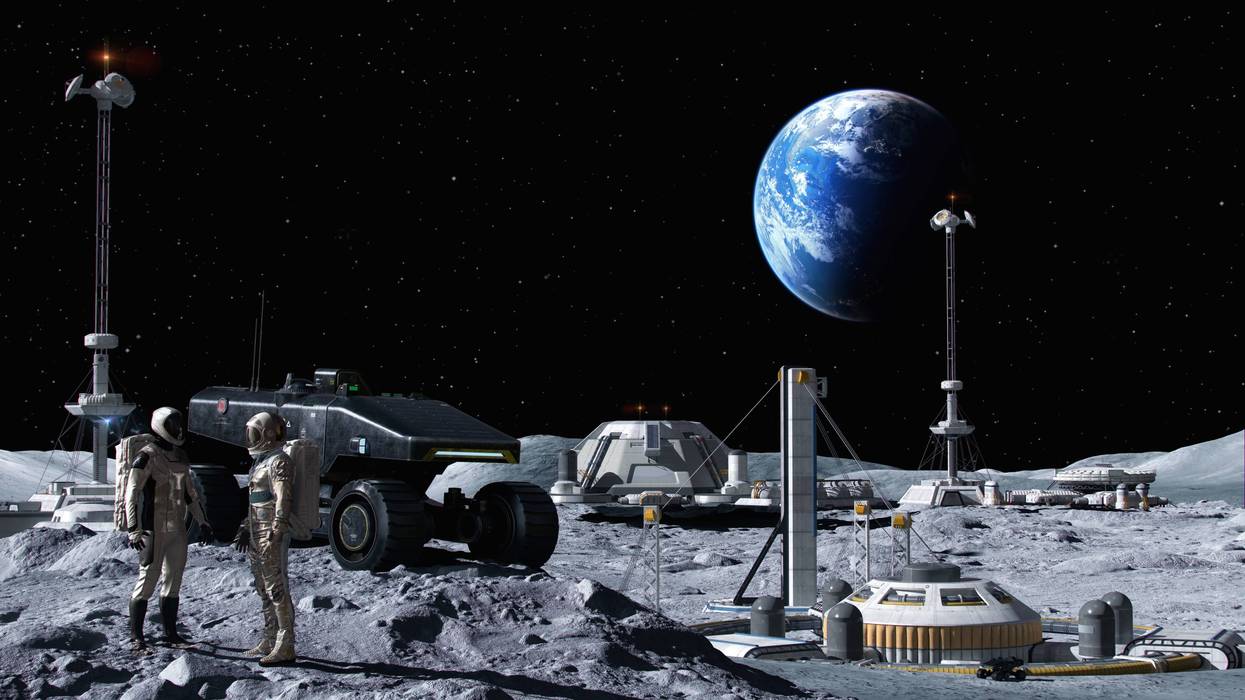

A big announcement from NASA on Tuesday, and even bigger plans for returning to the moon for the first time since 1972.
NASA administrator Jared Isaacman says their biggest objective is simple: "Returning American astronauts to the moon."
So, NASA is overhauling its Artemis moon program and says it plans to spend $20 billion building a permanent lunar base over the next seven years.
"Artemis II in the days ahead, will send NASA and a CSA astronaut into the lunar environment, the first crude step of the Artemis program to pick up where Gene, Harrison, and Ronald left off on Apollo 17," Isaacman explains.
Apollo 17 was the eleventh and final mission of NASA's Apollo program in December of 1972. It was the sixth and most recent time humans have set foot on the Moon. Commander Gene Cernan and Lunar Module Pilot Harrison Schmitt walked on the Moon, while Command Module Pilot Ronald Evans orbited above.
"NASA has stated we will return Americans to the moon before the end of President Trump's term," Isaacson continues. "As we move forward, we intend to launch Artemis III in 2027 to test the integrated operations of Orion, and one or both lunar landers in Earth orbit. What we learned from that mission will ideally give us the confidence to begin lunar landing attempts starting with Artemis IV in 2028."
Isaacman says robotic exploration will ramp up sharply, with up to 30 lunar landings beginning in 2027.
"We intend to work with no fewer than two launch providers with the aim of crude landings every 6 months, with additional opportunities for new entrants in the years ahead," he adds.
The Artemis II mission with four astronauts on board won't land on the moon this time or even orbit it. But it's the first step toward future moon landings.
The launch window from Cape Canaveral, Florida, opens on April 1. There are also opportunities to launch on April 2 through April 6.
LIVE: @NASAAdmin and agency leaders are sharing updates on our implementation of the National Space Policy and our preparations to return to the surface of the Moon by 2028. https://t.co/A28HKqedDD
— NASA (@NASA) March 24, 2026