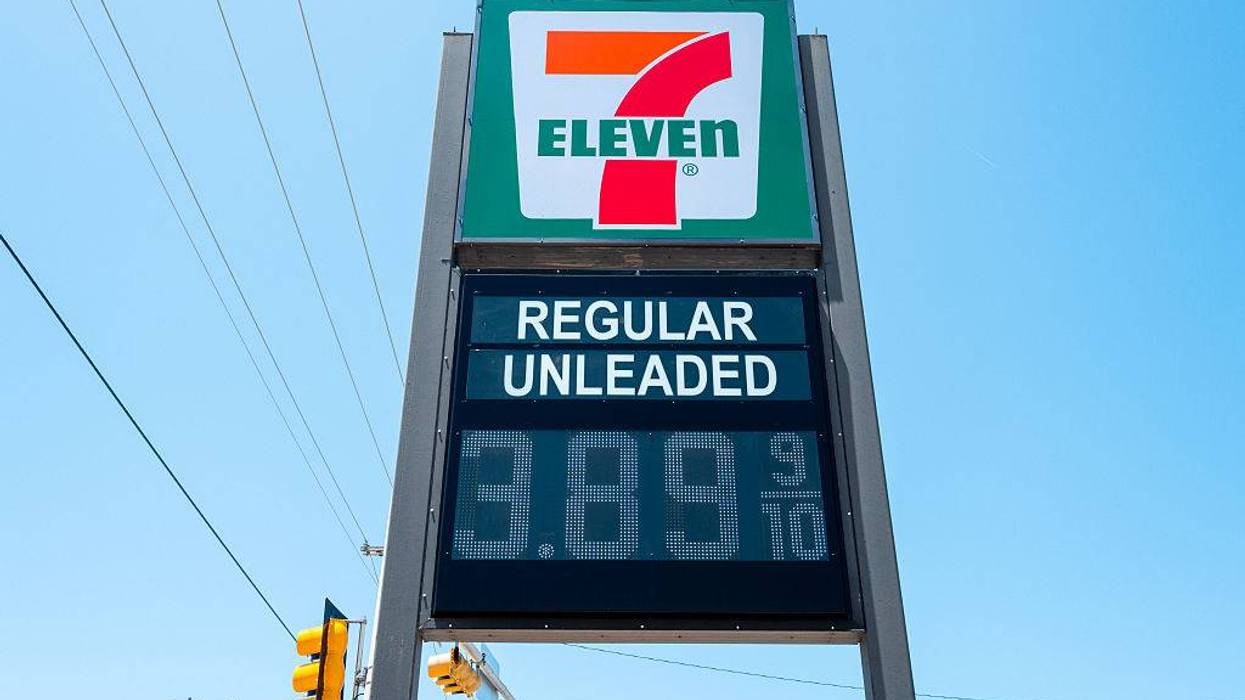

Even before average national gas prices again creeped higher than $4 per gallon this week, most Americans already thought they had gone up higher than they actually had, POLTICO polling found.
This polling was conducted by Public First from July 12 to July 15 and it included surveys of 2,061 U.S. adults online. Analysis of the results and pricing data from OPIS showed that three in five Americans think gas prices have risen in their area more than they have.
While AAA’s national gas price data shows that per-gallon prices this week compared to last year are less than $1 higher. During the polling, roughly one in four Americans said gas in their local area was up $3 or more. POLITICO said that its analysis revealed that no zip code in the country has seen gas prices increase by that much since President Donald Trump took office last year.
Trump’s loyal Make America Great Again (MAGA) voter base more likely to underestimate prices at the pump compared to non-MAGA Republicans, and Democrats were more likely to report higher gas prices. However, overestimation of gas prices was observed among members of both parties – around 70% of people who voted for former Vice President Kamala Harris in the 2024 election and 54% of Trump voters overestimated the increase in gas prices in their area, according to POLITICO’s analysis.
One reason why Americans might be overestimating gas prices is the impact of overall inflation. Despite an inflation drop reported in June, the Bureau of Labor Statistics’ latest report noted that inflation increased 3.5% during the 12-month period ending in June.
“Frustrations over cost of living could be reinforcing existing negative views of the Trump administration,” POLITICO said.
It also noted that 57% of Americans say the cost of living is worse than they “can ever remember it being,” and a 43% plurality blames Trump more than former President Joe Biden for the state of the economy overall. Those who overestimated the increase of their local gas prices were twice as likely to twice as likely to blame the current president.
National average gas prices were around $3.16 at this time last year, according to AAA data. After Trump announced that the U.S. had joined Israel to attack Iran this February and Iran blocked the Strait of Hormuz (an important transportation route for oil) in retaliation, oil and gas prices began to go up worldwide. POLITICO’s poll results showed that 63% o respondents chose the war with Iran as the main reason for increased gas prices, including 59% of Republicans.
According to POLITICO, prices in the U.S. hit a peak hit a peak of around $4.50 per gallon in May. In June, the Trump administration worked out a tentative peace deal with Iran and prices went down. That deal has since dissolved and prices are now up over $4 again.
Fox News reported Friday that Brent crude oil prices had surged above $100 a barrel after Iran-backed Houthi terrorists in Yemen attacked two Saudi Arabian oil tankers in the Red Sea. It said that this new complication was “fueling fears of further disruptions to global oil supplies.”
“President Trump and his energy team anticipated these temporary market disruptions, communicated them openly to the American people, and implemented an aggressive plan to mitigate any impacts,” said White House spokesperson Taylor Rogers in a statement cited by POLITICO.
Even if prices do come down again, POLTICO noted that the public is slow to believe that prices are getting lower. These opinions are also expected to impact how people vote in the upcoming midterm elections, with the poll results showing that 46% of respondents expect gas prices to influence how they fill out their ballots. Of that 46%, 40% said they are considering voting for a different party, including 49% of MAGA Republicans and 57% of non-MAGA Republicans.
“Voters’ anxieties about fuel prices could give Democrats a boost ahead of the midterms, further strengthening the Democratic voting base and putting strains on the MAGA coalition as the increasingly unpopular war in Iran drags on,” said POLITICO. Per the outlet, Republican candidates in many competitive races will have to answer for the perceived cost pressures.