
(WWJ) President Donald Trump says he's seriously considering renaming one of the Great Lakes.
Amid the U.S.'s escalating trade dispute with Canada, Trump said on social media that he'd like to change the name of Lake Ontario to "Lake America."
The president wrote on Truth Social:
"The United States is giving serious consideration to changing the name of Lake Ontario to Lake America in that we don't expect to (be) doing much business with Ontario any longer. Thank you for your attention to this matter! President DONALD J. TRUMP."
Such a change would be reminiscent of the Republican president’s action last year by executive order to change the name of the Gulf of Mexico to the "Gulf of America."
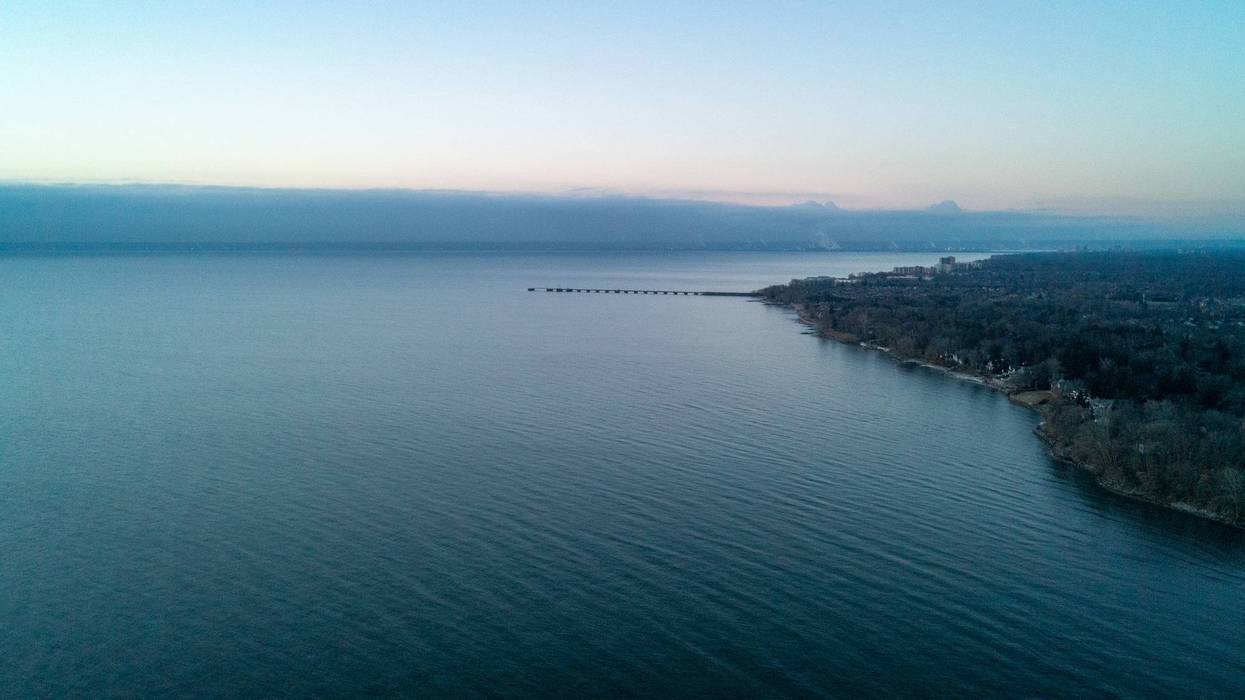
Lake Ontario is the easternmost of the Great Lakes, sitting right on the border between New York and Canada. It’s the smallest of the five by surface area, but its shores are packed with huge cities like Toronto and Rochester. Water flows into it from Niagara Falls and empties out into the Atlantic Ocean through the St. Lawrence River.'
This issue feels personal to some Michigan residents, including Lisa from Birmingham. She was baffled by the suggestion.
"That's crazy!" she said, "because that's one of the five Great Lakes! So, is he going to change the other four? ...Lake America? Why? What's the reasoning?"
Oak Park resident Linda is also not on board with the change.
"Absolutely not!" she told WWJ Newsradio 950's Charlie Langton. "Reason is I'm from the Texas/Louisiana area, and he renamed the Gulf of Mexico the Gulf of America, and I just can't get used to it."
So, could Trump actually do it?
While the U.S. President can issue executive orders to direct domestic federal agencies, neither the President nor the U.S. alone holds total authority to unilaterally rename Lake Ontario.
In practice, a Trump executive order changing the name would only bind U.S. federal agency usage, creating a dual-naming scenario rather than an international replacement. This is essentially what happened with the Gulf of Mexico. However, some online map services — including Google Maps — and several U.S.-based media outlets voluntarily adopted the change when serving U.S. users.
This all comes as the back and forth between the U.S. and Canada over tariffs is heating up again, with President Trump pledging to raise tariffs on all cars, trucks, auto parts and steel to 50% on Jan. 1. This current rate is 25%, but is applied only to non-US content. The latest threat comes after negotiations broke down last Friday and 50% tariffs on many Canadian imports kicked in on Saturday.