The entire starting lineup of the 1998 New York Yankees reached double-digit home run totals. Tino Martinez led the way with 28 dingers, while Bernie Williams, Paul O'Neill and Darryl Strawberry all exceeded 20. Jorge Posada, Chuck Knoblauch, Derek Jeter, Scott Brosius and Chad Curtis were all in the teens. It comes as no surprise that the Yankees were one of nine MLB clubs that season to reach 200 bombs as a team.
But none of the players listed above were that team's most fearsome slugger... at least for a brief spell.
That's because Shane Spencer, after sporadic appearances in the beginning of the year, turned himself into an absolute force late in the season. We got a teaser of that on August 7, when he went 5-5 with two home runs and two doubles. And once September came, it was all over for pitchers who were unlucky enough to cross paths with the slugging outfielder. In that month alone, he crushed eight home runs and drove in 21 runs, slashing an other-worldly .421/.476/1.105 through 14 September games.
But despite this heroic performance, Spencer doesn't make the cut for our Yankees one-season wonders. These aren't necessarily guys who were Yankees for just one year or who had one good year with the Yankees while performing well elsewhere throughout their careers. These are players who were good for one year and one year only, and that happened to come while wearing pinstripes.
Spencer as a one-month wonder? Sure. But the six names below had success for a little bit longer than that, and they're all deserving of the nods they get here.
Listen to New York sports talk now on Audacy and shop the latest Yankees team gear
Elliott Maddox, 1974
There are some notable names that appear in the final ballot for the 1974 AL MVP vote. Jeff Burroughs, a two-time All-Star who led the league in runs batted in, took home the award. Hall of Famers Reggie Jackson, Fergie Jenkins, Catfish Hunter and Rod Carew ranked in that order from No. 4 to No. 7 in total vote points. Multi-time All-Stars Joe Rudi, Sal Bando, Bobby Grich and Mike Cuellar also appeared in the top ten.
But coming in eighth place in the vote was Elliott Maddox, a defensively gifted player who Ted Williams called "perhaps the best defensive center fielder in the American League" while coaching him on the Rangers in 1972. The hope was that the offense would eventually come, and it ultimately did... for one season in 1974, when he first joined the Yankees. A .261 hitter overall, Maddox slashed .303/.395/.386 with a career-best 141 hits and 75 runs en route to his best overall season. Maddox ranked fourth in the American League, behind only the aforementioned Carew, Grich and Jackson, in WAR for position players (5.4). He ranked in the top six in both batting average and on-base percentage, finishing as the best player on an 89-73 Yankees team.
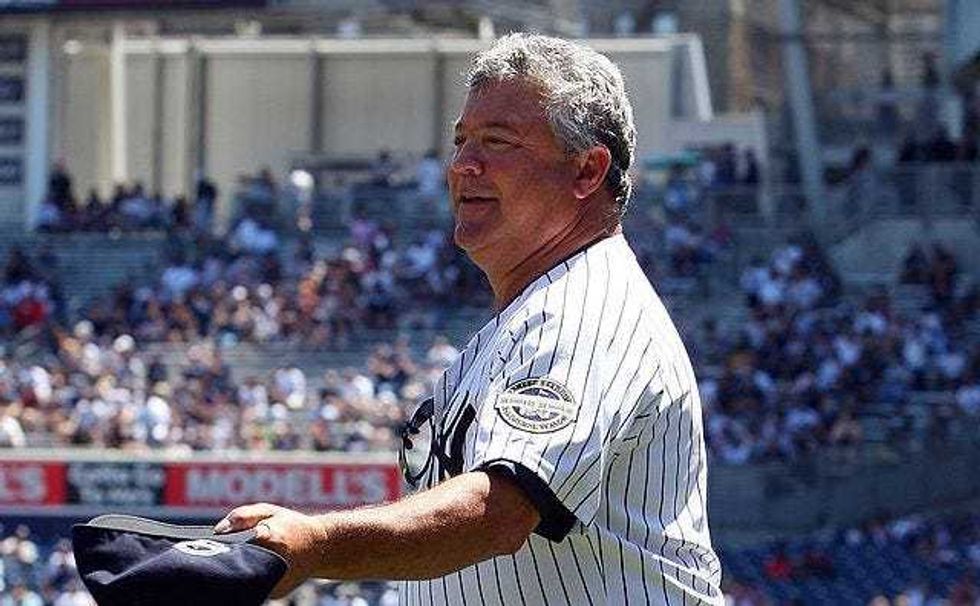 Rick Cerone at Yankees Old-Timer's Day in 2009.(Jim McIsaac/Getty Images)
Rick Cerone, 1980
It's not often that a player with an 18-year career and well over 1,000 games under his belt can be considered a "one-season wonder," but it's not too hard to see that this is the case with Cerone when you look at the stat sheet. His single-season bests — 144 hits, 14 home runs, 85 RBI, 70 runs, 30 doubles, .753 OPS — all came in one year. Nearly half of his career WAR (8.1) came in one year. His only appearance on the MVP ballot, where he finished in seventh place, came in one year.
In the first season after Thurman Munson's untimely death, Cerone came through in a big way and was an important piece of that 103-59 Yankees team.
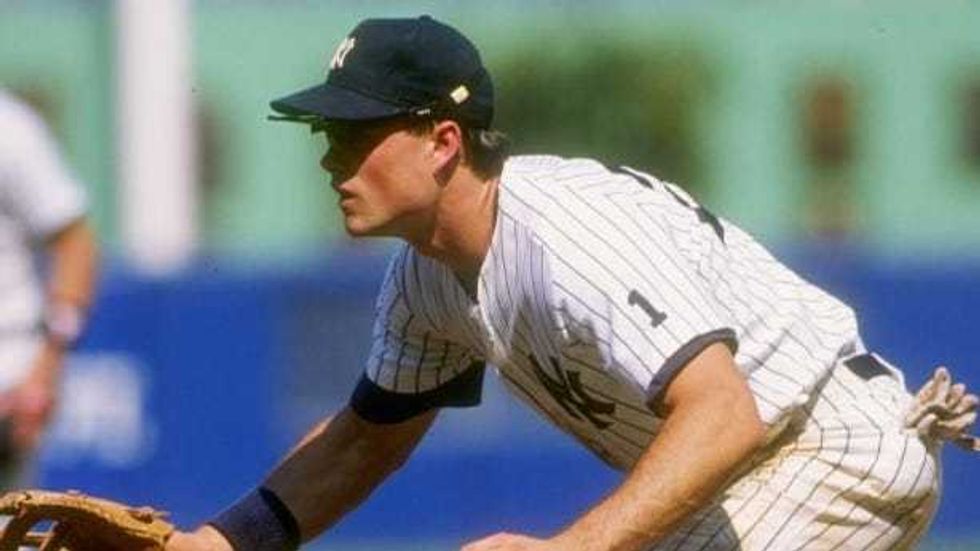 Kevin Maas plays first base for the Yankees.(Scott Halleran /Allsport via Getty Images)
Kevin Maas, 1990
If you've ever heard a stat that follows the format of "he's only the X player to hit X home runs in his first X games in the majors," you've probably heard Kevin Maas's name in the mix. That's because he burst onto the scene in 1990, with 10 home runs in 25 games to begin his MLB career. Finishing the season with 21 home runs, his .902 OPS was by far the highest figure in an otherwise forgettable Yankees lineup.
Though he had 23 home runs the next year, his batting average dropped over 30 points and his OPS dropped nearly 200 points, which was pretty much how the rest of his five-year career went.
Melido Perez, 1992
Perez was a pretty average pitcher in the late 1980s and early 1990s for the White Sox, going 44-45 with a 4.20 ERA from '88 to '91. Yea... pretty average.
But in 1992, something changed. He went 13-16 with a 2.87 ERA (sixth in the AL) and 218 strikeouts (second in the AL), finishing sixth in WAR for pitchers (5.9). Despite that strong showing, he regressed right away in 1993, going 6-14 with a 5.19 ERA in his second season with the Yankees. He played similarly throughout the rest of his stint with New York, playing his final season in 1995.
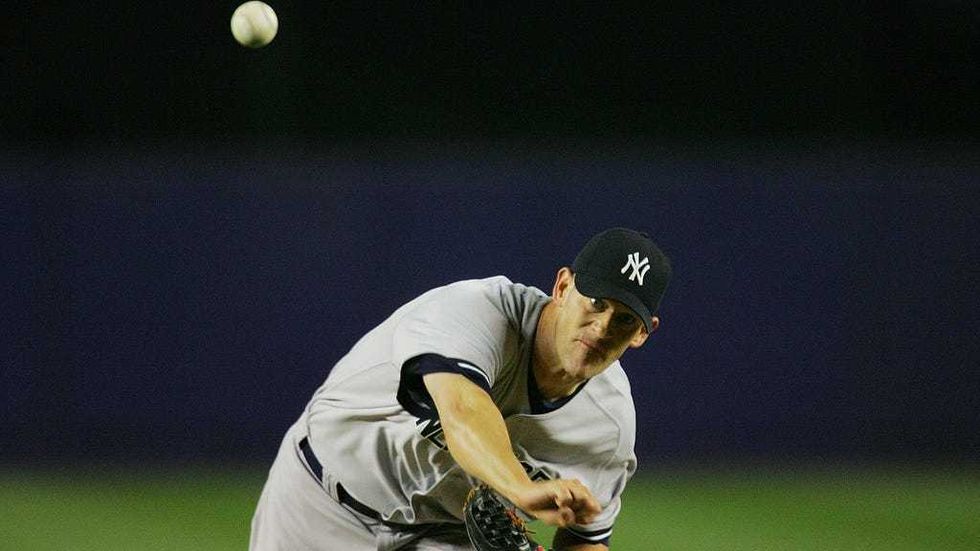 Aaron Small couldn't be beaten for the 2005 Yankees.(Chris Trotman/Getty Images)
Aaron Small, 2005
Only seven pitchers in baseball history have ever recorded double-digit wins without a loss in a season, and you're looking at one of them. None of them are particularly notable names, either, with Small acting as the most recent entrant on the list (via Stathead). Three of the pitchers who did so achieved the accomplishment in the Negro Leagues.
| Rk | Player | Year | W | L | Tm | Lg | ERA |
|---|---|---|---|---|---|---|---|
| 1 | Aaron Small | 2005 | 10 | 0 | NYY | AL | 3.20 |
| 2 | Dennis Lamp | 1985 | 11 | 0 | TOR | AL | 3.32 |
| 3 | Howie Krist | 1941 | 10 | 0 | STL | NL | 4.03 |
| 4 | Hilton Smith | 1941 | 10 | 0 | KCM | NAL | 1.53 |
| 5 | Ray Brown | 1938 | 14 | 0 | HG | NN2 | 1.88 |
| 6 | Edsall Walker | 1938 | 10 | 0 | HG | NN2 | 3.01 |
| 7 | Tom Zachary | 1929 | 12 | 0 | NYY | AL | 2.48 |
Small's career was marked by a 5.20 ERA, and it ended after the 2006 season — also with the Yankees — in which he had a terrible 8.46 ERA and an 0-3 record.
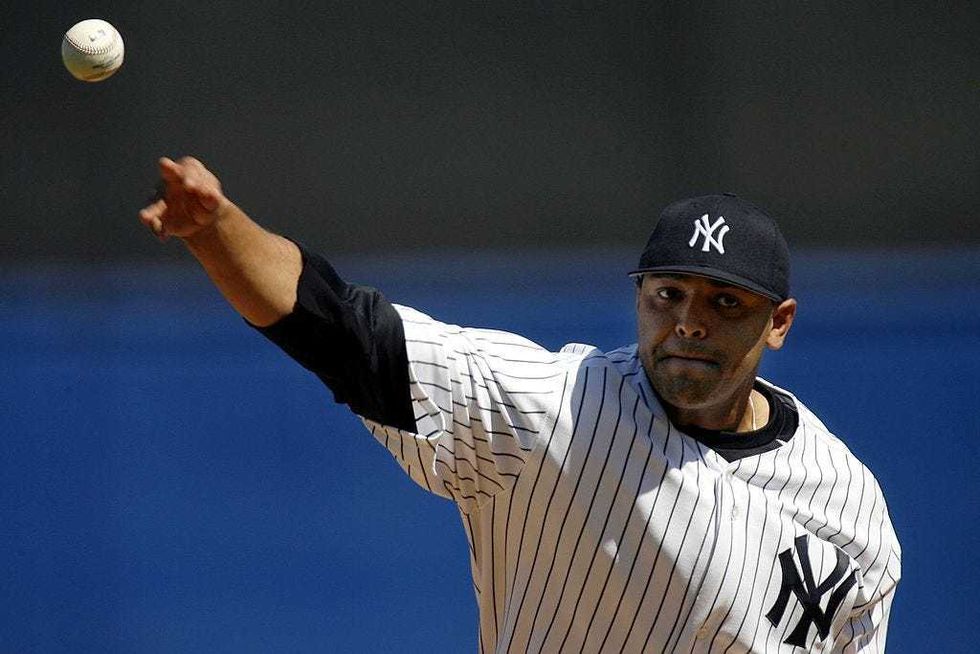 The 2005 midseason trade to acquire Shawn Chacon was a successful one.(Eliot J. Schechter/Getty Images)
Shawn Chacon, 2005
Chacon joined Small and the rest of the Yankees in a midseason trade from the Rockies. That's where he'd spent the first four-and-a-half years of his career, picking up an All-Star nod in 2003... so he might not seem like a true one-season wonder. However, in that 2003 season, he was an All-Star because of his great start — a 4-0 month of April with a 1.04 ERA. The rest of the season, he was 7-8 with a 5.80 ERA... so, no, that season doesn't count.
The season that does count was 2005, when he posted a 7-3 record with a 2.85 ERA over the second half of the year and was a key starter in a rotation that desperately needed some good arms. The next year, he had a 7.00 ERA over 63 innings of work before New York traded him to Pittsburgh for Craig Wilson.
LISTEN on the Audacy App
Sign Up and Follow Audacy Sports
Facebook | Twitter | Instagram