


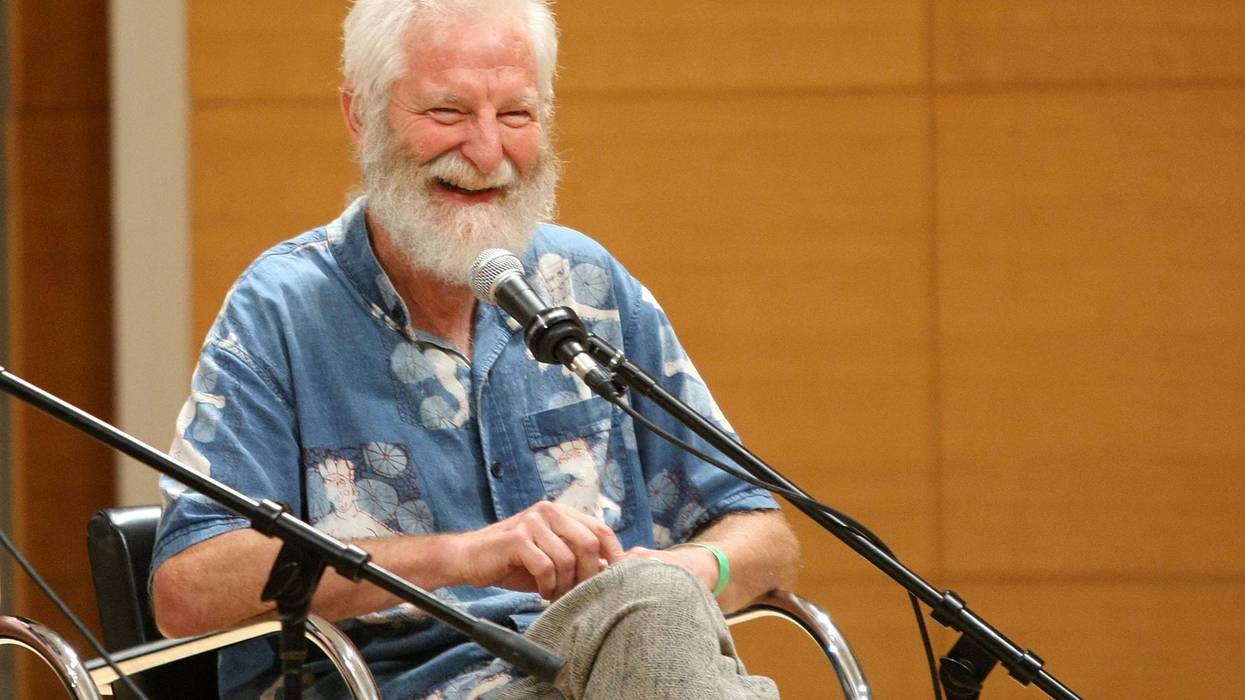

PHILADELPHIA (KYW Newsradio) — Isaiah Zagar, the iconic South Philly artist known for his mosaic works across the city, has died at the age of 86 following complications from heart failure and Parkinson's disease, according to a statement from Philadelphia's Magic Gardens.
Born in Philadelphia in 1939 but raised in Brooklyn, New York City, Zagar returned to Philadelphia in 1968 with his wife, Julia. Zagar moved to Philadelphia's South Street. There he founded Magic Gardens at 10th and South streets, a hub of his artwork, in 1991. In the more than three decades since, the hub has become an institution on South Street as a museum, studio and education center for the surrounding community.
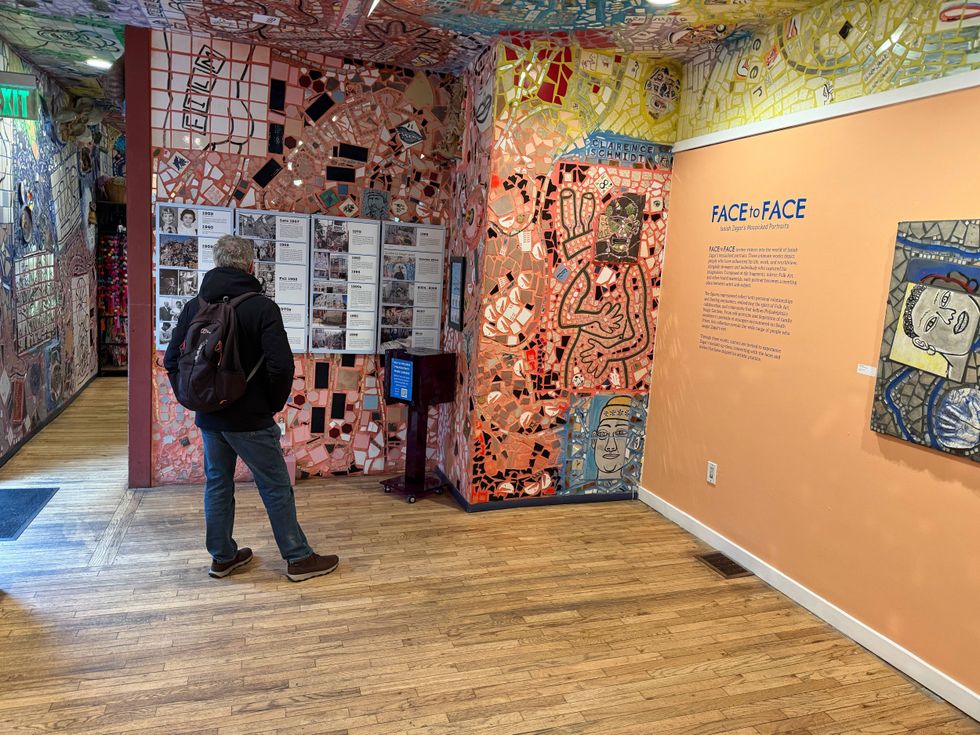
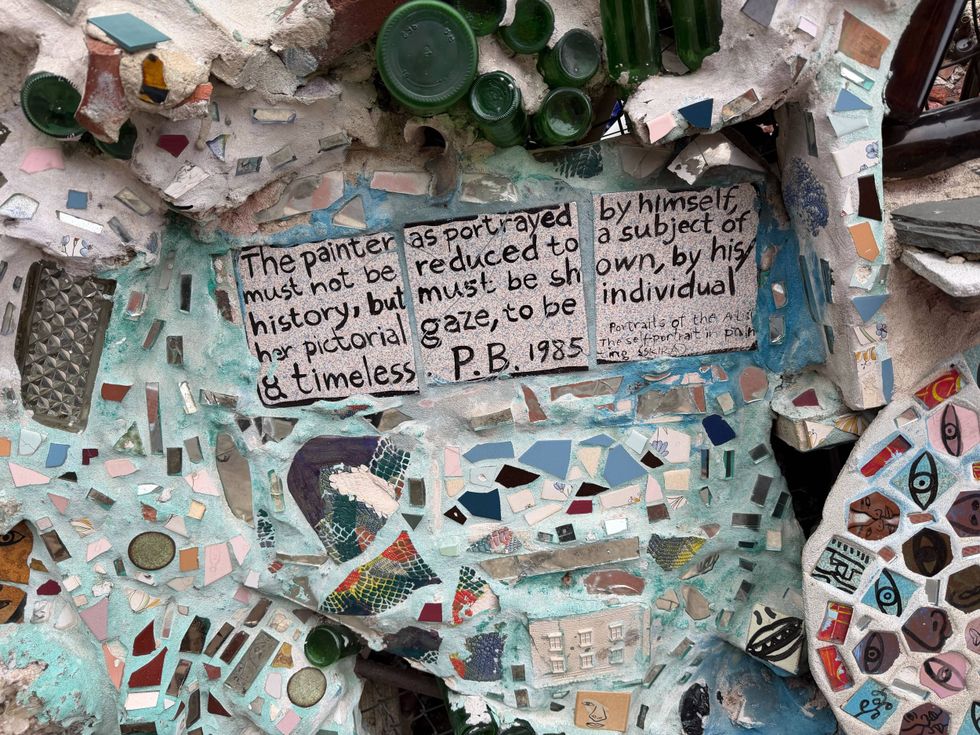
The current exhibit on display at Magic Gardens is called "Face to Face," depicts mosaic portraits of people who have influenced Zagar's life work, life and world.
 Vik Raghupathi/KYW Newsradio.
His art also extended beyond the South Philly institution to the entirety of the city. Zagar's mosaics can be found on home facades all over, including in the Washington Square West and Bella Vista neighborhoods. He also created the facade of the Painted Bride Art Center in Old City, called "Skin of the Bride."
The 7000-square foot mosaic was dismantled in 2023 after the building was sold, with about 30% of the tiles salvaged for use in future mosaics.
"In his 86 years, Isaiah became one of the most renowned mosaicists on earth, working from sunrise to sunset each day; creating hundreds of public mosaics, dozens of buildings and facades, and thousands of drawings, paintings, prints, and photographs," the statement continued.
Emily Smith, executive director of Philadelphia's Magic Gardens, called Zagar "more than our founder."
"He was our close friend, teacher, collaborator, and creative inspiration," she said. "He was unlike anyone we have ever met and will ever meet... In his lifetime, he created a body of work that is unique and remarkable, and one that has left an everlasting mark on our city."
Smith's words about Zagar's character and impact were echoed by Steve Ramm, one of the many people to visit the Magic Gardens Thursday upon learning about Zagar's death.
"It's a mind that I can't even conceive of," he said.
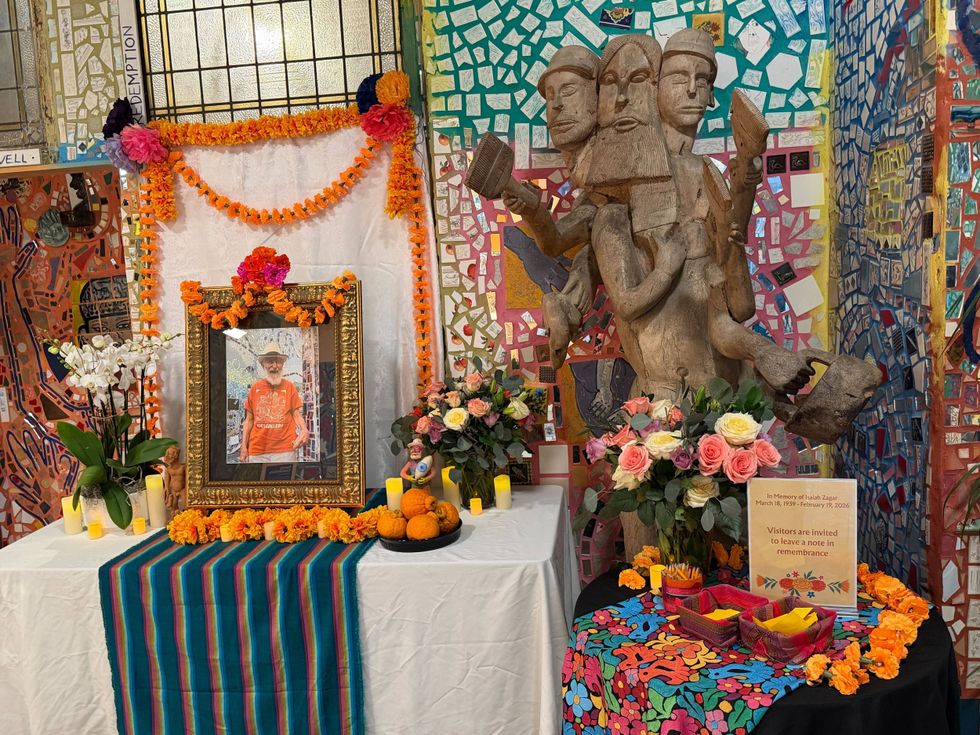 An altar set up to honor the late Isaiah Zagar at the Philadelphia Magic Gardens.Vik Raghupathi/KYW Newsradio.
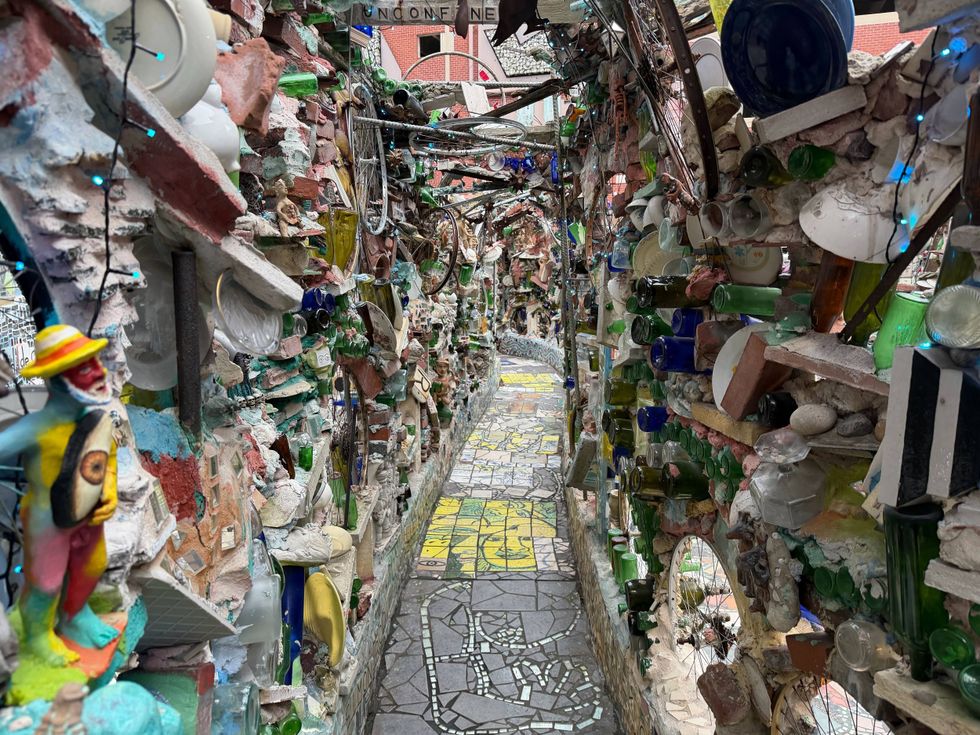
Ramm said he had known Zagar for 50 years. Looking around at the once-discarded bike wheels, the tiles and bottles that pop with color, the glass shards that reflect a fragmented image of the beholder, Ramm said Zagar was a singular artist.
"There's nobody like him. There is nobody else copying Isaiah. I don't know what's in his head, I'm not sure who knows it. But he just did it so lovely and patiently," he said.
 Vik Raghupathi/KYW Newsradio.
High school student Arden Li saw Zagar's work for the first time Thursday. Along with the artwork, she admired the preservation made possible by the his nonprofit.
"Everyone should support public art," Li said. "Installations like this wouldn't be possible if it weren't for people, lawyers, artists, coming together as one collective to fight for this to exist."
 Vik Raghupathi/KYW Newsradio.
Zagar is survived by his wife and collaborator Julia, and two sons, Jeremiah and Ezekiel.
A public memorial for his life will be announced at a later date.