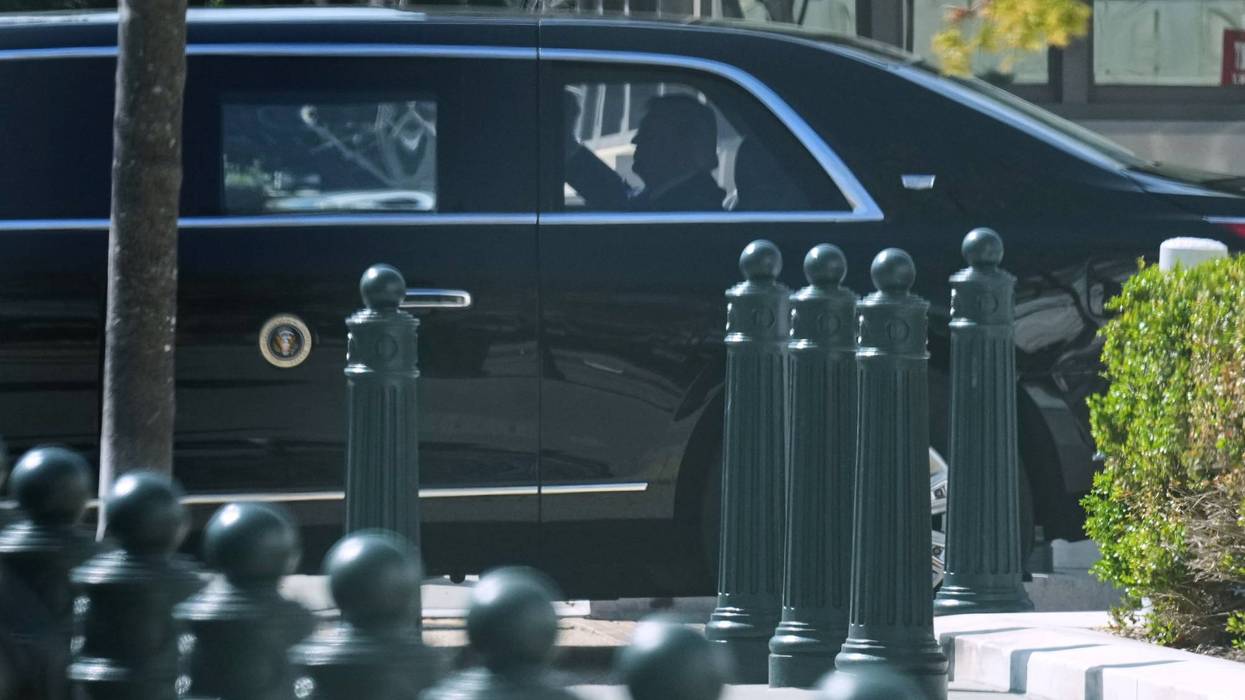



LONDON (AP) — U.S. President Donald Trump says he's strongly considering pulling the United States out of NATO, ratcheting up his criticism of European allies and exposing a wider rift in the trans-Atlantic alliance — this time over the Iran war.
While Trump's talk of a possible NATO pullout dates back years, the comments to The Telegraph newspaper in the U.K., published Wednesday, were among the clearest and most disparaging yet — suggesting that the fracture has deepened perhaps to a point of no return.
Asked whether he would reconsider U.S. membership in the alliance after the conflict in the Middle East ends, Trump replied: “Oh yes, I would say (it’s) beyond reconsideration."
NATO didn't provide immediate comment when contacted by The Associated Press.
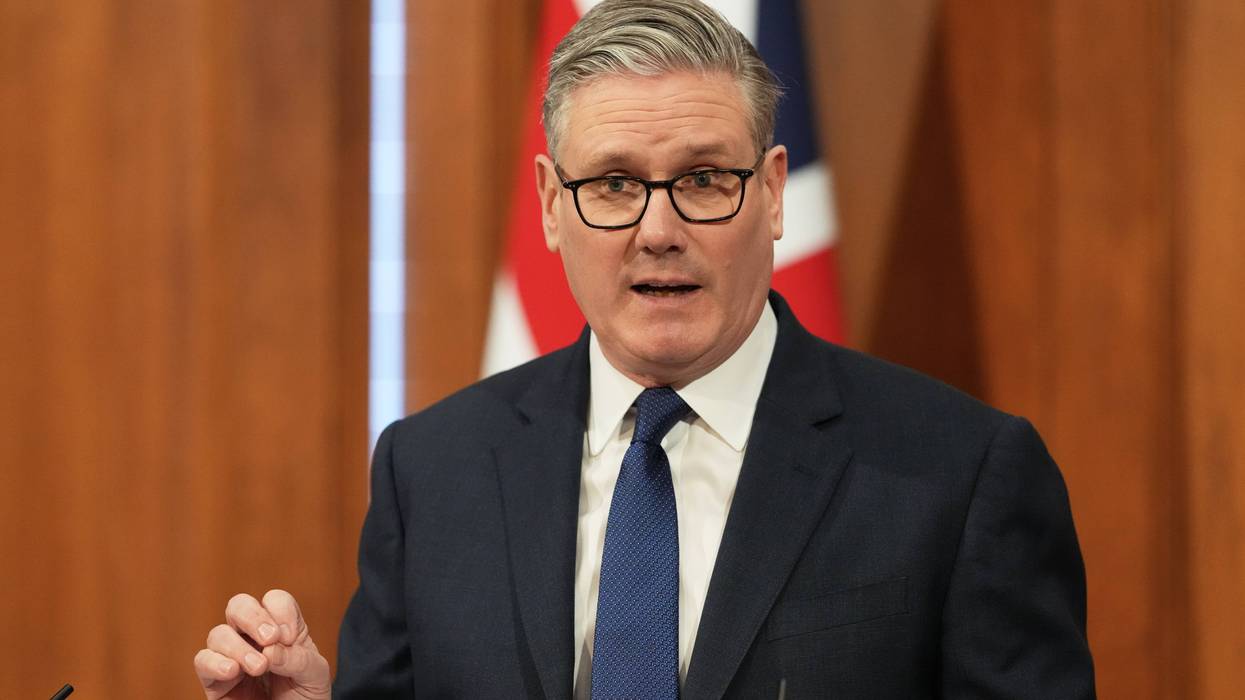
U.K. Prime Minister Keir Starmer said that his government was “fully committed to NATO” and called it “the single most effective military alliance the world has ever seen.”
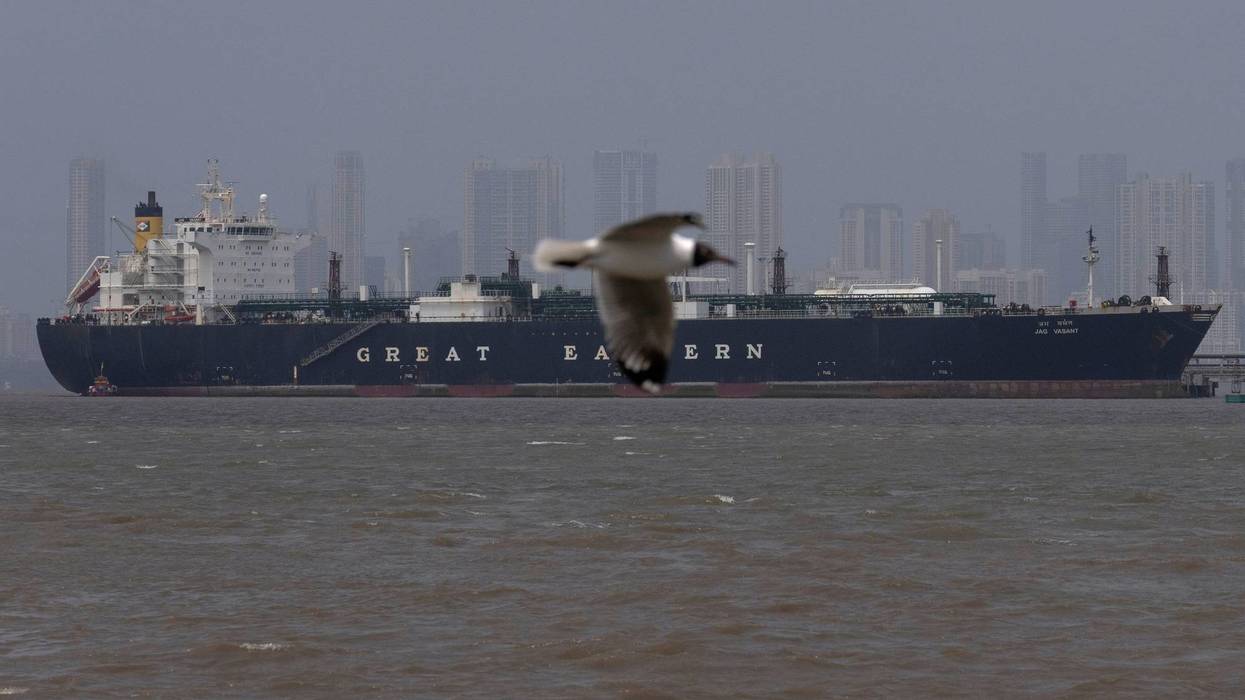
Many European leaders have felt political pressure over the war, which faces opposition in their countries and has sent petroleum prices soaring as Iran has effectively shut the Strait of Hormuz, the narrow waterway between Iran and Oman through which about one-fifth of the world’s oil passes.
“Whatever the pressure on me and others, whatever the noise, I am going to act in the British national interest in all the decisions I make,” Starmer said Wednesday.
Time to ‘reexamine the relationship,' Rubio says
Long-simmering tensions within the alliance have bubbled up again over the war.
As energy prices have spiked, Trump has been desperate to get countries to send their ships to the Strait of Hormuz. He has called NATO allies “cowards."
Even since his first term, Trump has urged the allies to assume greater responsibility for their own security and spend more on defense. He has argued that the U.S. has done more for them than the other way around.
A U.S. pullout would essentially spell the end of NATO, which flourished for decades under American leadership.
Speaking Tuesday on Fox News, U.S. Secretary of State Marco Rubio said: “I do think, unfortunately, we are going to have to reexamine whether or not this alliance that has served this country well for a while is still serving that purpose.”
Rubio raised questions with interviewer Sean Hannity about whether NATO has “become a one-way street where America is simply in a position to defend Europe — but when we need the help of our allies, they’re going to deny us basing rights and they’re going to deny us overflight.”
The criticism from Rubio could raise concerns in the alliance about whether the U.S. under Trump may no longer consider NATO as worth the time, money and personnel that Washington has invested in it.
The very mention of a pullout could weaken the alliance’s deterrence, particularly with Russia: It relies on ensuring that Russian President Vladimir Putin believes NATO will retaliate if he decides to one day expand Moscow's war in Ukraine.
François Heisbourg, senior adviser for Europe at the International Institute for Strategic Studies think tank, called Trump's tough new rhetoric "a new step. It’s a very disturbing one. I think that no member of NATO signed on to join an offensive alliance.”
Ukraine, supplied in large part by Europe, would be the first casualty of a U.S. pullout, he said — European countries would have to increase their defense spending, speed up procurement and take time to replace what the United States might no longer deliver.
The U.K. is working on plans that could help assuage Trump.
On Thursday, British Foreign Secretary Yvette Cooper will host a virtual meeting of 35 countries that have signed up to help ensure security for shipping in the Strait of Hormuz after the war. Starmer said military planners will also work on a postwar security plan for the strait.
The backdrop
NATO is built on Article 5 of its founding treaty, which pledges that an attack on any one member will be met with a response from them all.
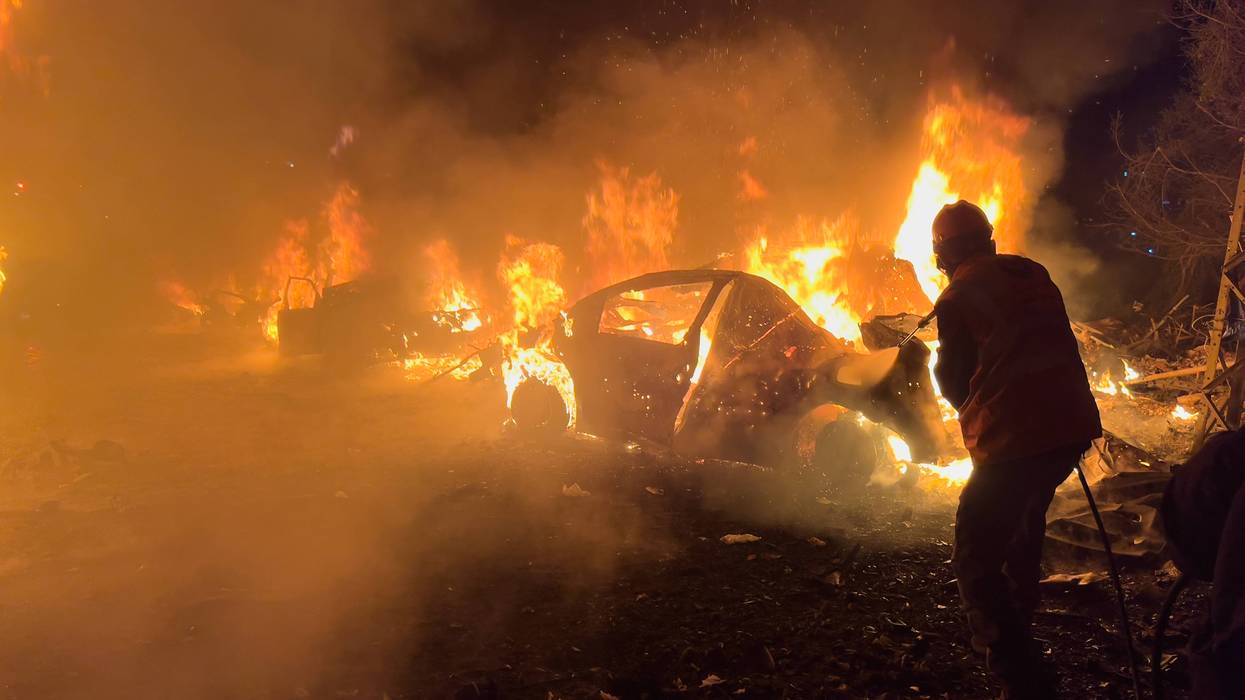
As the Iran war has spread, missiles and drones have been fired toward NATO member Turkey and a British military base on Cyprus, fueling speculation about what might prompt NATO to trigger its collective security guarantee and come to their rescue.
The alliance hasn't intervened or signaled any plan to. NATO Secretary-General Mark Rutte — who has voiced support for Trump and Washington's role in the alliance — has been focusing mostly on the Russia-Ukraine war since Ukraine borders four NATO countries.
NATO operates uniquely by consensus. All 32 countries must agree for it to take decisions, so political priorities play a role. Even invoking Article 5 requires agreement among the allies. Turkey or the U.K. can't trigger it alone.
The U.S. can’t just simply walk away all that easy. A Defense Act passed under U.S. President Joe Biden two years ago prevents an American president from withdrawing from NATO without support of two-thirds of the Senate or under another act by Congress.
Vocal opposition
European leaders have called for the Middle East conflict to stop and want the U.S. and Iran to return to negotiations over Tehran's nuclear program, which Washington and Israel see as a threat.
The vocal opposition in Europe to Trump's war against Iran has started to turn into action.
Spain has closed its airspace to U.S. planes involved in the war.
Early last month, France agreed to let the U.S. Air Force use a base in southern France after receiving a “full guarantee” from the United States that planes not involved in carrying out strikes against Iran would land there.
The government of Italian Premier Giorgia Meloni, long seen as one of the European Union leaders with the best personal ties with Trump, denied permission for U.S. bombers to land at the Sigonella air base in Sicily for one mission related to the Middle East.
Franco Pavoncello, a professor of political science at Rome’s John Cabot University, said that decision might cost Meloni a lot of her political capital in Washington.
But he said: “The Italian government could not be seen by the European allies as too submissive to American interests, as it would have very negative repercussions both at home and in the EU.”
U.S. relations with Europe had already soured in recent months over Trump's call for Greenland — a semiautonomous territory of stalwart NATO ally Denmark — to become part of the United States, prompting many EU countries to rally behind Copenhagen.
___
Jamey Keaten reported from Geneva. Lorne Cook in Brussels, Giada Zampano in Rome, and Matthew Lee in Washington, contributed to this report.