



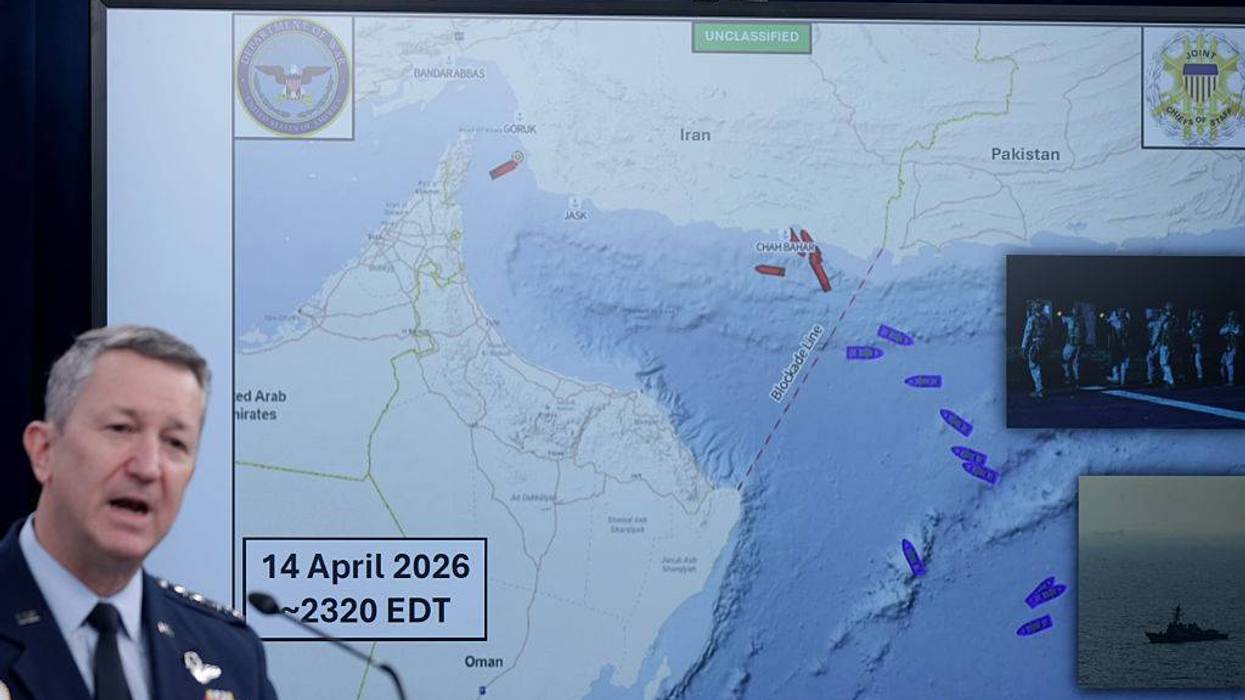

Foreign policy expert Brent Sadler of the The Heritage Foundation joined Rich Herrera on Richmond’s Morning News to break down rising tensions in the Middle East, including the ongoing dispute surrounding the Strait of Hormuz. Sadler emphasized that while Iran has never had full control over the critical shipping lane, the mere threat of disruption has historically been enough to rattle global markets and restrict the flow of oil.
Sadler explained that the Strait remains one of the most important chokepoints in the world, with a significant portion of global energy supplies passing through it. Even without direct control, Iran’s ability to create uncertainty — whether through rhetoric or military posturing — can drive up costs and complicate international shipping, impacting economies far beyond the region.
Turning to diplomacy, Sadler discussed ongoing face-to-face talks and what he described as a potential miscalculation by Iran in how it approaches negotiations with Donald Trump. Rather than focusing solely on direct engagement, Sadler noted that Iran appears to be attempting to leverage political divisions within Washington, appealing to Trump’s domestic opponents in hopes of gaining an advantage in negotiations.
Sadler also highlighted the broader global impact on energy markets, pointing to tightening pressure on Iran’s oil industry and shifting dynamics involving China. With restrictions limiting access to discounted or illicit oil supplies, countries like China may be forced to compete more aggressively on the open market, contributing to volatility in global energy prices and adding further strain to an already complex geopolitical landscape.
Richmond's Morning News with Rich Herrera
Richmond's Morning News with Rich Herrera