


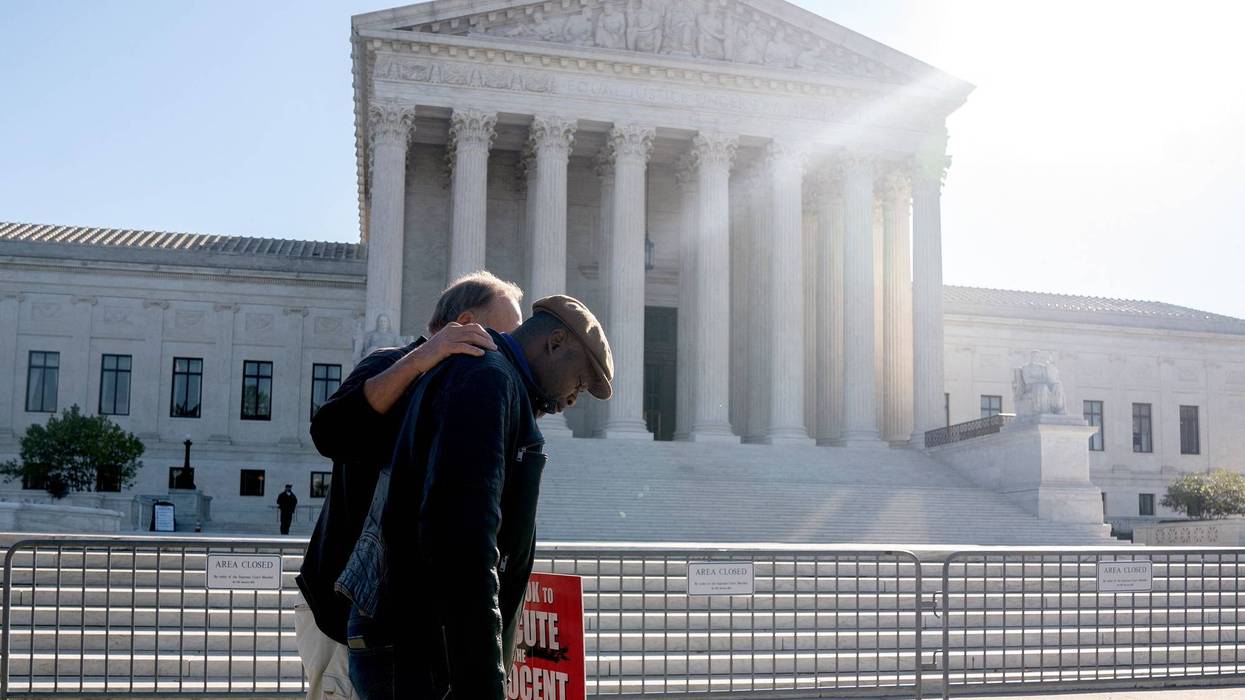

WASHINGTON (Talk1370.com) -- The Supreme Court on Monday declined to intervene in the case of Rodney Reed, the Texas death row inmate whose long-running quest to test crime-scene evidence has brought national attention to the case.
Monday's decision leaves standing a lower court’s refusal to permit new DNA testing on the weapon used in the nearly thirty-year-old murder of 19-year old Stacey Stites.
By its action, the Court upheld a ruling from the New Orleans-based federal appeals court, marking the second time in three years that the high tribunal has looked past Reed’s petitions. The Court’s three liberal members, Justices Sotomayor, Kagan, and Jackson, broke with the majority in a sharp dissent.
At the heart of the dispute is a webbed belt used to strangle Stites in 1996 as she traveled to her supermarket job in Bastrop. While the State of Texas contends Reed raped and murdered Stites, he has long maintained his innocence, asserting he was involved in a consensual, though clandestine, interracial affair with the victim.
Attorneys for Reed argued that the killer’s DNA—lodged deep within the fibers of the belt—could finally resolve the matter.
Reed’s defense has consistently pointed the finger at the victim’s fiancé, Jimmy Fennell, a former police officer. They allege Fennell committed the crime in a fit of rage over Stites’ affair with Reed. Fennell, who has previously served time for an unrelated sexual assault, has denied any involvement in the Stites murder.
The Texas Court of Criminal Appeals previously ruled that the state's DNA testing laws do not apply to items that may have been contaminated. Reed’s counsel countered that any such contamination was the fault of the State, not the defendant, and noted that the prosecution frequently uses similarly handled evidence to secure convictions.
Writing for the dissent, Justice Sonia Sotomayor called the State’s resistance "inexplicable," noting that Reed’s team had offered to pay for the testing themselves. She warned that without the Court’s intervention, the State would likely proceed to execution without the world ever knowing the truth.
Reed, whose execution has been delayed before following outcries from figures such as Beyoncé and Oprah Winfrey, now faces a narrowing path to exoneration. For now, the heavy doors of the law remain closed to his plea for a scientific reckoning.


