



Israeli strikes killed five Palestinians and wounded 19 others in Gaza, officials at two hospitals said, the latest of almost-daily attacks since Israel and Hamas agreed to a ceasefire nearly a year ago.
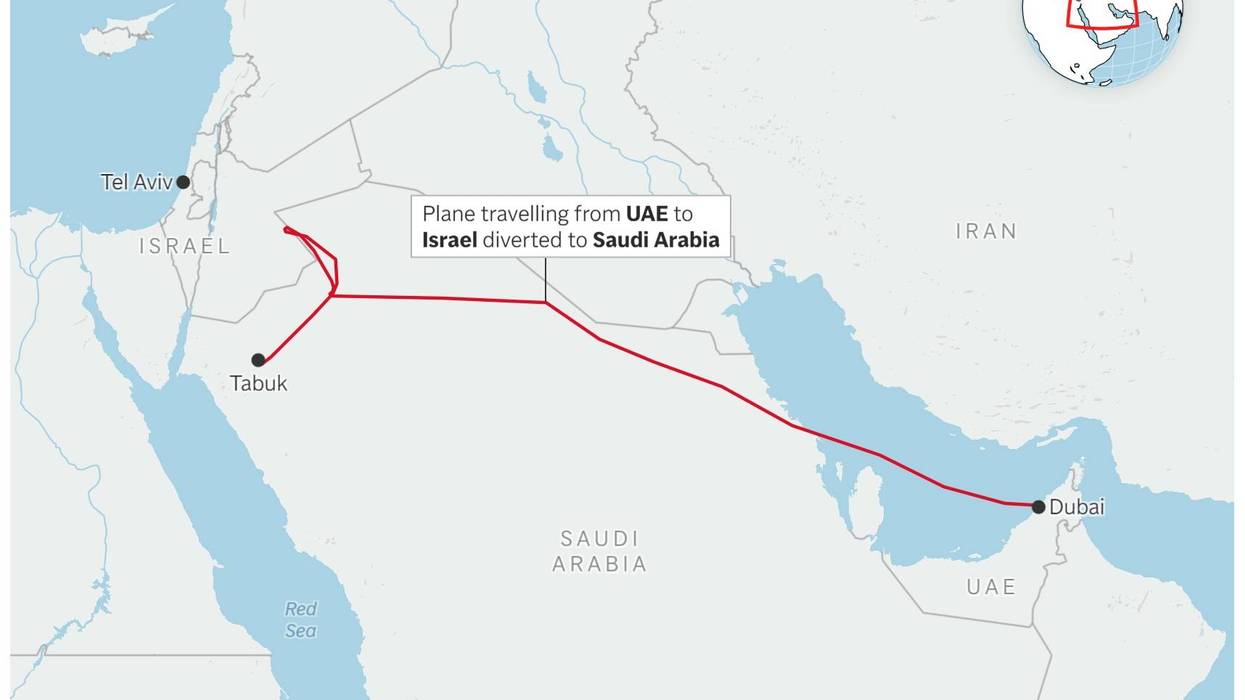
On an Israel-bound flight Wednesday, a pilot stabbed another pilot, then apparently tried to crash the aircraft carrying dozens of Israelis, Prime Minister Benjamin Netanyahu said. Passengers and crew subdued the attacker and the plane made an emergency landing in Saudi Arabia.
Meanwhile, in Iran, authorities executed two people accused of violence against security forces during the country’s January protests. And the last U.S. forces left Iraq, under a Washington-Baghdad deal from two years ago.
Here is the latest news from the Middle East on Wednesday. Full coverage is available here.
Israeli strikes kill 5 Palestinians and wound 19 in Gaza
Israeli strikes killed five Palestinians and wounded 19 in Gaza, hospital officials said Wednesday, the latest of almost daily attacks since Israel and Hamas agreed to a ceasefire nearly a year ago, halting the heaviest of the fighting.
Officials at Shifa Hospital said an Israeli strike killed a woman and critically wounded her husband in Gaza City, while another struck a bus, killing four and wounding at least 14. Elsewhere in the territory, a strike in Khan Younis wounded four Palestinians, officials at Nasser Hospital said.
Israel’s military didn’t immediately respond to questions about the bus strike, but said it was reviewing information about the strike in Khan Younis.
Israeli forces have carried out repeated airstrikes and frequently fire on Palestinians near military-held zones, killing more than 1,400 Palestinians since the ceasefire, according to Gaza’s Health Ministry, which maintains detailed records that are generally seen as reliable. Five Israeli soldiers have been killed in militant attacks over the same time period, while two more were killed by friendly fire.
Israel-bound plane makes emergency landing in Saudi Arabia
On an Israel-bound flight Wednesday from the United Arab Emirates, a pilot stabbed another pilot then apparently tried to crash the aircraft carrying dozens of Israelis, Netanyahu said. Passengers and crew staged a dramatic intervention to subdue the attacker and the plane eventually made an emergency landing in Saudi Arabia.
The FlyDubai flight landed safely after issuing an emergency alert and abruptly descending thousands of feet (meters). Israel scrambled warplanes over concerns of a possible hijacking.
Netanyahu said that Saudi Arabia had arrested a pilot of the flight.
Yasmin Abukasis said her daughter who was on the flight told her in a phone call that she could hear someone screaming “help!” Abukasis said that her daughter told her that the plane started to lose control, but eventually two people were able to wrest control of the plane, while others attempted to subdue an attacker on the floor of the plane.
— By Samy Magdy in Cairo, and Melanie Lidman in Tel Aviv, Israel
Iran hangs 2 men on charges of violence during protests
Iran executed two men on Wednesday over what it said was their role in violence during nationwide anti-government protests in January, state media reported.
IRNA, citing the judiciary, said that the men took part in unrest in the northeastern city of Mashhad that left four security officers dead. The judiciary said that the men confessed to the violence, including setting fires and damaging public property. It also said that one had confessed to stabbing a member of Iran's paramilitary force. Iran’s Supreme Court upheld the sentences before they were carried out Wednesday morning.
The unrest began Dec. 28 amid anger over Iran’s collapsing currency and worsening economy and quickly spread across the country. Iranian authorities responded with a deadly crackdown.
Dozens of Iranians have since been executed in connection with the protests, according to state media in Iran. Executions aren't uncommon in Iran, where rights groups say the accused are often tried in secretive courts based on forced confessions extracted through torture.
Oil and fuel exports near pre-war level with alternate routes
Alternate export routes and a U.S.-protected route through the Strait of Hormuz have helped restore oil and fuel exports from the Gulf to near pre-war levels, according to figures from data firm Kpler.
Exports through the Red Sea and the Suez Canal — along with a pipeline to Fujairah on the Gulf of Oman and a U.S.-protected route that guides tankers at night — have been a key workaround after the threat of Iranian attacks disrupted shipping through the Strait of Hormuz, Kpler said during a Tuesday podcast.
About 21.8 million barrels per day of crude and fuel products made from crude are being shipped weekly, on average, compared to the pre-war baseline of 23.3 million barrels per day, Kpler said.
“We are getting closer to the norm, we are not at pre-conflict levels, but we are getting close to there,” said Matt Smith, Kpler's director of commodity research.
Still, the workarounds are time consuming and expensive.
Egypt's president says Suez Canal revenue down $20 billion
Egyptian President Abdel-Fattah el-Sissi says that the Suez Canal has lost a cumulative $20 billion in revenue since the Hamas-led attack on Israel unleashed the war in Gaza on Oct. 7, 2023, and because of maritime navigation disruptions from the Middle East conflict.
During a televised meeting on Tuesday with Cabinet members, top military leaders and local governors, el-Sissi blamed the government’s tight budget and little spending on education and health on the volatile geopolitical situation that led to increases in food and energy prices.
“Does that affect us? Of course it does affect us severely,” el-Sissi said.
Traffic was significantly disrupted after Yemen’s Iran-backed Houthi rebels began targeting vessels heading to Israel through the Suez Canal after the start of the war in Gaza. Since then, traffic has remained between 60% and 70% below prewar levels, according to a July report by the Oxford Economics research firm.
American troops leave Iraq
The U.S. military announced on Wednesday that it had completed the withdrawal of its troops from Iraq, ending a 12-year mission to fight the Islamic State group.
Baghdad touted the move as a sign of the country’s growing strength and sovereignty. It was also celebrated by Iran-backed groups, but raised concerns among some other Iraqis, particularly in the Kurdish region.
Pentagon spokesperson Sean Parnell, in a statement, called it an “orderly departure” and said that the withdrawal “marks a transition from a wartime coalition mission to an Iraqi-led security effort supported by a more normal bilateral security relationship.”
Lebanon blast wounds a soldier and 3 civilians
The Lebanese army said that a soldier was seriously wounded in an explosion in the village of Nabatiyeh al-Fawqa on Wednesday. Three civilians were also wounded, it said.
Initially, the army said the soldier’s vehicle had been targeted by an Israeli strike, but later it said that the explosion was caused by a “suspicious object.” The army was escorting residents of the area in southern Lebanon to visit their houses, it said.
In June, the Lebanese and Israeli governments reached an agreement under which the Israeli military would withdraw gradually from southern Lebanon and allow the Lebanese army to take control, in exchange for disarming the militant Hezbollah group. However, implementation of the deal has stalled.
___
This report will be updated throughout the day as new developments emerge.