

Midterm elections are coming up in just days, and data suggests that Americans are still feeling queasy about the economy as they prepare to head to the voting booth. Data also shows that those voters are still paying inflated prices for consumer goods.
In its latest Consumer Price Index report, inflation increased by 3.4% in the 12-month period ending in September, though the Federal Reserve Bank didn’t decide to increase interest rates a second time this year during its last meeting (it increases the rates in efforts to tame inflation). AAA data viewed by Audacy Saturday also showed that national average gas prices in the U.S. were still at more than $4 per gallon – the U.S. is still engaged in military conflict with Iran that caused oil prices to spike this year.
At the same time, the Bureau of Economic Analysis reported this week that the real gross domestic product (GDP) increased at an annual rate of 3.4% in the third quarter of this year. While Fidelity noted that economic growth is generally expected to bring more opportunity and even wage increases, economists have chronicled how wage growth has trailed behind productivity growth in the U.S. since the 1970s.
Last year, Forbes reported that 73% of workers were struggling amid a “wage crisis.” This year, Democrats proposed a $25 national minimum wage, citing wage stagnation.
Gallup polling data released Thursday showed that the economy was the top issue out of 11 for U.S. voters going into the midterms. Half of voters said the economy is extremely important this year. Income and wealth distribution also stood out as “extremely important to 44% of voters,” said Gallup, along with gas prices at 42%.
Pew Research Center data released earlier in October also found that the economy was the “dominant issue for midterm voters in this fall’s congressional elections.” According to Pew, Americans were expressing “growing concerns about economic conditions and the cost of necessities,” and 84% of registered voters said the economy is very important to their midterm vote – more than 80% of both Republicans and Democrats ranked it as their top issue, even as they disagreed on other issues.
This week, multiple Ipsos polling also highlighted the importance of the economy to midterm voters. One poll conducted on behalf of Thrivent found that “rising prices and economic concerns are top of mind for many Americans,” as they look beyond the elections to the upcoming holiday season.
“As Americans approach the holiday season, economic concerns are shaping how they plan to spend,” said Ipsos. “More than half expect the current economic environment to affect their approach to holiday spending at least a fair amount, while nearly four in 10 are more concerned about managing their holiday finances than in past years”
Another national study conducted by Ipsos for the DeFi Education Fund (DEF) called “The State and Future of Finance: The American Perspective,” found that “few Americans are confident the financial system is secure,” at just 19%. That study also found that 66% want access to their money at all times, but only about half feel they have personal control over their financial assets or even have faith in traditional financial institutions.
YouGov polling updated Monday also found that more than 60% of participants think the economy is getting worse.
On the campaign trail this weekend, money was on the minds of candidates in some of the most high-profile races in the country, The New York Times reported. In Michigan, there was tension between Dr. Abdul El-Sayed, the Democratic Senate nominee and Rep. Haley Stevens, who he beat in the midterms. Stevens demanded that El-Sayed disavow an ad that suggested U.S. support for Israel was behind higher prices. El-Sayed stressed that he wasn’t behind the ad but also reportedly removed Stevens from the roster of a campaign stop.
In Texas, Democratic candidate James Talarico (who is running against Republican Texas Attorney General Ken Paxton) criticized Elon Musk’s $158 million donation to Paxton. Musk is often listed as the richest man in the world.
“I want to be a senator for every Texan who can’t afford one,” Talarico said.
Ipsos polling conducted from Oct. 22 through Oct. 26 found that Democrats holds a 9-point edge over the Republican Party among likely voters on the 2026 generic congressional ballot. It said that this lean towards the Democratic party comes as Americans deal with frustration over how President Donald Trump and his administration have handled the economy.
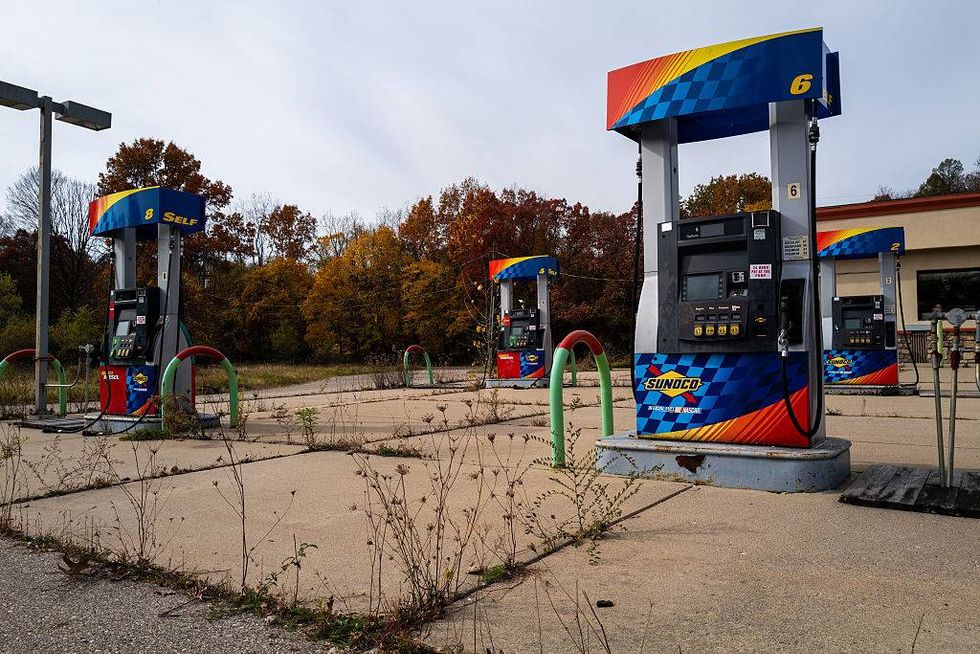 LANSING, MICHIGAN - OCTOBER 30: Gas pumps stand at a closed gas station outside Lansing days before the state votes in the upcoming midterm elections on October 30, 2026, in Lansing, Michigan. Fuel prices have been a top concern of voters as Michigan has become a pivotal state in the race for the U.S. Senate with Republican Senate candidate, former U.S. Rep. Mike Rogers (R-MI) and Democratic Senate candidate Dr. Abdul El-Sayed in a tight race that may decide which party controls the powerful chamber.Photo by Spencer Platt/Getty Images
“Among all Americans, just 25% approve of how President Donald Trump is handling the U.S. economy, while only 20% approve of his handling of the cost of living,” Ipsos noted. “The president’s overall approval rating remains at a near low for his presidency, with just 32% saying they approve.”
Data compiled by 270 to Win from both polls and betting markets also show that Democrats are expected to pick up seats in Congress once the polls are closed on Tuesday.