

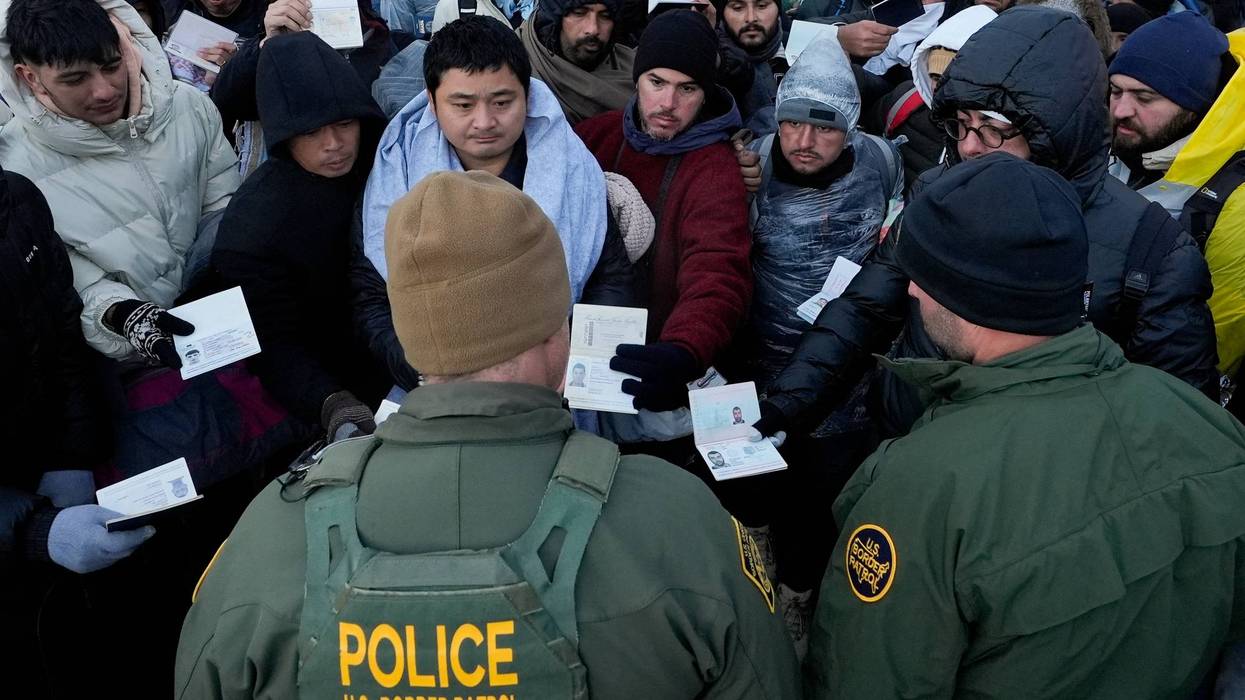

WASHINGTON (AP) — The Supreme Court agreed Friday to consider President Donald Trump’s ban on asylum at the southern border, a pillar of the Republican president’s far-reaching crackdown on immigration.
The Trump administration is asking the justices to overturn lower court decisions that found it was illegal to block asylum applications following an executive order that called the situation at the southern border an “invasion.” The suit is the latest in a series of immigration cases before the high court.
Federal law allows people to seek asylum if they fear persecution in their home countries, no matter how they arrived in the U.S.
At the same time, it also lets the executive branch decide whether people are granted asylum. The Trump administration argues it can categorically deny asylum to migrants covered by the order and should not have to accept applications destined to be rejected.
Federal attorneys say yearslong processing times had previously contributed to a major influx of migrants at the southern border as many were released into the country while awaiting a decision.
“Since the proclamation took effect, border encounters have fallen by 93 percent, dropping to the lowest levels since the 1960s,” Solicitor General D. John Sauer wrote. The executive order has been the “single most important factor in the President’s success at the border," the Homeland Security Department's general counsel, James Percival, said in a social media post.
Attorneys from the American Civil Liberties Union and several immigration rights groups counter that border crossings were already falling before Trump took office.
They say his executive order is an unlawful attempt to "invent by fiat a new removal system that eviscerates” legal protections aimed at protecting people fleeing danger in their home countries.
The executive branch does decide whether to grant asylum, which allows people to live and work legally in the U.S. But those decisions are supposed to be made on an individual basis and the law doesn’t allow the administration to unilaterally stop people from even applying, immigration attorneys argue.
“The plaintiffs in this case fled persecution and torture, including political imprisonment and threats from the Taliban," said Keren Zwick, executive director of the National Immigrant Justice Center. “Yet, the Trump administration refused to honor its obligation to consider them for asylum.”
The ban was one of a series of immigration restrictions Trump rolled out upon his return to office in 2025. It has remained in place during the litigation.
The Supreme Court is expected to hear the case in the spring and hand down a decision by the end of June.
It's the third major immigration case the high court will hear this term. The justices will also decide whether people can be swiftly deported to countries other than their homelands and if immigrants can be detained indefinitely during deportation proceedings.
The justices decided another asylum case in favor of the administration earlier this year, clearing the way for the Trump administration to potentially revive a “metering” policy that has been used to turn back immigrants at the border in years past.