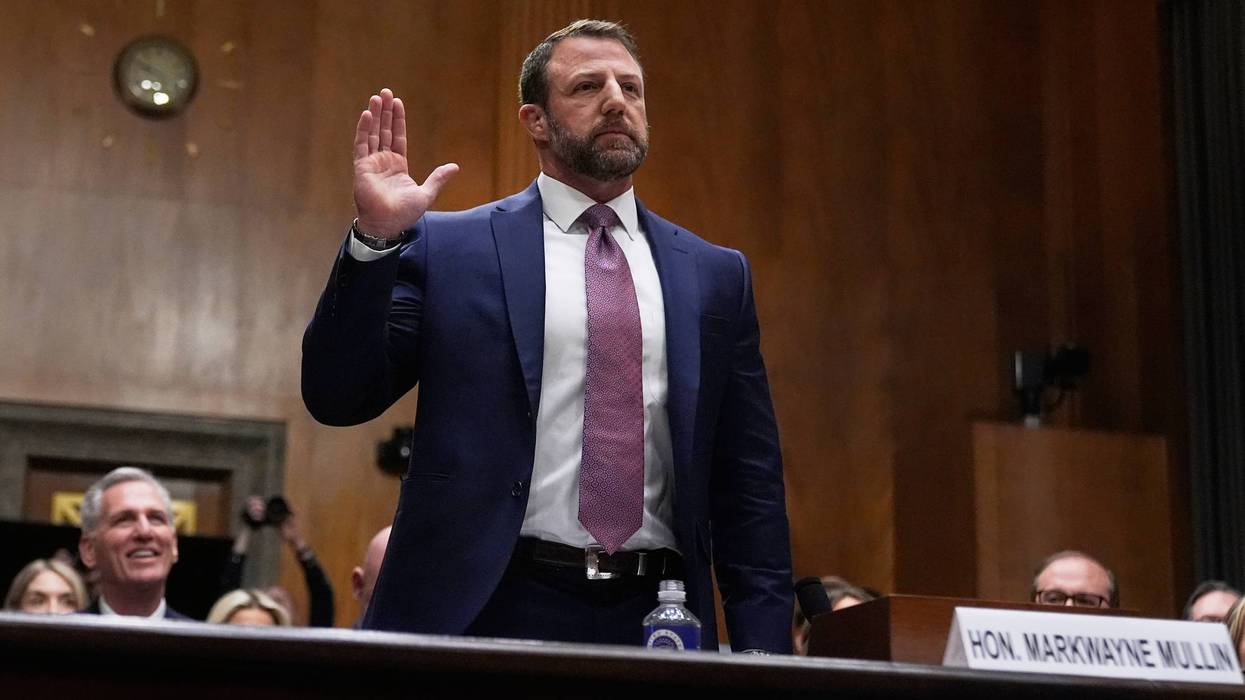

WASHINGTON (AP) — Markwayne Mullin, the White House pick for homeland security secretary, made a case to fellow senators Wednesday that he would be a steady hand for a department roiled by controversy under Kristi Noem, but signaled he would follow President Donald Trump's hard-line immigration priorities and pushed back on concerns over his temperament for the Cabinet post.
The Oklahoma Republican faced questions from members of the Senate Homeland Security and Governmental Affairs Committee about his vision for a department tasked with carrying out the Republican administration's push for mass deportations. Democrats have halted routine funds for the Department of Homeland Security in a weekslong standoff as they demand restraints on immigration officers after the death of at least three American citizens at the hands of federal agents.
Throughout his confirmation hearing, Mullin struck a soft tone on some of the administration’s most contentious policies, and he retracted his description of a Minneapolis man killed by federal officers as “deranged.” But his combative style, seen in a heated exchange with the committee chair, and loyalty to the president meant questions remained over how he might revamp a troubled department that is central to Trump’s deportation agenda.
“I can have different opinions with everybody in this room, but as secretary of homeland I’ll be protecting everybody,” Mullin said. “My goal in six months is that we’re not in the lead story every single day.”
Mullin became emotional at some moments during the hearing and fought back at others, as he spoke of his family’s relationship with Trump and his own commitment to the president’s agenda.
The hearing was Mullin’s first opportunity since being nominated to present his plans in public for the government's third-largest department. Noem was fired this month following mounting criticism of her leadership.
Trump's immigration agenda and how Mullin intends to implement it are key issues for Democrats. Trump's policy of mass deportations is at a crossroads, and Mullin will be under pressure to achieve Trump's goals when the public mood has soured over aggressive immigration enforcement operations.
On whether DHS should meet a 3,000 a day quota for the number of immigration arrests it makes, Mullin said none had been set for him.
He retracted comments he made about Alex Pretti, the Minneapolis man shot by federal immigration officers and whom Mullin had called “deranged.”
“I shouldn’t have said that and as secretary, I wouldn’t,” he said.
Mullin said officers would only use a warrant signed by a judge to forcibly enter homes to make arrests, except in limited circumstances. Federal officers have used administrative warrants to do so, raising concerns that constitutional protections are being skirted.
In his opening remarks and in answers to senators’ questions, Mullin called for the routine DHS funding to be restored.
“We have to get DHS funded," Mullin told senators. “We have to realize that we’re putting our homeland and the peace of mind at risk for the American people.”
The first part of the hearing was marked by a fiery opening statement by Republican committee chair Sen. Rand Paul of Kentucky.
Paul challenged Mullin's fitness for the role, pointing to comments Mullin made after a funding fight, when he called Paul a “freaking snake” and said he understood why a neighbor had tackled Paul in a lawn care dispute. That incident happened several years ago, and Paul suffered multiple broken ribs and later underwent surgeries he linked to the attack.
“I just wonder if someone who applauds violence against their political opponents is the right person to lead an agency that has struggled to accept limits to the proper use of force?” Paul said.
Mullin refused to back down to Paul, in a display that Trump is likely to expect and appreciate.
“For you to say I’m a liar, sir, that’s not accurate,” Mullin said.
Separately, Michigan Sen. Gary Peters scrutinized past remarks he attributed to Mullin that suggested he'd been “involved in special security forces or combat operations overseas."
Mullin said he was involved in an official trip but he couldn't discuss details.
“It’s classified, sir,” Mullin replied, saying he had never revealed details about "the dates, location and mission.”
Peters said the FBI, which conducts background checks on executive nominees, said it has no record of his trip.
Ultimately, Mullin agreed to discuss the matter after the hearing in a private classified setting.
Mullin is a former mixed martial arts fighter who ran a plumbing business in Oklahoma before running for Congress. If confirmed, he is expected to be a faithful ally for Trump's agenda.
“Whether it be protecting the homeland from bad actors, stopping dangerous drugs from flowing into American communities, or removing the worst-of-the-worst criminal illegal aliens, Senator Mullin will work tirelessly to implement the President’s agenda,” White House spokeswoman Abigail Jackson said in an emailed statement.
Peters said Democrats were asking for “straightforward” changes at DHS in line with rules and that police departments follow.
Peters underlined the challenges that Homeland Security is facing, from threats from Iran to criminal hackers, and said the department needed someone with a “steady hand." But Peters said he had reservations about whether Mullin was ready for the job.
As the latest partial government shutdown drags on, there have been long security lines at a growing number of U.S airports as security screeners go into another month without pay. Republicans have charged that Democrats are risking the nation’s security by blocking funding to the department.
Under Noem, intense enforcement operations were launched in places including Los Angeles, Chicago and Minneapolis, where immigrants were rounded up in arrest sweeps and protesters clashed with federal officers.
Activists and politicians accused DHS officers of smashing car windows, roughing up bystanders who tried to record their activities and detaining immigrants in squalid conditions. The shooting deaths contributed to the growing criticism of Trump’s immigration agenda.
DHS has said that its officers are responding with force only when necessary and it has blamed activists and politicians, who they say are dialing up the rhetoric against federal officers.
Mullin also faced questions about the future of the Federal Emergency Management Agency, or FEMA, which is in the middle of tumultuous changes after Trump said he wanted to overhaul the agency, if not eliminate it.
Mullin said he would look to “restructure” FEMA and not abolish it.
Under Noem’s leadership, all contracts above $100,000 had to wait for her approval. That led to long delays for states desperate for reimbursements for money they had spent on things such as storm debris removal.
Asked about that policy, Mullin said he would revoke it.
___
Associated Press writer Gabriela Aoun Angueira contributed to this report.