


NEW YORK (AP) — U.S. stocks are faltering Wednesday after oil prices halted their slide, while a surprisingly strong report on U.S. business activity raised worries about inflation.
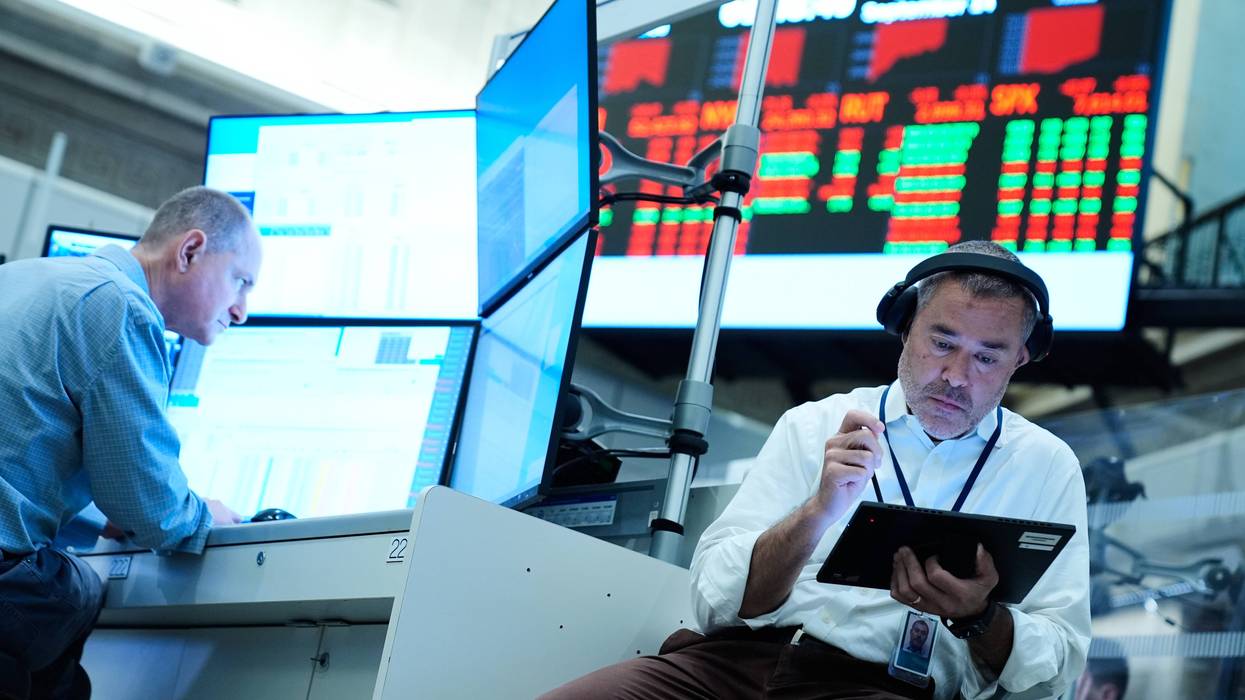
The S&P 500 sank 0.8% and dropped 1.3% below its record set last month. The Dow Jones Industrial Average was down 348 points, or 0.7%, as of 1:08 p.m. Eastern time, while the Nasdaq composite was down 1.3% from its own all-time high.
Stocks felt pressure as the price for a barrel of Brent oil rose 3.2% to $102.44. It reversed a decline for Brent, which had been falling since nearing $110 last week on worries that the war with Iran will keep oil bottled up in the Middle East for a long time. Talks are continuing with mediators between U.S. and Iranian officials, but nothing concrete has come from it yet.
Even with its recent decline, the price for a barrel of Brent remains much higher than the roughly $72 it cost before the war with Iran began.
The climb in oil prices has pushed yields higher in the bond market, which undercuts stock prices and slows the economy by making it more expensive for everyone to borrow money. Yields got an extra push Wednesday morning after a preliminary report suggested growth in U.S. business activity surged to its strongest level in more than five years.
The yield on the 10-year Treasury jumped to 5.12% from 4.96% late Tuesday, which is a considerable move for the bond market. The 10-year yield is back to where it was in 2007, before the global financial crisis sent yields toward zero.
On the downside for the economy, the report also suggested costs for businesses are leaping at the fastest rate in four years, in part because of more expensive fuel, according to Chris Williamson, chief business economist at S&P Global Market Intelligence. That could mean businesses will pass on those higher costs to their customers in coming months and worsen inflation.
Last week, the 10-year Treasury yield topped 5% for the first time since 2023 because of worries about inflation, the U.S. government’s growing debt load and other concerns. The Federal Reserve also last week raised its short-term interest rate for the first time in three years in hopes of reining in inflation.
Fed Gov. Michael Barr said in a speech on Wednesday that in his “base case, further policy adjustments are likely to be needed to ensure inflation comes down to target in a timely fashion.” Traders now see better than a 50% probability that the Fed will hike its federal funds rate at each of its next two meetings, in October and December, according to data from CME Group.
Strong growth in profits for U.S. companies have so far helped support Wall Street despite higher interest rates and more expensive oil.
KB Home became the latest to deliver a stronger profit report for the latest quarter than analysts expected. But its stock nevertheless swung between losses and gains after the homebuilder’s executive chairman said conditions got even tougher for the housing market over the last three months. It was most recently down 0.8%.
Potential customers are becoming more cautious because of higher mortgage rates caused by the rise in the 10-year Treasury yield. They also are feeling pressure from “geopolitical uncertainty and broader economic headwinds,” Jeffrey Mezger said.
General Mills likewise reported a stronger profit for the latest quarter than analysts expected, even as higher costs eroded how much the company behind the Cheerios and Progresso brands made off each $1 of revenue.
But the company said it also expects growth this fiscal year to fall below its historical track record “driven by a continued challenging consumer backdrop,” and it did not raise its forecast for profit over the full fiscal year. Its stock fell 0.8%.
U.S. consumers have been feeling more discouraged about their finances because of how much prices keep rising for fuel, groceries and other costs of living.
In stock markets abroad, indexes slipped across much of Europe and Asia.
Stock indexes fell 1% in Hong Kong and 0.4% in Shanghai ahead of Chinese President Xi Jinping’s state visit to Washington, which is kicking off Wednesday, and his meeting this week with President Donald Trump.
The leaders are expected to attempt to steady fragile ties in their third meeting since Trump returned to the White House. That is despite the world’s two largest economies seeking the upper hand on artificial-intelligence developments and trade, while pushing for leverage in persistent hot spots like Iran and Taiwan.
___
AP Business Writers Chan Ho-him and Michelle Chapman contributed to this report.