CHARLOTTE, N.C. (AP) — A top NASCAR executive returns to the stand Wednesday for a second day of testimony in the explosive antitrust case that accuses the top motorsports series in the United States of being a monopolistic bully in violation of federal antitrust laws.
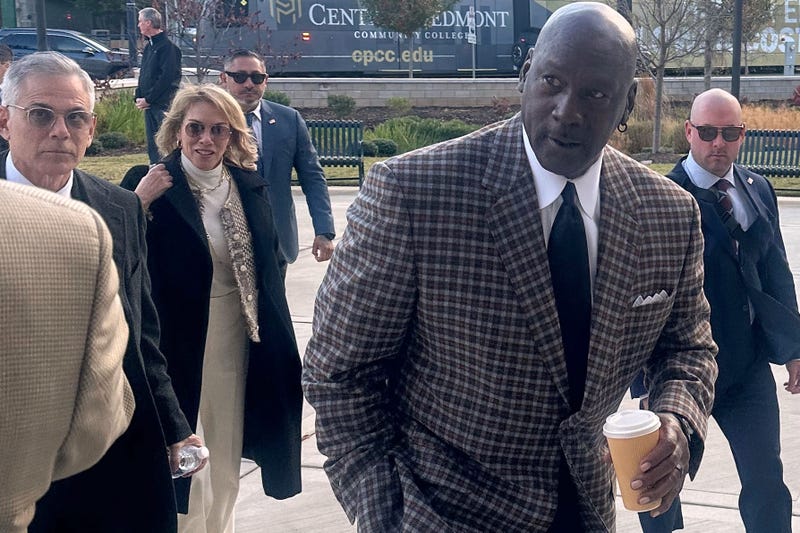
NASCAR is being sued by 23XI Racing, owned by Basketball Hall of Famer Michael Jordan and three-time Daytona 500 winner Denny Hamlin, and Front Row Motorsports, which is owned by fast-food franchiser Bob Jenkins. They were the only two organizations out of 15 to refuse to sign agreements last year on new charters, which are NASCAR's version of the franchise model used in other sports.
Front Row and 23XI contend that NASCAR is a monopoly that has handcuffed teams with a no-win revenue model. The charter agreement that took effect this year ended more than two years of bitter negotiations in which neither side budged until NASCAR presented its final offer on the eve of the 2024 playoffs and refused to negotiate any further.
The deal fell short of the requests made by all 15 teams, but 13 teams still signed under the belief they'd lose their protected status as a charter — which guarantees both entry into every race and a defined share of the purse.
The second day of testimony on Tuesday — which included nearly three hours from Hamlin — turned to Scott Prime, NASCAR executive vice president in charge of strategy. Jeffrey Kessler, attorney for 23XI and Front Row, used Prime's memos and private communications to attempt to show anticompetitive practices.
Among the exhibits shown was NASCAR's fear of a rival stock-car series developing that would resemble the LIV golf league. To stop such a move, communications showed NASCAR executives tried to lock the tracks it competes on into exclusivity clauses that would prohibit them from hosting other events.
Kessler showed an agreement with Las Vegas Motor Speedway in which NASCAR implemented a clause in which the track could not host a rival stock car series for two years after its deal with NASCAR expires.
Kessler also showed communications between Prime, NASCAR Commissioner Steve Phelps and NASCAR President Steve O’Donnell in which the three expressed frustration with NASCAR chairman Jim France and vice chair Lesa France Kennedy because the owners of the series refused to offer any concessions in negotiations.
Phelps wrote the current proposal at that time showed “zero wins for the teams," while O'Donnell argued the agreement would set NASCAR back to 1998 while reverting the series to a “dictatorship, redneck, Southern tiny sport.”
Prime defended the deal eventually reached — “from my point of view, where we landed was strong for the two teams” — but Kessler confronted Prime about eight specific points the teams asked for and did not receive.
The teams had asked for the charters to become permanent (they are currently renewable and revocable), for 1/3 of revenue, 33% of new revenue sources, 33% from any increases in media agreements, a voice in governance when it comes to schedule, electrification and new industry initiatives, as well as compensation for its intellectual property.
Kessler listed each of the asks individually in questioning if any of them landed in the final charter agreement, and Prime answered “No” to each one. Prime also said he didn't have knowledge of sanctioning agreements, wasn't familiar with the split between CART and IndyCar that decimated open-wheel racing in the U.S., and distanced himself from many of the contractual agreements.
He apologized for language used in one of his communications and said it came from frustration over the slow pace of negotiations. One set of texts addressed a meeting, with France Kennedy writing “the teams won't get everything they want, and hopefully we can just meet in the middle.”
O'Donnell replied “I just asked for someone in the room to point out how any of our positions are going to grow the sport and position us for a big rights renewal in the future.”
Phelps responded: “Productive? Insanity. Zero wins for the teams.” He later added a charter proposal draft “must reflect a middle position or we are dead in the water.”
Prime called the lack of concessions toward the team “a bold strategy” while O'Donnell indicated “any big sports person” would find NASCAR laughable for its negotiations.
Jordan and Jenkins, as well as Rick Hendrick and Roger Penske — the two most powerful team owners in the United States — are all expected to testify in the trial scheduled to last two weeks. Jenkins said in a pre-trial deposition he's lost $100 million since starting Front Row in 2004.
___
AP auto racing: https://apnews.com/hub/auto-racing