


An architect of the Senate bill that proposes to solve problems engulfing college sports says he heard the criticism right away, along with conversations of breakaway conferences and collective bargaining as ways to combat the industry’s ever-spiraling spending.
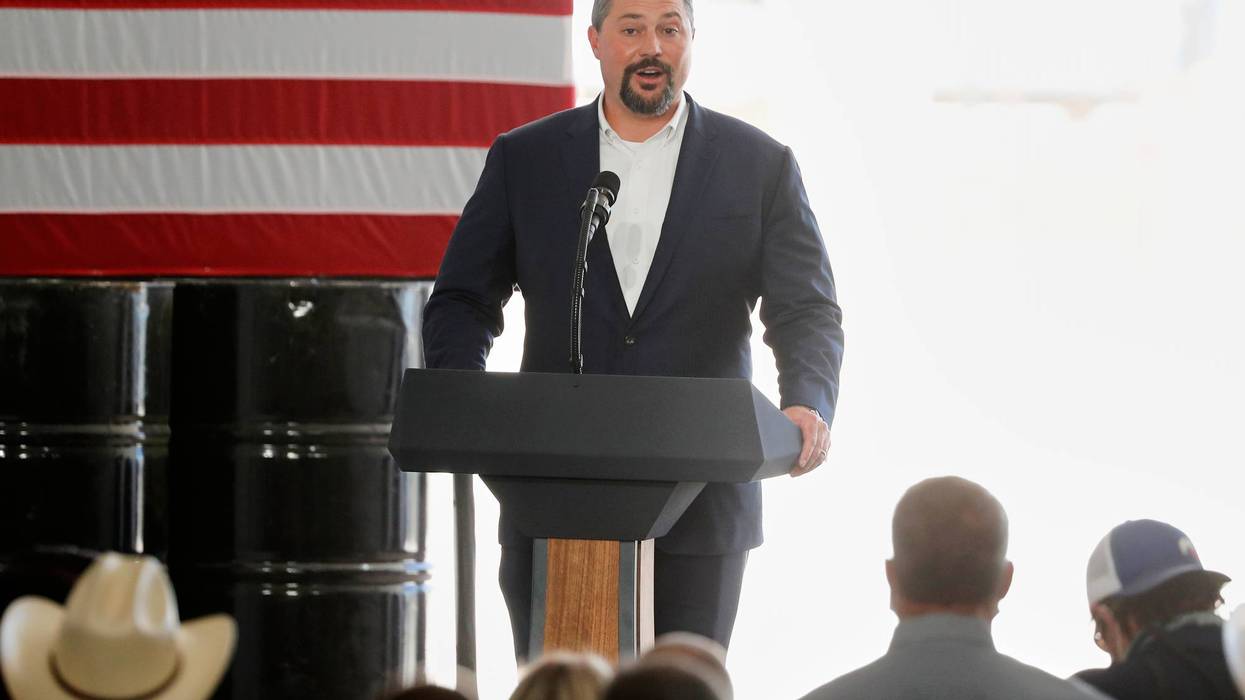
Cody Campbell’s response to that talk: You broke it, we’re trying to fix it.
“My take is, it’s pretty rich for these people who created the problem in the first place to say that all of the sudden, they have the solution to the problem,” he said.
The billionaire head of the Texas Tech board of regents spoke to The Associated Press on Thursday, a day after Sens. Ted Cruz, R-Texas, and Maria Cantwell, D-Wash., presented a bipartisan bill they hope can put teeth behind a lot of rules already in place to guide college sports through its multibillion-dollar metamorphosis.
While leaders of conferences and the NCAA said they would review the bill to decide whether to support it, critics emerged almost as quickly. Among them were Sen. Chris Murphy, D-Conn., who wants more limits on coaching salaries; and Reps. Tim Walberg, R-Mich., and Brett Guthrie, R-Ky., who want to see language that outlaws athletes from becoming employees of the schools.
A players group also expressed skepticism and the AP spoke to experts who predicted the bill would face a tough climb to get 60 votes in the Senate and a majority in the House.
“It's turning back the clock two to three years, and I don't think that's realistic,” said Michael LeRoy, a labor and sports law professor at Illinois, speaking to the realities of how much more expensive payrolls have become since name, image and likeness payments became allowable. “Players are getting paid in the millions of dollars. The underlying premise is to get a more uniform ceiling. That certainly is needed, but collective bargaining would do that.”
Schools have used third-party NIL deals to blow past the $20.5 million in revenue sharing that some envisioned as a “salary cap” when terms of the lawsuit settlement that set rules for college sports were approved.
Bill could address issues that trigger growing calls for collective bargaining
The spiraling spending has led some big names, including Tennessee athletic director Danny White, to suggest a collective-bargaining agreement between players and — schools? leagues? the NCAA? — could solve problems by bringing cost certainty to the industry while also giving it the antitrust protection it so desperately seeks.
It could also open the door to athletes becoming employees of the schools, which many view as a backbreaking financial burden that would invite the demise of Olympic and women's sports in college, and maybe football and basketball themselves.
Campbell, who was part of a group formed by President Donald Trump to tackle problems in college sports and has long been a strong voice in trying to shape its next chapter, says the Cruz-Cantwell bill provides many of the same benefits as collective bargaining, including limited antitrust protection.
“We created something that could actually be passable on a bipartisan basis,” Campbell said. “And while it's not perfect, and it never will be, there are many, many good elements in it. I think that college sports should be universally pleased with the outcome.”
Campbell said he views one of the bill's most divisive elements — a provision that would provide conferences the option to pool their media rights — not as a threat but as a genuine option for the leagues. The Southeastern and Big Ten Conferences are against media pooling, arguing that the numbers don't add up.
Campbell said the proposal addresses long-running concerns about out-of-control coaches salaries but also suggested the language in the 111-page bill could be amended to make the legislation even tougher.
He said it gives the year-old College Sports Commission the legal authority to approve and reject third-party NIL deals and would shield it from lawsuits that could come under the current system.
Campbell also said he has little time for the increasing conversation coming out of the SEC — headlined by Georgia president Jere Morehead and its football coach, Kirby Smart — that suggests those leagues might be better off splitting away from the system completely, making their own rules and playing games among themselves.
“If this was the solution, why didn't they come up with it over the last several decades as this thing started to crumble?" Campbell said. "If you created this mess, I don't see how you can stand up and say you're the one who's going to fix it.”
Despite bipartisan nature, bill faces an uphill climb
The AP spoke to a handful of legal experts familiar with college sports, none of whom predicted an easy road for the Cruz-Cantwell bill.
“It might be trying to bite off too much at this point to get passed this year,” sports attorney Mit Winter said.
Cantwell acknowledged to the AP in an interview that she knows despite its bipartisan nature, the bill is hardly a slam-dunk to pass.
Among those who gathered with Campbell to help draft the legislation were Condoleezza Rice, Yankees President Randy Levine and Gerry Cardinale of the private equity firm Redbird Capital. It was a group, according to a Yahoo Sports report, that SEC commissioner Greg Sankey was referencing when he said “it's interesting in Washington where the voices of influence come from.”
Campbell, however, views it as a smart group that doesn't have as many conflicting interests as the leagues and NCAA themselves.
“And if we can’t get it done," he said, "then they can have their way and let chaos continue to persist.”
___
AP Sports Writer Eric Olson contributed to this report.
___
AP sports: https://apnews.com/hub/sports