


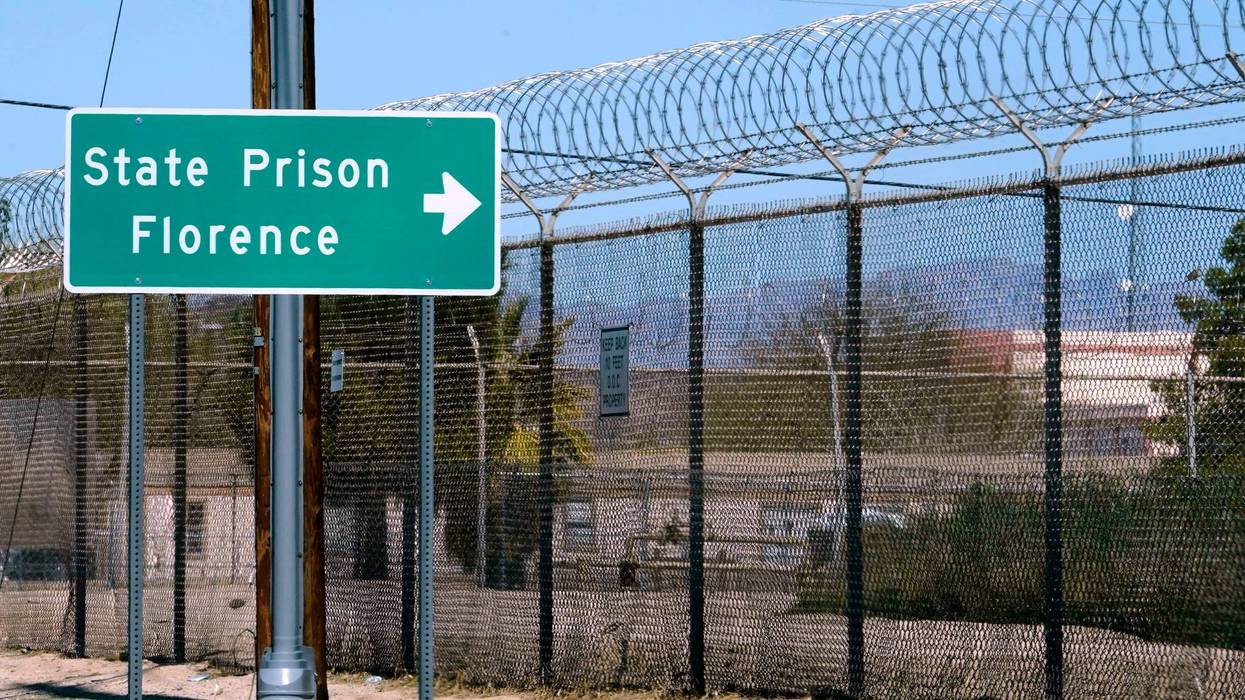

PHOENIX (AP) — The U.S. Supreme Court has rejected Arizona's eleventh-hour bid to block the upcoming start of a court-ordered takeover of healthcare operations in its prisons after the state was found to have provided constitutionally inadequate care to incarcerated people and dragged its feet for over a decade in making required improvements. Justice Elena Kagan denied the state's request Thursday, leaving an outside corrections professional set to take over healthcare management for 25,000 incarcerated people on Oct. 19.
Arizona had asked the courts to delay the takeover while it appealed that decision and the appointment of former Ohio corrections director Annette Chambers-Smith to lead the effort. The state sought the delay from the Supreme Court after lower courts rejected by the request.
Over the past 14 years, Arizona has been dogged by complaints that its prison healthcare system was run shoddily and callously and that it repeatedly failed to improve a system found to have exposed prisoners to harm and preventable deaths.
Under a 2014 settlement, the state pledged to overhaul medical and healthcare services for prisoners but was soon accused of failing to make promised improvements. That led to more than $2 million in contempt-of-court fines and the eventual revocation of the agreement by U.S. District Judge Roslyn Silver, who said corrections officials had shown little interest in making required changes.
After a 2021 trial, Silver ruled against the state, issuing an injunction that required corrections authorities to address the constitutional violations. Earlier this year, she ordered the takeover after concluding the state hadn’t gotten a semblance of compliance with court-ordered changes and the U.S. Constitution after more than a decade of litigation. Silver found that prisoners remained exposed to grave threats of harm and suffering because of systematic deficiencies in their health care.
The Arizona Department of Corrections, Rehabilitation and Re-entry did not immediately respond to a request for comment on Thursday's decision.
In a statement, Corene Kendrick, an American Civil Liberties Union attorney who represents prisoners in the lawsuit, applauded the court's refusal to delay the takeover, also known as a receivership. She said Arizona fought accountability at every turn while prisoners suffered. “Today’s decision clears the way for a receiver to do what the state has failed to do for more than a decade,” Kendrick said.
In seeking a delay, Arizona’s attorneys said Silver adopted a drastic takeover remedy without first trying intermediate fixes to speed compliance. They also said the judge hadn't given the corrections department enough time to continue making progress and argued that the official appointed to run healthcare operations wouldn’t be politically accountable. They said the agency is committed to improving health care in prisons, has made significant progress since 2023 and that the prisoners won’t suffer harm if the start of the takeover were delayed by a few months.
Lawyers for prisoners said the state was minimizing its noncompliance, disputed its claim it had not been given enough time to comply after 14 years of litigation and said Silver had already tried less-intrusive remedies. They also said the state’s proposal of a months-long delay in the takeover “grievously minimizes” the harm prisoners face from the state’s inability to provide adequate care.
Complaints about health care in Arizona’s prisons have spanned both Republican and Democratic administrations.
The lawsuit was filed in 2012 during Republican Gov. Jan Brewer’s administration and continued under Republican Gov. Doug Ducey, when both contempt fines against the state were issued. Under Ryan Thornell, the corrections director in Democratic Gov. Katie Hobbs administration, the department has complained that its progress in overhauling health care operations in recent years hasn’t been acknowledged.
The lawsuit over healthcare for incarcerated people covers Arizona’s nine state-run prisons but not the nearly 10,000 Arizona inmates held in private prisons.