

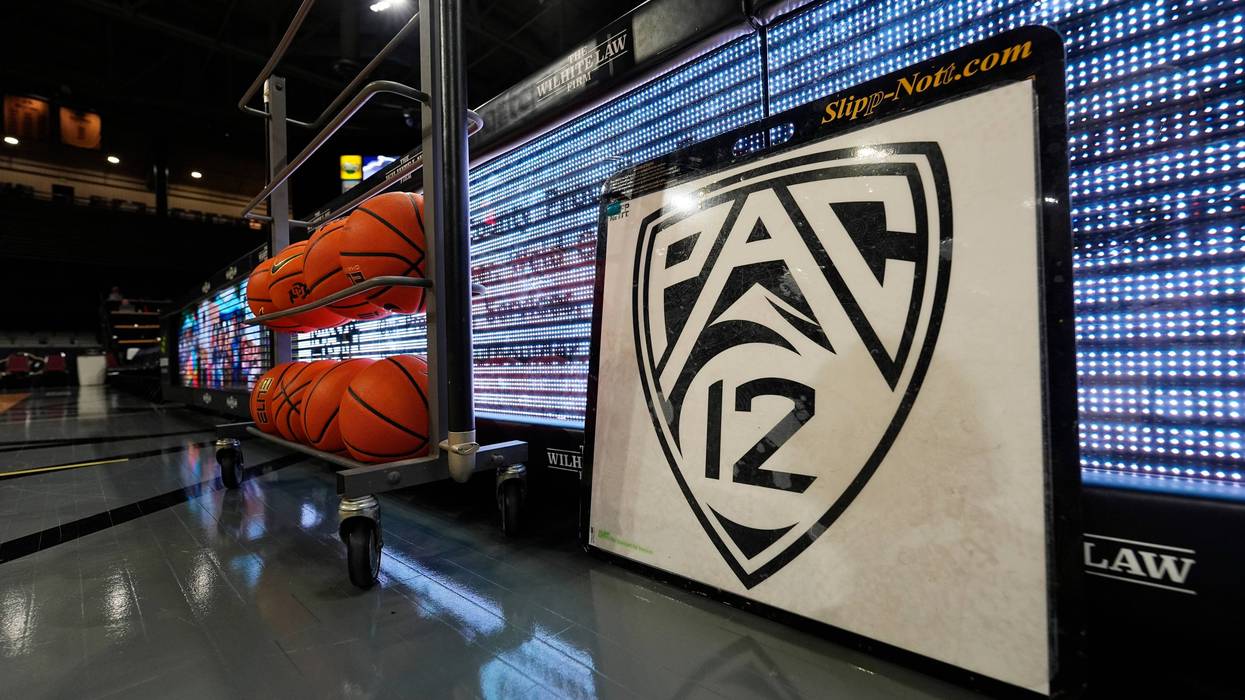

The Pac-12, the self-dubbed “Conference of Champions” with athletic excellence going back more than a century, turned into the conference of ashes.
A mass exodus of 10 schools in 15 months left the Pac-12 in tatters, dimming the future of a conference that was once the proud home of Kareem Abdul-Jabbar, Cheryl Miller, Tiger Woods, Jackie Robinson, Lisa Leslie, Jackie Joyner-Kersey and many more.
League brass and the two remaining schools worked behind scenes to pull the conference out of a death spiral and now, more than four years since the first two schools left, the Pac-12 is back as something of a startup.
“We’re literally launching a new league,” Pac-12 Commissioner Teresa Gould said. “We've been doing all the things that are already established in a traditional conference, but we wound ours down. So now we’re winding it back up and it’s a fun time.”
The new version of this venerable old conference officially launched on July 1, when seven new members joined Oregon State and Washington State. The soccer, volleyball and cross-country seasons kicked off last month.
Next gen Pac-12 kicks off in full force this week with the start of the football season.
Newcomer Fresno State gets it started at No. 14 Southern California on Thursday night with all eight teams, capped by Washington State's Apple Cup rivalry game against former Pac-12 member No. 17 Washington on Sunday.
“It's really exciting,” said Kirby Moore, the first-year Washington State coach and Washington state native. “Very few times do you get to be a part of history and be the first in the Pac-12 Conference coming back together.”
There were plenty of doubts it would ever happen.
Losing USC and UCLA in 2022 was a big blow to the conference, yet one it could possibly recover from. Once eight more schools bolted over a span of about six weeks, it appeared as if the lights would go out on “Pac-12 After Dark.”
The once-powerful conference jokingly became the “Pac-2,” but no one with remaining ties to the league was laughing as staff were laid off and the future looked bleak. There were lots of discussions and legalities to sort through over money for the former members as well as complications over new membership
“I guess when I accepted this position in February of 2024, the idea or possibility that the conference wouldn't survive was certainly swirling in the back of my mind because there was just so much uncertainty at that time,” Gould said.
Within a few months, the conference began showing signs of life.
The Pac-12 worked out a deal for Oregon State and Washington State to play Mountain West Conference schools for the 2024 season, with deals for other sports in separate scheduling agreements.
Behind the scenes, the league was working on a re-expansion.
Boise State, Colorado State, Fresno State and San Diego State became the first new members in late 2024 after bolting the Mountain West. Utah State joined the Pac-12 not long after that and powerhouse Gonzaga gave the league a higher national profile by joining as a basketball-only member.
Texas State's addition in 2025 was the final piece, giving the conference an FBS-mandated eight football schools.
“Things shifted very, very fast,” Gould said.
There were still hurdles to clear.
The Pac-12 and Mountain West became embroiled in legal wrangling over “poaching” fees and three of the conference's new members filed a separate lawsuit over exit fees from the Mountain West. Both lawsuits were settled earlier this year.
Gould and the Pac-12 also had to negotiate new media rights deals, a massive stumbling block under previous commissioners that, in large part, led to the exodus to other leagues. The Pac-12 worked that out by negotiating deals with CBS, USA Network and The CW, ensuring all its football games and many basketball games will be on linear TV — meaning no more fumbling through the channels to find "Pac-12 After Dark."
“We are super, super fortunate that we have that kind of reach and that kind of accessibility for all of our football games and the majority of our basketball games, because it’s more important than ever, given that we’re launching this new league,” Gould said.
The Pac-12 also had to address its College Football Playoff chances.
As a Power Five (now Four) league, the conference would have had an automatic bid under the new 12-team format. Because the re-imagined conference dropped into the Group of Six conference category, the trajectory to a playoff spot is no longer a straight line.
The Pac-12 hopes to boost its CFP chances by scheduling “flex” games during the final week of the regular season, creating the best possible rematches to enhance its postseason chances.
“We’ve gotten a lot of other conferences that have said, ‘Hey, that’s a really interesting way of thinking about this opportunity or solution,’” Oregon State athletic director Kevin Griffin said “There may be some challenges as we actually execute, but what I’m most proud of as a conference is the ability to think differently and have a different type of solution.”
The Pac-12 spent four years searching for solutions to prevent the conference's extinction.
The result is an old conference with a new look and feel.
___
AP Sports Writer Anne Peterson contributed to this report.
___
Sign up for Top 25 poll alerts here, visit the Top 25 here and see AP’s full college football coverage here